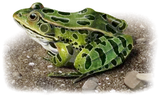
Greenhouse Frog
Eleutherodactylus planirostris
This specie is comprised of very miniature frogs. They are about 12 – 30 mm in total length. Their background colour is usually brown, reddish-brown, or bronze. They also…
How to identify
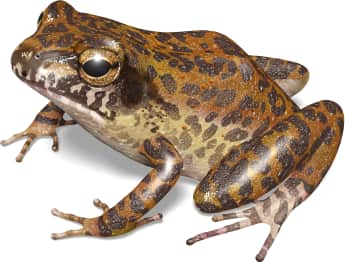
This specie is comprised of very miniature frogs. They are about 12 – 30 mm in total length. Their background colour is usually brown, reddish-brown, or bronze. They also have two pattern phases: speckled with dark and light markings, usually with indistinct chevron-shaped bands on its back and between its eyes and striped with 2 faint longitudinal stripes on its back. Additionally, it has no webbing between its toes. Lastly, its eyes are red, with its belly grey or white with the infrequent dark spot.
Range
The Greenhouse Frog is native to Cuba, the Bahamas and maybe some other islands in the West Indies. This specie probably made its way from Cuba to Florida and Georgia as a stowaway in tropical plant shipments. They are quite widespread in Florida and have also been introduced in Jamaica. They have also been introduced to the Cayman Islands, some of the Bahamas and in the area around Veracruz, Mexico. Lastly, there are remote archives in the Florida panhandle, New Orleans, Louisiana, southern Alabama, and coastal and southern Georgia.
Habitat
They can be found in both residential areas and a vast range of natural terrestrial habitats. They’re not very good climbers so they prefer to stay close to the ground. They stay in warm, humid areas that have moist ground cover and other suitable hiding places. They are most active at night and during or right after the rain. Their diet is made up of ants, beetles and other tiny invertebrates. Breeding occurs from May to September where a cluster of up to 20 eggs are laid terrestrially. The eggs hatch into fully formed froglets in about 2 weeks.
Similar species
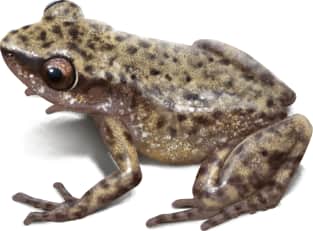
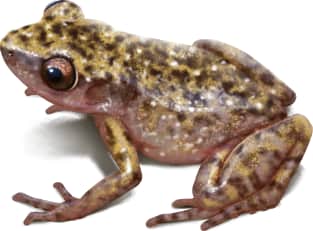
Eleutherodactylus cystignathoides or the Rio Grande chirping frog. They can be found from the southern United States in Texas. They can also be found in northeastern Mexico in the states of Nuevo Leon, Tamaulipas, San Luis Potosi, Hidalgo and Veracruz. Eleutherodactylus diplasius or the spotted chirping frog. They are native to Haiti and can be found in the Tiburon Peninsula northwest, to the Massif de la Hotte. Eleutherodactylus aporostegus or the Tiburon burrowing frog. They are endemic to the Tiburon Peninsula, Haiti.
Name and etymology
Genus
Eleutherodactylus
From the greek, free(eleutheros) finger(dactylos), referencing no webbing on the toes.
Origin
Sources
- Dumeril and Bibron, 1841. Erpet. Gen., Vol. 8, p. 620 ↗
Eleutherodactylus. Dumeril and Bibron, 1841 - Erpet. Gen., Vol. 8, p. 620
Species epithet
planirostris
From the latin, flat (planum) snout (rostrum), referencing its flattened head.
Origin
Sources
- Wikipedia: Eleutherodactylus planirostris ↗
“Eleutherodactylus planirostris.” Wikipedia. https://en.wikipedia.org/wiki/Greenhouse_frog
Explore more names in the etymology index.
At a glance
Size
12 to 30 mm
Range
The Greenhouse Frog is native to Cuba, the Bahamas and maybe some other islands in the West Indies. This specie probably made…
Habitat
They can be found in both residential areas and a vast range of natural terrestrial habitats. They’re not very good climbers…
Range map
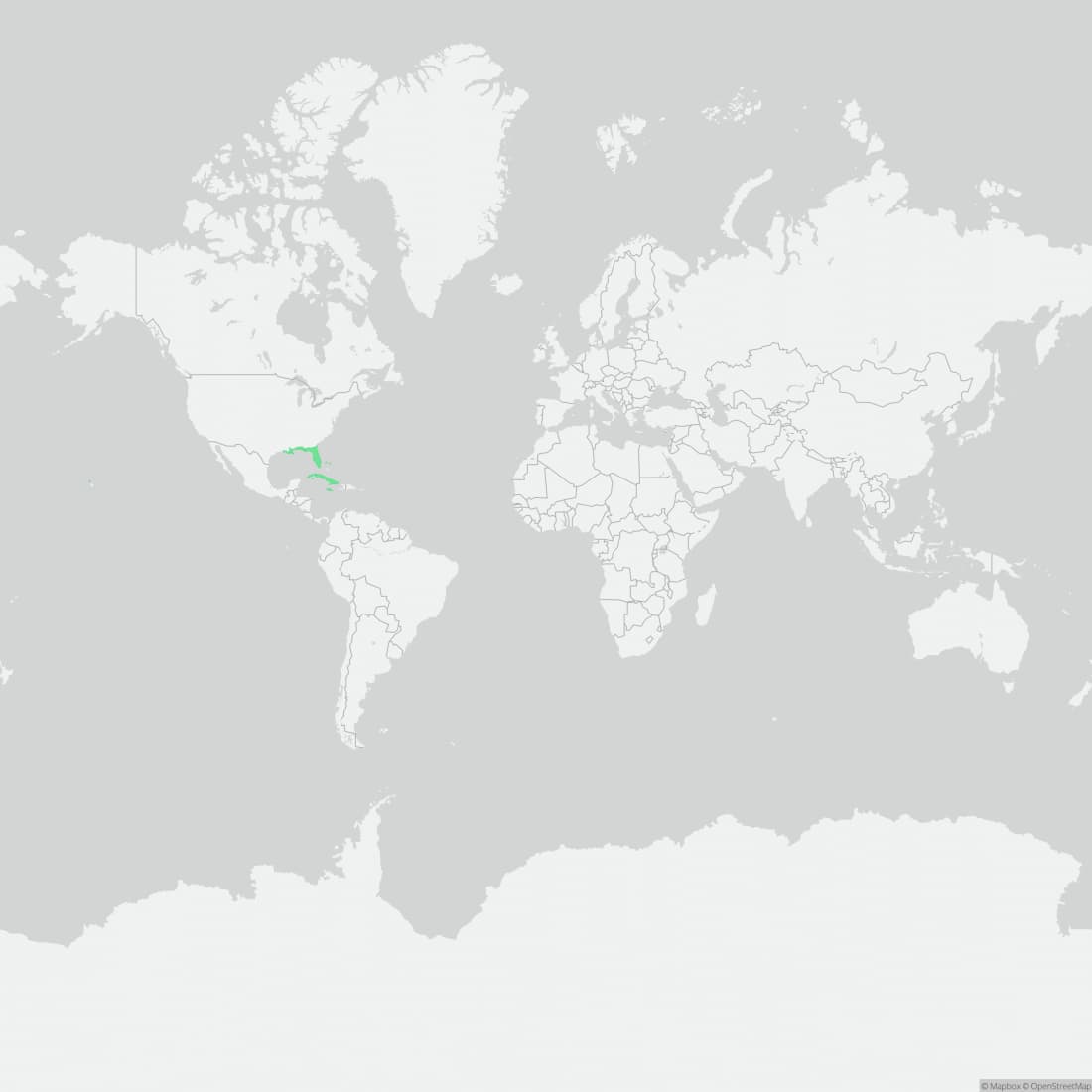
Approximate range. © Mapbox © OpenStreetMap