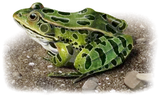
Rio Grande Chirping Frog
Eleutherodactylus campi
This small tree frog averages 16-24 mm in snout to vent length. It has a flat head with a pointed snout and noticeable tympana. Its skin is slightly bumpy, and it has sma…
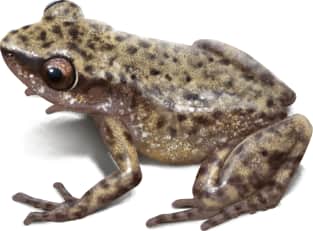
How to identify
This small tree frog averages 16-24 mm in snout to vent length. It has a flat head with a pointed snout and noticeable tympana. Its skin is slightly bumpy, and it has small toe pads. Its ventrum is translucent, and its dorsum varies in color from grey to greenish to brown. It often has small dark spots or a mottled pattern. Most individuals have a distinct horizontal line of demarcation along the sides of the face, separating light dorsal coloration from dark lateral coloration.
Range
Native to deep south Texas and the Gulf Coast of Mexico. Populations have been introduced in parts of east Texas and southern Louisiana from the transport of potted plants.
Habitat
These frogs are found living in moist vegetation in shaded areas of coastal plains and foothills. They are often seen in urban environments, and rarely found more than 1.5 meters above the ground. They like to live in palm groves, thick lawns, gardens, and ditches.
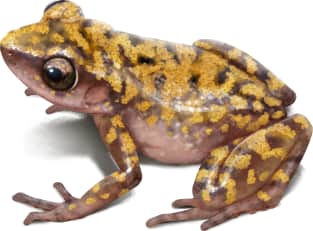
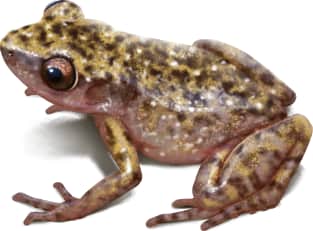
Variations
Dorsal coloration varies, depending on the surrounding habitat.
Similar species
Most likely to be mistaken for the cliff chirping frog (*Eleutherodactylus marnockii*). Also similar to the spotted chirping frog (*Eleutherodactylus guttilatus*).
Name and etymology
Genus
Eleutherodactylus
From the greek, free(eleutheros) finger(dactylos), referencing no webbing on the toes.
Origin
Sources
- Dumeril and Bibron, 1841. Erpet. Gen., Vol. 8, p. 620 ↗
Eleutherodactylus. Dumeril and Bibron, 1841 - Erpet. Gen., Vol. 8, p. 620
Species epithet
campi
Honoring Robert Denham Camp
Origin
Honors
Sources
- Stejneger, 1915. Proc. Biol. Soc. Washington, Vol. 28, p. 131 ↗
Eleutherodactylus cystignathoides campi. Stejneger, 1915 - Proc. Biol. Soc. Washington, Vol. 28, p. 131
Explore more names in the etymology index.
At a glance
Range
Native to deep south Texas and the Gulf Coast of Mexico. Populations have been introduced in parts of east Texas and southern…
Habitat
These frogs are found living in moist vegetation in shaded areas of coastal plains and foothills. They are often seen in urba…
Guide
Reptiles and Amphibians of North America
Range map
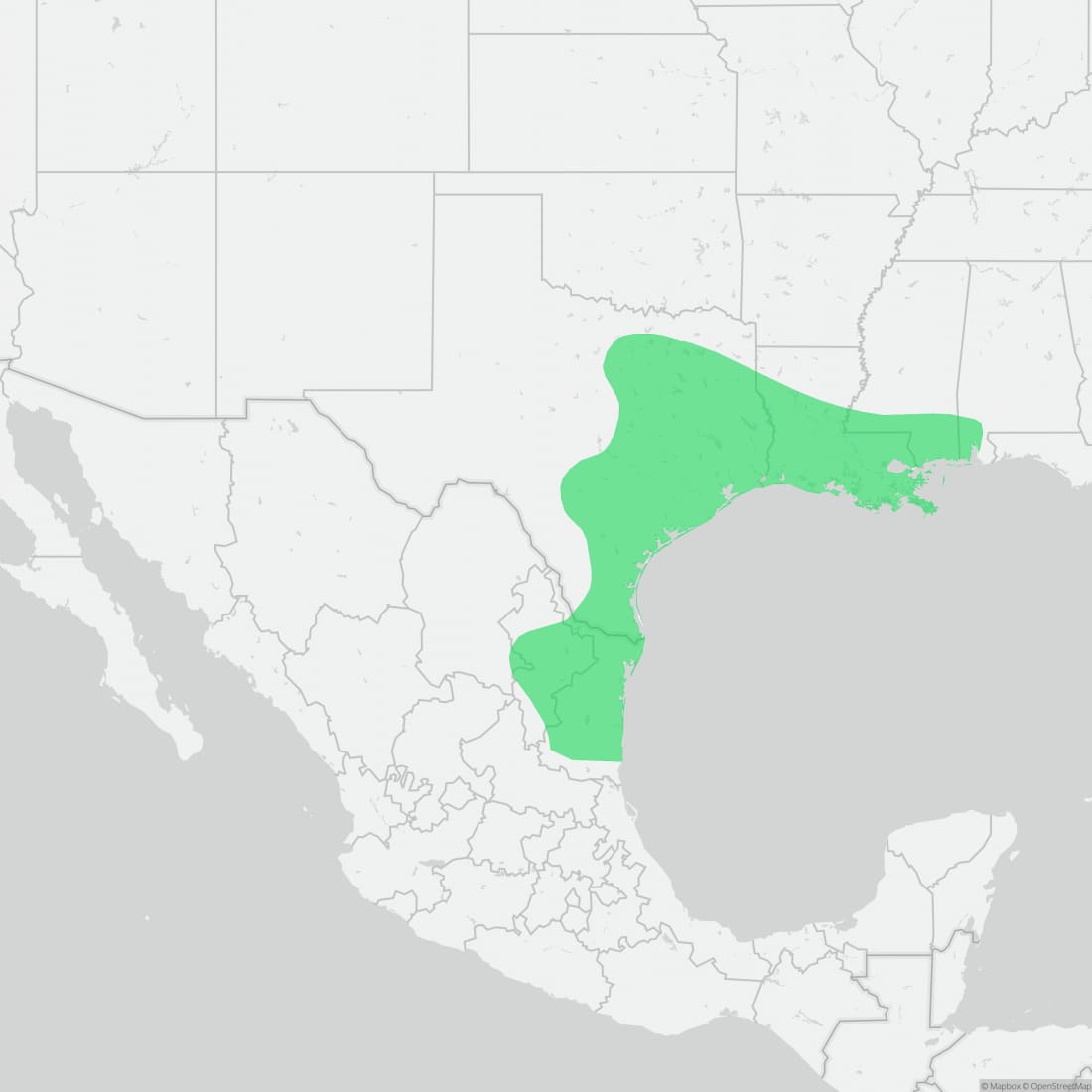
Approximate range. © Mapbox © OpenStreetMap