Swamp Rabbit
Sylvilagus aquaticus
S. aquaticus is one of the largest cottontails. They have dark brown or blackish fur with a white underside. The ears are relatively short, and the tail is dark brown or…
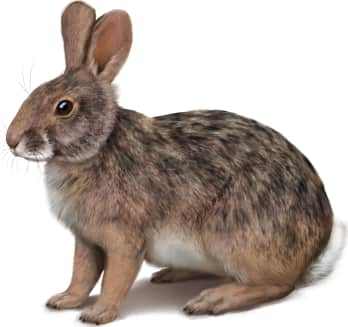
How to identify
S. aquaticus is one of the largest cottontails. They have dark brown or blackish fur with a white underside. The ears are relatively short, and the tail is dark brown or blackish on top and grayish underneath. They are strong swimmers, a key adaptation to their wetland habitat.
Range
S. aquaticus is found in the southeastern United States, primarily in areas with abundant wetlands, including coastal plains, river floodplains, and swamps. Its range extends from eastern Texas and Oklahoma eastward to South Carolina and northward to southern Illinois and Indiana.
Habitat
S. aquaticus inhabits swamps, bottomland hardwood forests, and other wetland areas. They are often found near rivers, streams, and bayous. They are well-adapted to semi-aquatic environments and are known to take refuge in water to escape predators.
Similar species
S. floridanus (Eastern Cottontail) can overlap in range, but S. aquaticus is larger, darker, and prefers wetter habitats. The darker tail and larger size are helpful distinguishing features.
Name and etymology
Genus
Sylvilagus
Latin for forest (silva) and Greek for hare (lagos_
Origin
Sources
- Palmer, Index Generum Mammalium (1904) ↗
Palmer, T. S. 1904. Index Generum Mammalium: a list of the genera and families of mammals. North American Fauna 23. Government Printing Office, Washington. https://doi.org/10.5962/bhl.title.39809
Species epithet
aquaticus
Latin for found in water
Origin
Sources
- Wikipedia: Sylvilagus aquaticus ↗
“Sylvilagus aquaticus.” Wikipedia. https://en.wikipedia.org/wiki/Swamp_rabbit
Explore more names in the etymology index.
At a glance
Range
S. aquaticus is found in the southeastern United States, primarily in areas with abundant wetlands, including coastal plains,…
Habitat
S. aquaticus inhabits swamps, bottomland hardwood forests, and other wetland areas. They are often found near rivers, streams…
Guide
Mammals of North America
Range map
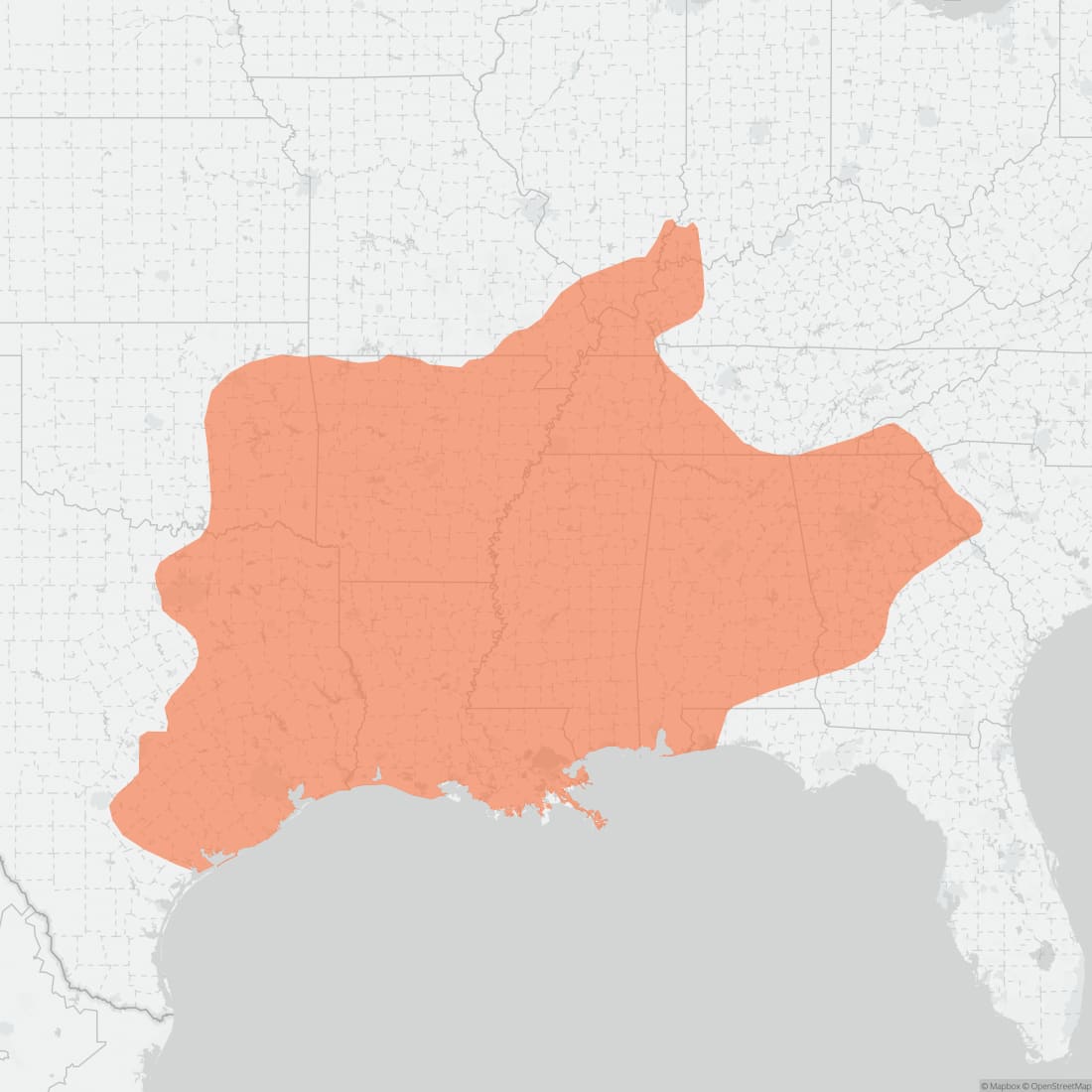
Approximate range. © Mapbox © OpenStreetMap