Idaho Giant Salamander
Dicamptodon aterrimus
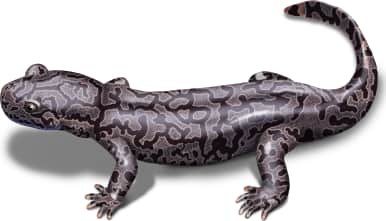
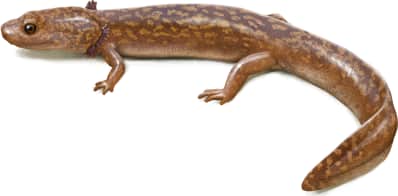
Dorsum is black or brown with bronze spotting. Body heavy overall with proportionally large head and powerful legs. Total length can be as small as 3.5 inches and as larg…
How to identify
Dorsum is black or brown with bronze spotting. Body heavy overall with proportionally large head and powerful legs. Total length can be as small as 3.5 inches and as large as 8 inches. Males and females usually breed in water sources including lakes and streams. The female lays large, elongated eggs in water under rocks, logs, or in cracks in rocks. Clutches range from 135-200 in size. Females protect the eggs until they have hatched in the spring. Larvae exhibit small gills and a fin protruding from posterior legs.
Range
Northern Idaho and a small area in western Montana along border with Idaho.
Habitat
The only salamander that inhabits streams in Montana. Also prefers to stay in humid woodlands under bark, rocks, or logs close to streams or lakes. Has been known to adapt well to natural disturbances including landslides, increasing in population in water sources where landslide sediment had been deposited. Adults stay hidden under natural protection and are not commonly found in open spaces.
Variations
Some populations observed to have no spotting mid dorsally. There are also some adults that still exhibit gills from the larval stage. These adults usually are smaller than those who have lost their gills. Larvae that live in some Montana ponds know to have a dorsal fin protruding from in front of rear legs instead of behind them like most other populations.
Similar species
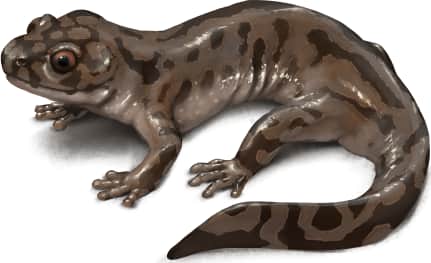
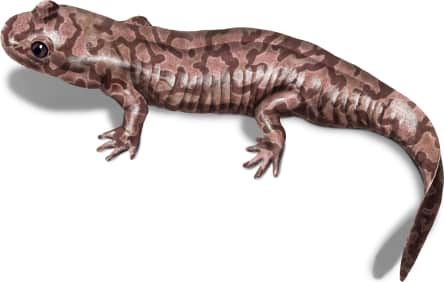
Coastal Giant Salamander - Dicamptodon tenebrosus California Giant Salamander - Dicamptodon ensatus Cope's Giant Salamander - Dicamptodon copei
Name and etymology
Genus
Dicamptodon
Greek for two (di) curved (kamptos) teeth (odon).
Origin
Sources
- Strauch, 1870. Mem. Acad. Sci. St. Petersburg, Ser. 7, Vol. 16, No. 4, p. 68
Dicamptodon. Strauch, 1870 - Mem. Acad. Sci. St. Petersburg, Ser. 7, Vol. 16, No. 4, p. 68
Species epithet
aterrimus
Latin for blackest.
Origin
Sources
- (Cope, 1867). Proc. Acad. Nat. Sci. Philadelphia, Vol. 19, 2nd Series, p. 201 ↗
Dicamptodon aterrimus. (Cope, 1867) - Proc. Acad. Nat. Sci. Philadelphia, Vol. 19, 2nd Series, p. 201
Explore more names in the etymology index.
At a glance
Size
170 to 250 mm
Range
Northern Idaho and a small area in western Montana along border with Idaho.
Habitat
The only salamander that inhabits streams in Montana. Also prefers to stay in humid woodlands under bark, rocks, or logs clos…
Range map
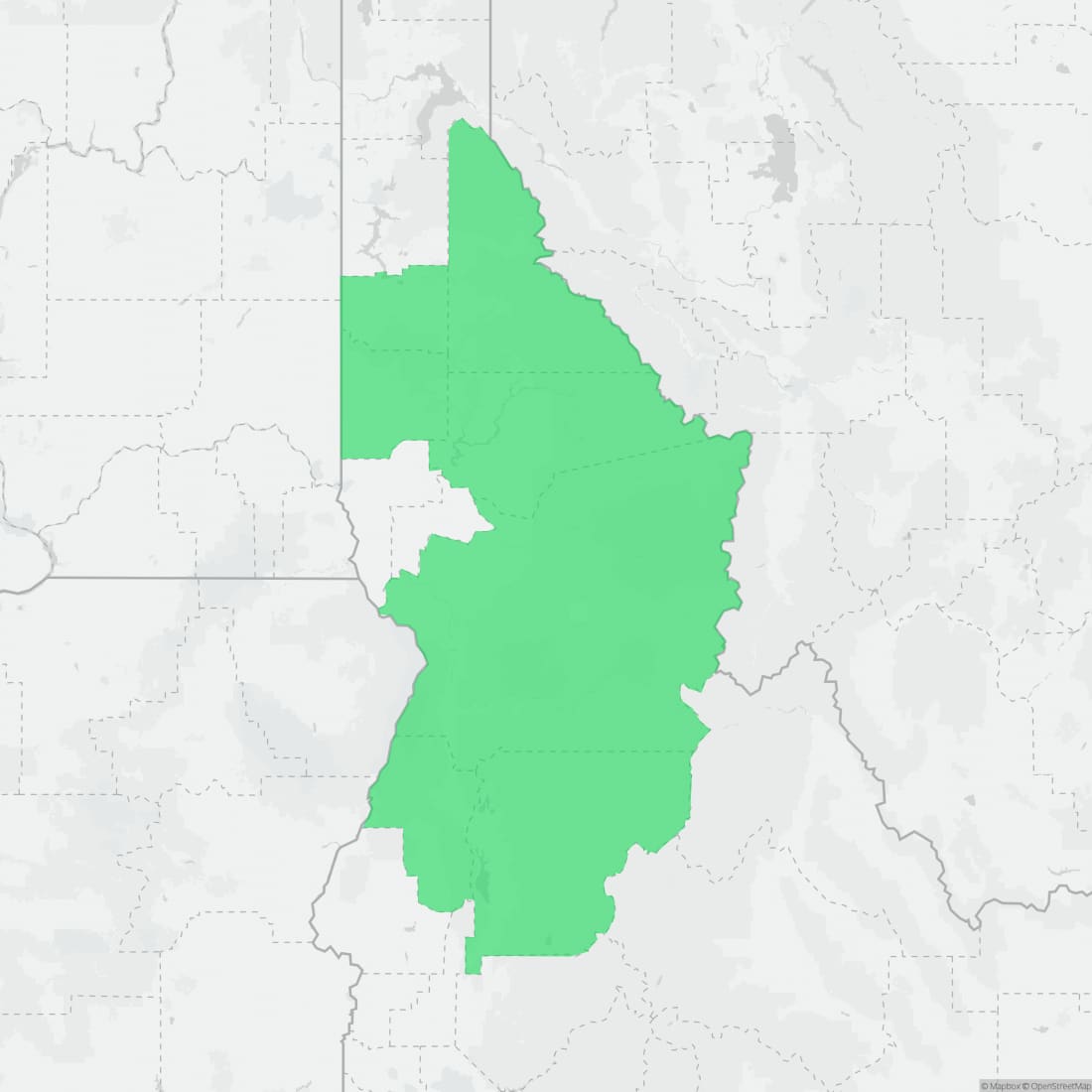
Approximate range. © Mapbox © OpenStreetMap