Long-nosed Snake
Rhinocheilus lecontei
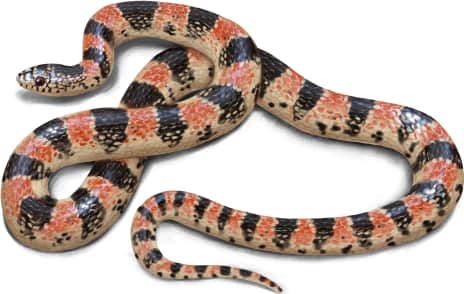
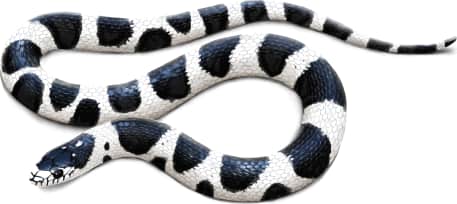
Distinguishable pointed snout longer than lower jaw. Dorsum is white with red and black rings; rings do not extend to underside which is either yellow or white. Body is s…
How to identify
Distinguishable pointed snout longer than lower jaw. Dorsum is white with red and black rings; rings do not extend to underside which is either yellow or white. Body is smooth in texture and appears slender. Can range anywhere from 16 - 60 total inches long (40 - 152 cm). Clutches are laid from June to August and usually contain 4 to 11 eggs. Some females lay 2 clutches per year. Shakes body and vibrates tail when feeling threatened; can also discharge blood and cloacal fluids.
Range
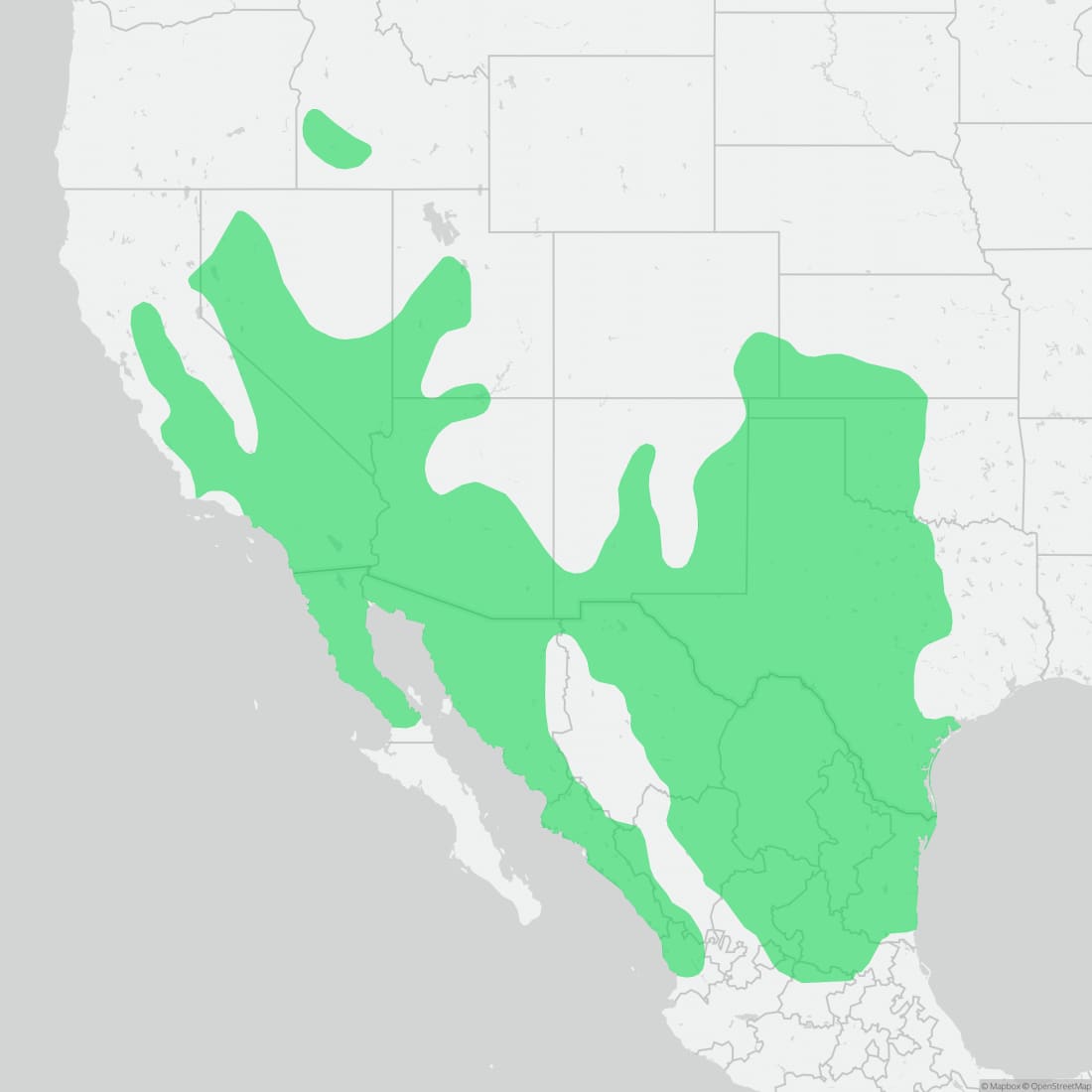
West and central United States and Mexico from northern California, southern Idaho, southeastern Colorado, and southwest Kansas south to Tamaulipas, San Luis Potosi, Jalisco, and central Baja California.
Habitat
Can be found in dry prairies, shrubland, deserts, and grasslands. Stays underground or under natural cover during the day; females will also lay their eggs in these areas. Varied diet includes small mammals, small snakes, lizards, and bird and lizard eggs.
Variations
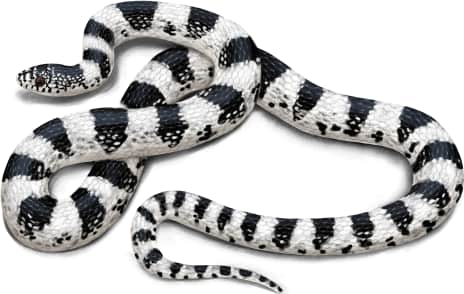
Some individuals do not exhibit any red coloring. They used to be considered subspecies *Rhinocheilus lecontei clarus*.
Similar species
Name and etymology
Genus
Rhinocheilus
Greek for lip (cheilo) nose (rhinos).
Origin
Sources
- Baird and Girard, 1853. Cat. N. Amer. Rept., Pt. 1, p. 120 ↗
Rhinocheilus. Baird and Girard, 1853 - Cat. N. Amer. Rept., Pt. 1, p. 120
Species epithet
lecontei
Honoring John L. Le Conte.
Origin
Honors
Sources
- Baird and Girard, 1853. Cat. N. Amer. Rept., Pt. 1, p. 120 ↗
Rhinocheilus. Baird and Girard, 1853 - Cat. N. Amer. Rept., Pt. 1, p. 120
Explore more names in the etymology index.
More illustrations
Clarus phase
At a glance
Range
West and central United States and Mexico from northern California, southern Idaho, southeastern Colorado, and southwest Kans…
Habitat
Can be found in dry prairies, shrubland, deserts, and grasslands. Stays underground or under natural cover during the day; fe…
Guide
Reptiles and Amphibians of North America
Range map
Approximate range. © Mapbox © OpenStreetMap