
Antelope Jackrabbit
Lepus alleni
L. alleni is the largest jackrabbit species. They have grayish-brown fur with a pale underside. The most striking feature is their exceptionally long ears, which are prop…
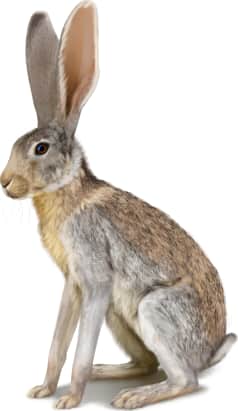
How to identify
L. alleni is the largest jackrabbit species. They have grayish-brown fur with a pale underside. The most striking feature is their exceptionally long ears, which are proportionally larger than those of any other North American hare. The tail is relatively short and white.
Range
L. alleni has a restricted distribution in the southwestern United States (southern Arizona and southwestern New Mexico) and northern Mexico.
Habitat
L. alleni inhabits desert grasslands, mesquite scrub, and open woodlands in arid and semi-arid regions. They prefer areas with sparse vegetation and open spaces.
Similar species
L. californicus (Black-tailed Jackrabbit) overlaps in parts of its range. L. alleni is easily distinguished by its significantly larger ears and lack of a black stripe on the tail.
Name and etymology
Genus
Lepus
Latin for hare
Origin
Sources
- Palmer, Index Generum Mammalium (1904) ↗
Palmer, T. S. 1904. Index Generum Mammalium: a list of the genera and families of mammals. North American Fauna 23. Government Printing Office, Washington. https://doi.org/10.5962/bhl.title.39809
Species epithet
alleni
Honoring American naturalist and zoologist Charles Allen
Origin
Honors
Sources
- Wikipedia: Lepus alleni ↗
“Lepus alleni.” Wikipedia. https://en.wikipedia.org/wiki/Antelope_jackrabbit
Explore more names in the etymology index.
At a glance
Range
L. alleni has a restricted distribution in the southwestern United States (southern Arizona and southwestern New Mexico) and…
Habitat
L. alleni inhabits desert grasslands, mesquite scrub, and open woodlands in arid and semi-arid regions. They prefer areas wit…
Guide
Mammals of North America
Range map
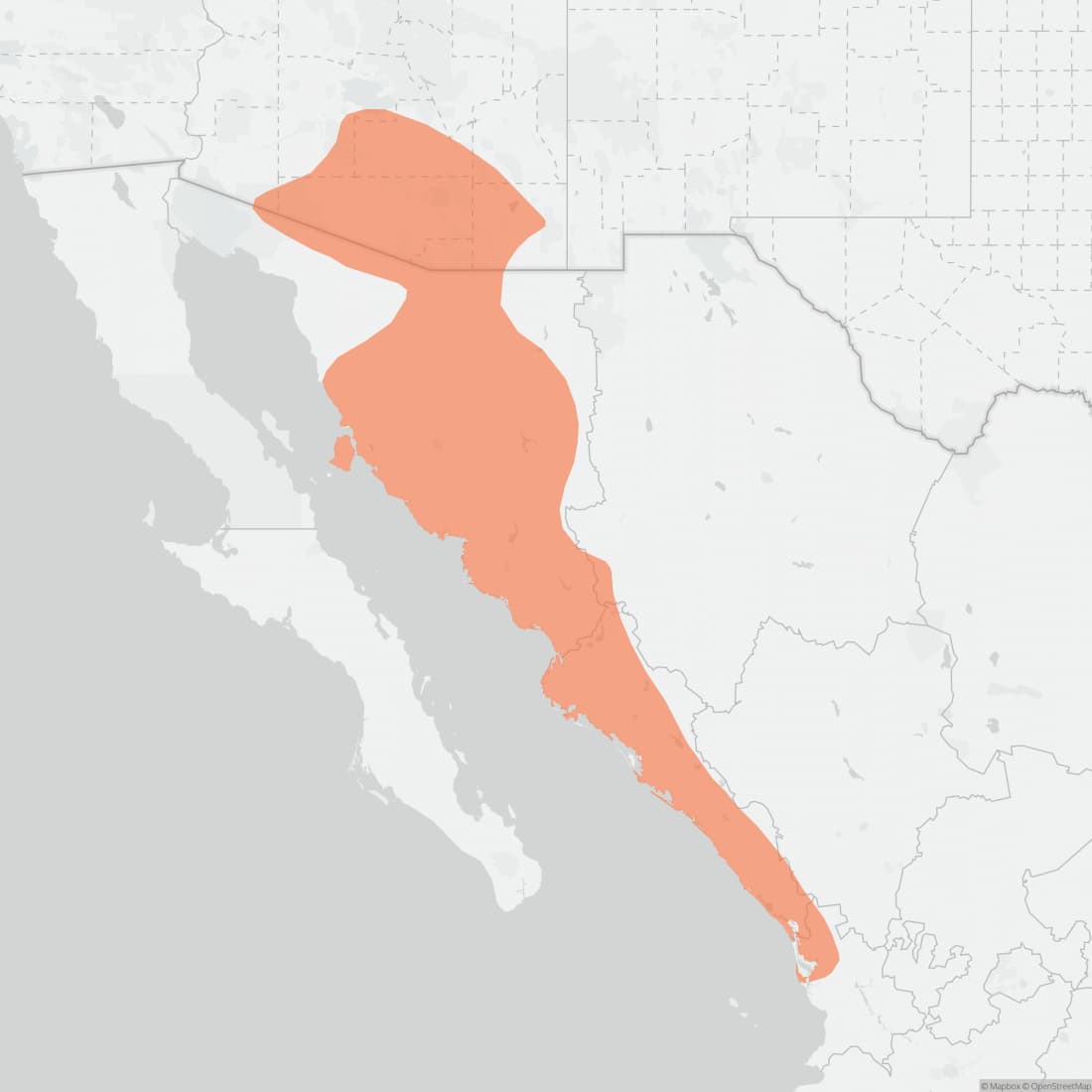
Approximate range. © Mapbox © OpenStreetMap