Timber Rattlesnake
Crotalus horridus
The adult of this species has a length that ranges from 36-60 inches. The Timber rattlesnake or Crotalus horridus has keeled dorsal scales which are arranged in 21-26 row…
How to identify
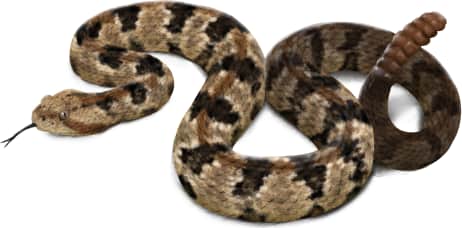
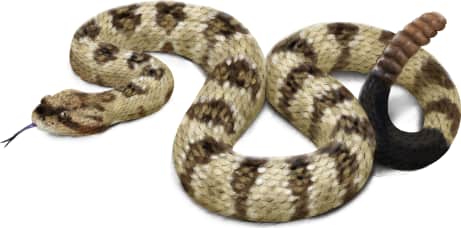
The adult of this species has a length that ranges from 36-60 inches. The Timber rattlesnake or Crotalus horridus has keeled dorsal scales which are arranged in 21-26 rows at mid-body. The make has 158-177 ventral scales while their female counterparts have 163-183 scales. The dorsal coloration of this species is a patterned dark-brown or black crossbands which lies on a yellowish-brown or grayish background. The crossbands are irregular at the edges and shaped in a zig-zag V or M. There's a presence of rust-colored vetebral stripe on the body of Crotalus horridus.
Range
This species is endemic to eastern North America. It ranges from Southern Minnesota, South to East Texas and North Florida, eastern Kansas, lowo and central Wisconsin, Georgia, the Carolinas, Western Virginia, New England and Pennsylvania.
Habitat
This species dwell on mountainous or hilly forests, swamps, pine floodplains, hardwood or pure forests, lowlands cane thickets. Females are oviparous and reproduce two to three eggs every 2-3 years. A single litter can have about 3-13 eggs. The young ones look like the adults, except that they possess only button on their tail and may have a stripe from eyes to jaws.
Similar species
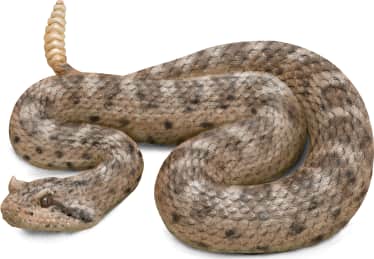
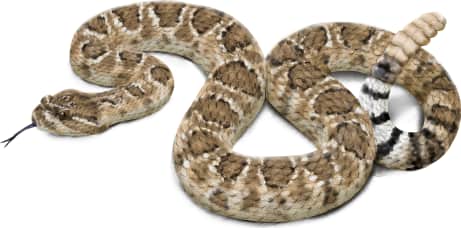
Crotalus Cerastes or sidewinder has raised supraocular scales above its eyes and also has the ability to display different coloration depending on the temperature. This varying color may be buff, cream or yellowish-brown. Mojave rattlesnake or Crotalus scutulatus has a green hue in its skin and a diamond pattern along its back. This species has enlarged scales on the top of its head between the supraoculars. Western black-tailed rattlesnake or Crotalus molossus has a distinguishing feature which is its entirely black tail scales. Presence of black band which appears across its eyes and extends diagonally down to the corners of its mouth.
Name and etymology
Genus
Crotalus
Greek for rattle (krotalon).
Origin
Sources
- Linnaeus, 1758. Syst. Nat., 10th ed., Vol. 1, p. 214 ↗
Crotalus. Linnaeus, 1758 - Syst. Nat., 10th ed., Vol. 1, p. 214
Species epithet
horridus
Latin for dreadful, referencing the snake's venom.
Origin
Sources
- Linnaeus, 1758. Syst. Nat., 10th ed., Vol. 1, p. 214 ↗
Crotalus. Linnaeus, 1758 - Syst. Nat., 10th ed., Vol. 1, p. 214
Explore more names in the etymology index.
At a glance
Size
90 to 152 cm
Range
This species is endemic to eastern North America. It ranges from Southern Minnesota, South to East Texas and North Florida, e…
Habitat
This species dwell on mountainous or hilly forests, swamps, pine floodplains, hardwood or pure forests, lowlands cane thicket…
Range map
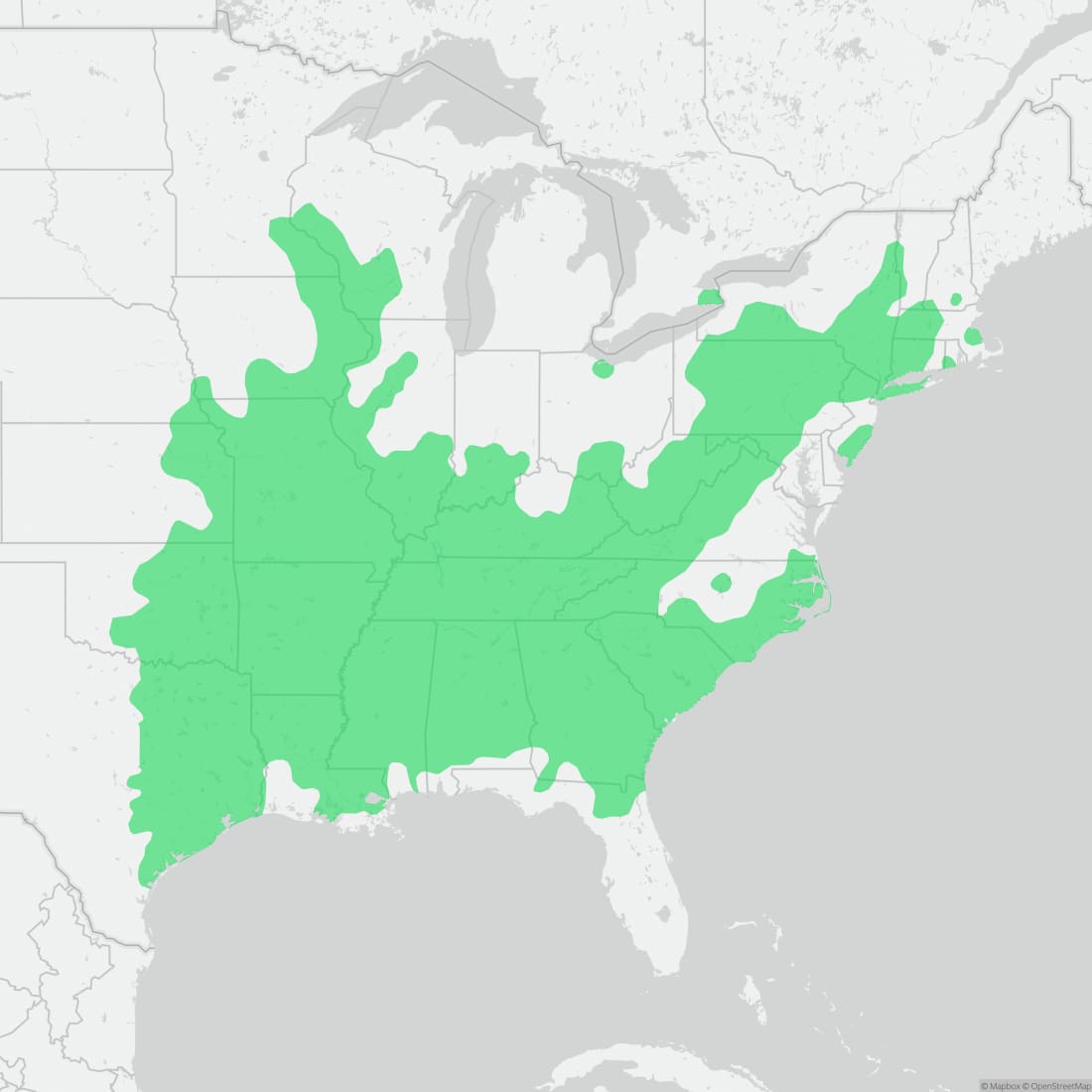
Approximate range. © Mapbox © OpenStreetMap