Junaluska Salamander
Eurycea junaluska
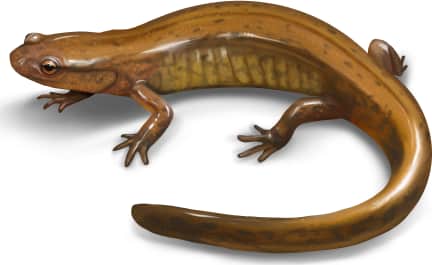
Comparable in appearance to two-lined salamanders. Dorsum is either olive or brown; brown markings down back. Tail is short and limbs are elongated. Females lay eggs by a…
How to identify
Comparable in appearance to two-lined salamanders. Dorsum is either olive or brown; brown markings down back. Tail is short and limbs are elongated. Females lay eggs by attaching them under rocks in streams; stay with eggs for protection. Larvae hatch with external gills; larval stage lasts for two to three years.
Range
An area of the Blue Ridge Mountains from southwestern North Carolina to southeastern Tennessee.
Habitat
During cold seasons, inhabits streams and the areas immediately surrounding them. During warmer months, spends time in areas around water sources like forests. Species is hard to find in North Carolina due to small population sizes.
Variations
Some data suggests that the larval stage can last as short as one year.
Similar species
Name and etymology
Genus
Eurycea
Probably honoring Eurydice the wife of Orpheus in Greek mythology. Although Rafinesque, who named the genus, only wrote "mythological"
Origin
Honors
Sources
- Rafinesque, 1822. Kentucky Gazette, Lexington, N. S., Vol. 1, No. 9, Feb. 28, p. 3, column 6
Eurycea. Rafinesque, 1822 - Kentucky Gazette, Lexington, N. S., Vol. 1, No. 9, Feb. 28, p. 3, column 6
Species epithet
junaluska
Honoroing Cherokee Junaluska.
Sources
- Sever, Dundee and Sullivan, 1976. Herpetologica, Vol. 32, p. 26
Eurycea junaluska. Sever, Dundee and Sullivan, 1976 - Herpetologica, Vol. 32, p. 26
Explore more names in the etymology index.
At a glance
Size
34 to 49 mm
Range
An area of the Blue Ridge Mountains from southwestern North Carolina to southeastern Tennessee.
Habitat
During cold seasons, inhabits streams and the areas immediately surrounding them. During warmer months, spends time in areas…
Range map
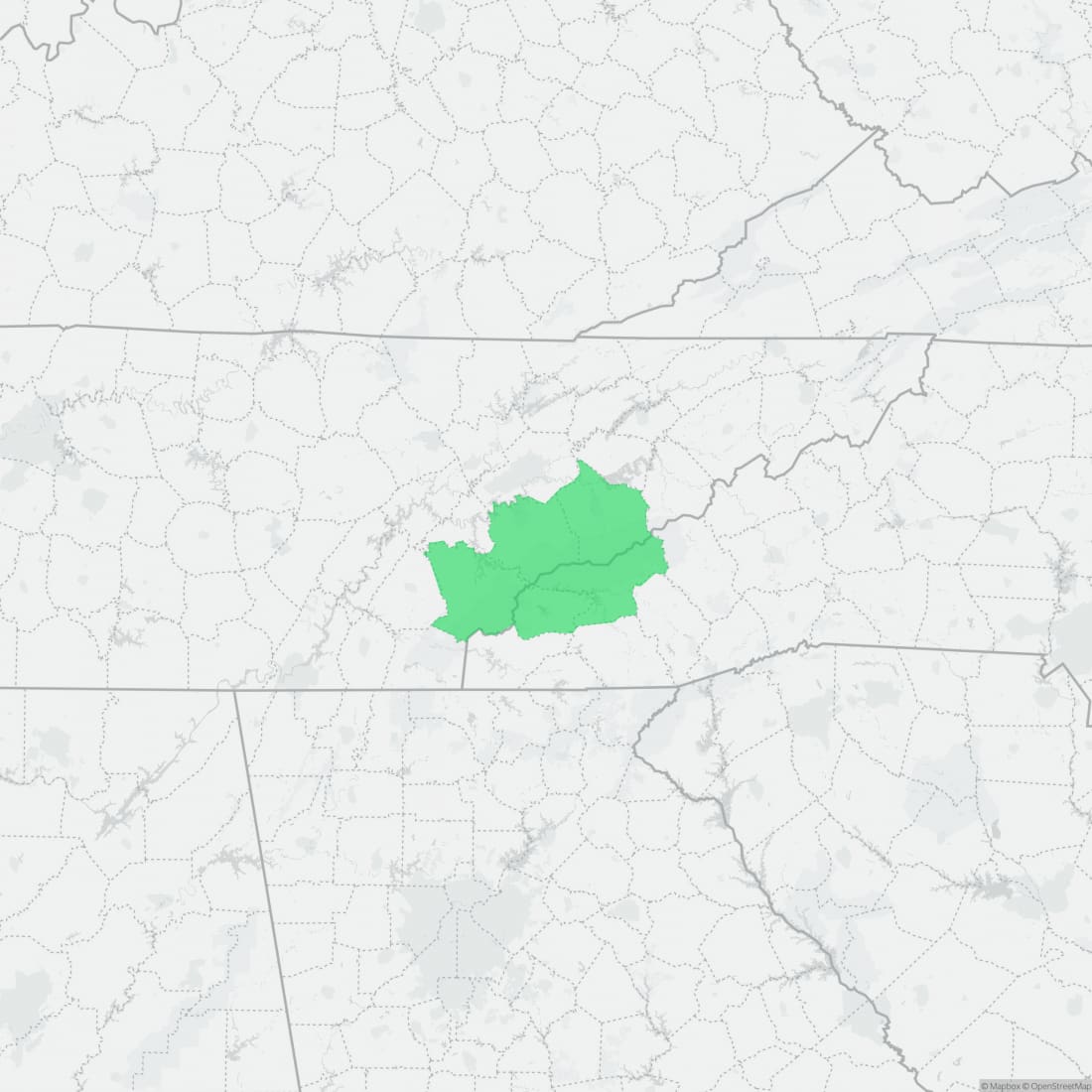
Approximate range. © Mapbox © OpenStreetMap