Blue Spiny Lizard
Sceloporus cyanogenys
This species of lizard is the largest of spiny lizards in Texas. S. cyanogenys can grow total lengths of 5 – 14 in. Its coloration varies with sex; males have a blue thro…
How to identify
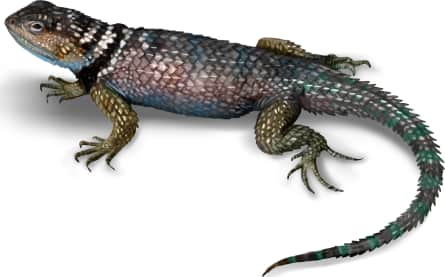
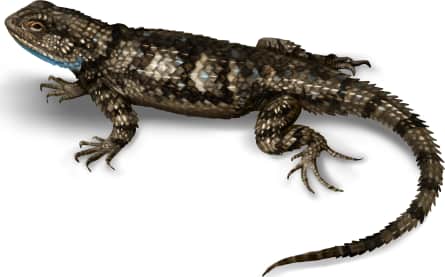
This species of lizard is the largest of spiny lizards in Texas. S. cyanogenys can grow total lengths of 5 – 14 in. Its coloration varies with sex; males have a blue throat and chin, and blue belly patches. The males also have metallic green or blue pigmentation on their backs and white flecks on their tails while the females and juveniles lack the blue-green coloration and belly patches. Although, male and female both have a dark band that runs across the neck, bordered by a stripe of white (or lighter) color. Both sexes also have head and limbs that are dark brown. The lizard has a long tail that is patterned with a vague band of a dusty color.
Range
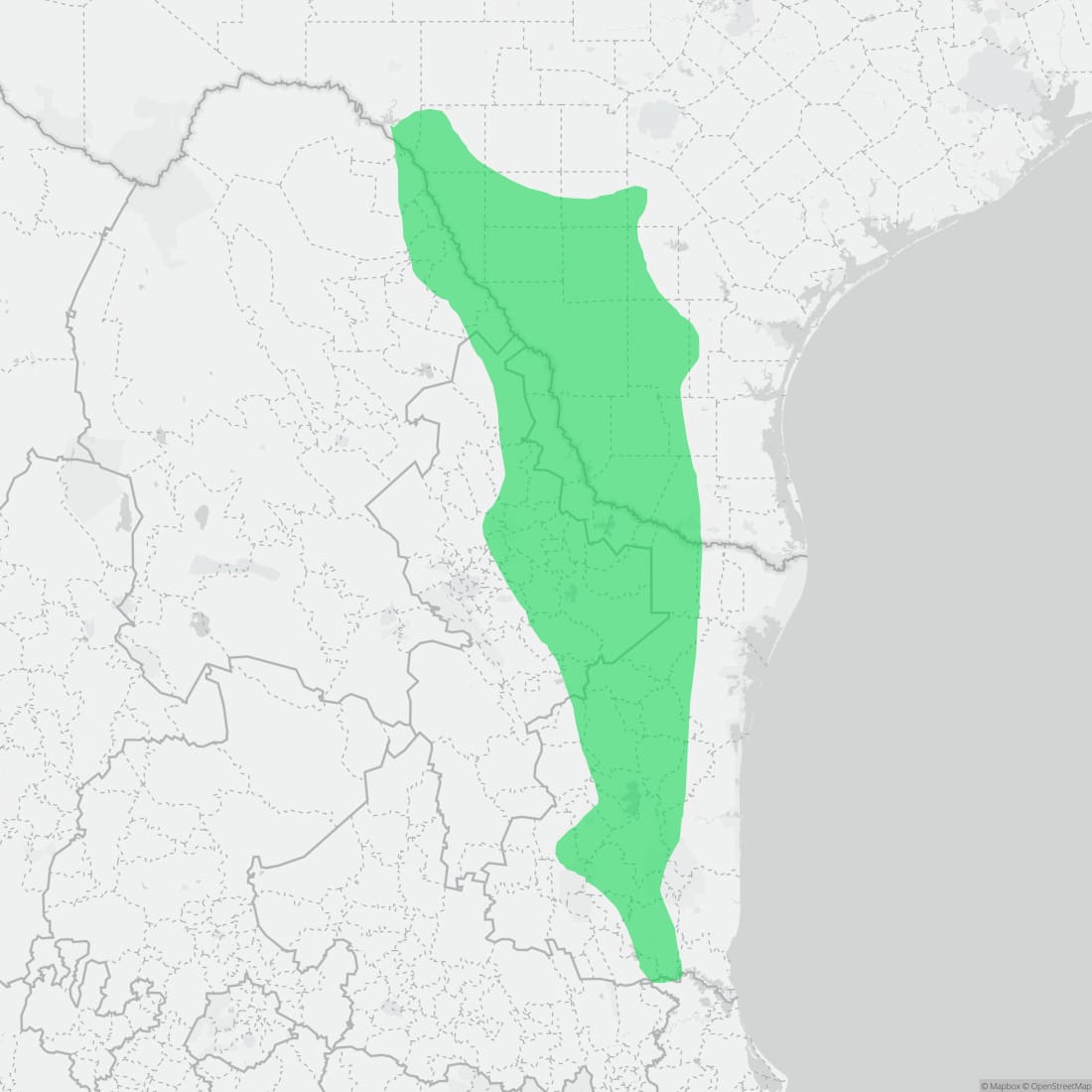
The S. cyanogenys can be found near Falcon Dam (north of Roma in Texas) and further north in Del Rio Texas. They can be found in several disjunctive populations in northeastern Mexico including north Coahuila, Nuevo Leon, southern Tamaulipas, Veracruz, and northern Yucatan Peninsula and central Chiapas.
Habitat
These lizards occur in arid or semi-arid climates with rocky terrains where then can be seen on boulders, cliffs, rock piles and manmade structures like bridges, abandoned houses or rubble. They shelter themselves underground and in rock crevices. They feed on small invertebrates like roaches, caterpillars, crickets, and worms. The lizard is live-bearing and have their hatchlings from February to June with clutches of up to 18.
Similar species
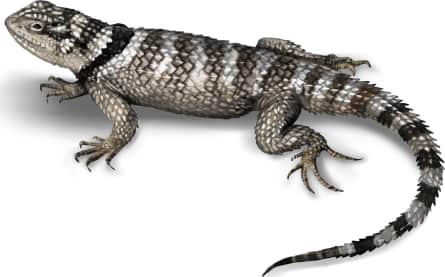
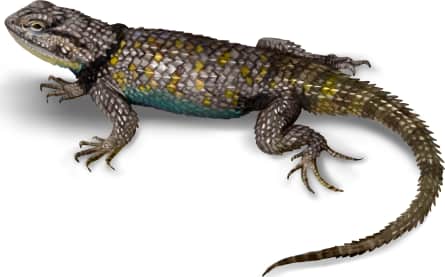
Crevice Spiny Lizard or Sceloporus poinsettia has similar basic structures and features (such as the band around the neck). However, while this lizard is smaller, it also has a distinct grey coloration and scales with a unique spiny texture. The Minor Lizard or Sceloporus minor is a quite colorful relative of the S. cyanogenys with a range of colorful patterns of orange, green or yellow dorsal patches to an electric blue or cyan-green general pigmentation. Crevice Swift or Sceloporus torquatus has very similar pigmentation and scale texture. But with closer examination, it is easier to see the difference in the patterns of color. The S. torquatus lacks the white flecks that appear on S. cyanogenys.
Name and etymology
Genus
Sceloporus
Greek for leg (skelos) pores (porus), referencing femoral pores on back legs.
Origin
Sources
- Wiegmann, 1828. Isis von Oken, Vol. 21, p. 369 ↗
Sceloporus. Wiegmann, 1828 - Isis von Oken, Vol. 21, p. 369
Species epithet
cyanogenys
latin for blue (kyanos) cheek (genys).
Origin
Sources
- Cope, 1885. Proc. Amer. Philos. Soc., Vol. 22, p. 402 ↗
Sceloporus serrifer cyanogenys. Cope, 1885 - Proc. Amer. Philos. Soc., Vol. 22, p. 402
Explore more names in the etymology index.
At a glance
Range
The S. cyanogenys can be found near Falcon Dam (north of Roma in Texas) and further north in Del Rio Texas. They can be found…
Habitat
These lizards occur in arid or semi-arid climates with rocky terrains where then can be seen on boulders, cliffs, rock piles…
Guide
Reptiles and Amphibians of North America
Range map
Approximate range. © Mapbox © OpenStreetMap