Florida Cottonmouth
Agkistrodon conanti
A venomous pitviper that averages 20-48 inches and has a thick, heavy body. They have a triangular head with a sharp-edged snout and scales over the eyes that stick out,…
How to identify
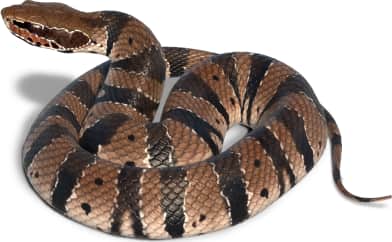
A venomous pitviper that averages 20-48 inches and has a thick, heavy body. They have a triangular head with a sharp-edged snout and scales over the eyes that stick out, creating a furrowed brow appearance. They are named for the bright white skin inside their mouth. Their body is brown with dark brown jagged, irregular bands and often spots between the bands. They have a distinct horizontal dark brown bar behind each eye, which is bordered by a thin pale stripe above and a thicker pale stripe below. They have 2 vertical stripes on the tip of the snout. Their patterning is generally darker on the distal third of their body. They have elliptical pupils.
Range
Ranges throughout Florida, southern Georgia, southern Alabama, and southeastern Mississippi.
Habitat
This species is found in wetland habitats, near all types of natural or manmade water bodies. It will rarely travel far from water. They like to hide in thick vegetation around water.
Variations
Some are very dark all over with subtle patterning, while others are vibrantly patterned. The patterning on their face is almost always distinct. They can have a reddish overall hue.
Similar species
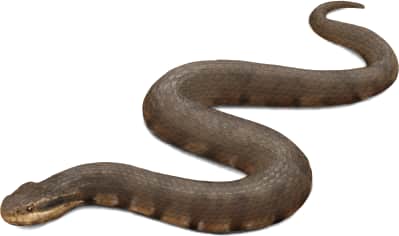
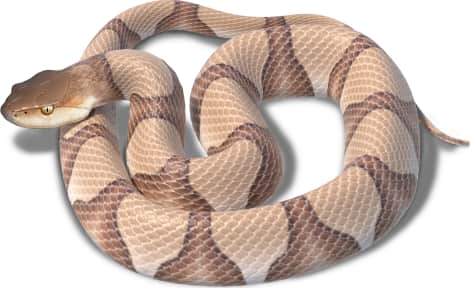
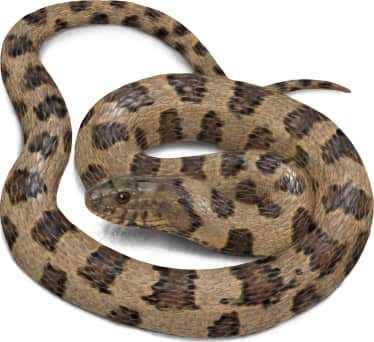
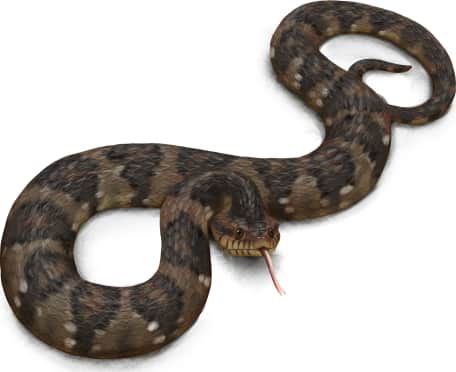
Most likely to be mistaken for the northern cottonmouth (*Agkistrodon piscivorus*) or eastern copperhead (*Agkistrodon contortrix*). It could also be confused with the nonvenomous banded watersnake (*Nerodia fasciata*) or brown watersnake (*Nerodia taxispilota*).
Name and etymology
Genus
Agkistrodon
Greek for fishhook (ankistron) tooth (odontos), referencing curved fangs.
Origin
Sources
- Palisot de Beauvois, 1799. Trans. Amer. Philos. Soc., Vol. 4, p. 381 ↗
Agkistrodon. Palisot de Beauvois, 1799 - Trans. Amer. Philos. Soc., Vol. 4, p. 381
Species epithet
conanti
Honoring Roger Conant.
Origin
Honors
Sources
- Rossman, 1958. Herpetologica, Vol. 14, p. 158
Desmognathus conanti. Rossman, 1958 - Herpetologica, Vol. 14, p. 158
- Gloyd, 1969. Proc. Biol. Soc. Washington, Vol. 82, p. 226 ↗
Agkistrodon piscivorus conanti. Gloyd, 1969 - Proc. Biol. Soc. Washington, Vol. 82, p. 226
Explore more names in the etymology index.
More illustrations
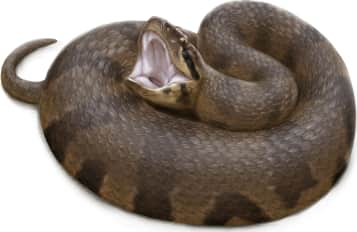
Cottonmouth showing it's "cotton" mouth
At a glance
Range
Ranges throughout Florida, southern Georgia, southern Alabama, and southeastern Mississippi.
Habitat
This species is found in wetland habitats, near all types of natural or manmade water bodies. It will rarely travel far from…
Guide
Reptiles and Amphibians of North America
Range map
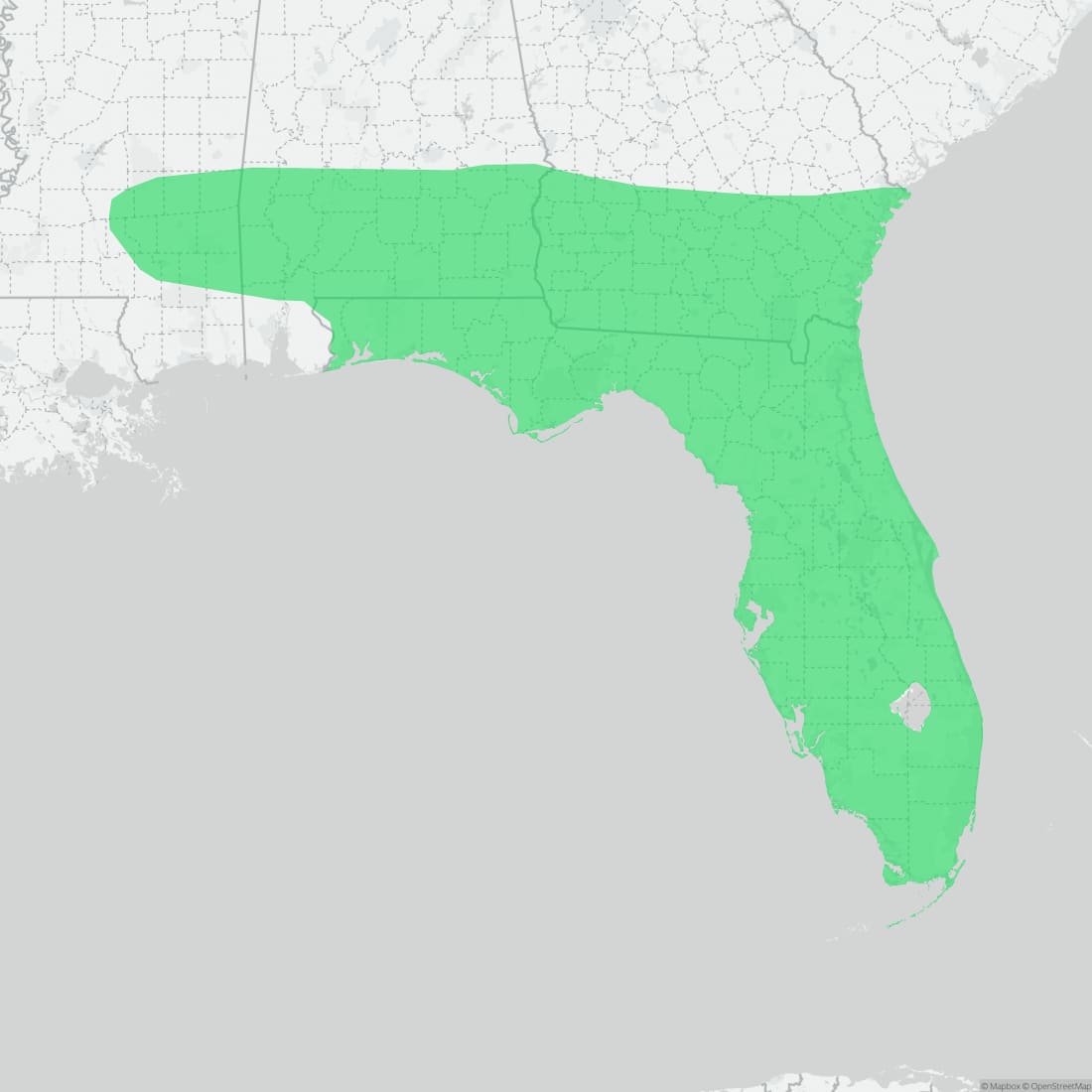
Approximate range. © Mapbox © OpenStreetMap