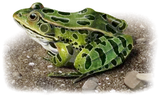
Atlantic Coast Leopard Frog
Lithobates kauffeldi
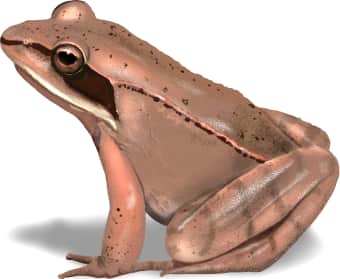
This medium-sized frog averages 2-3.5 inches in length. It has very distinct, cream-colored dorsolateral skin folds, and folds below each eye to the corners of the mouth.…
How to identify
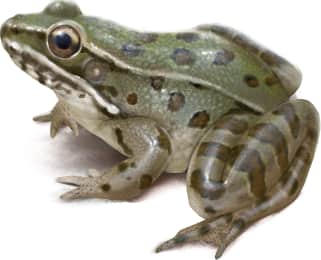
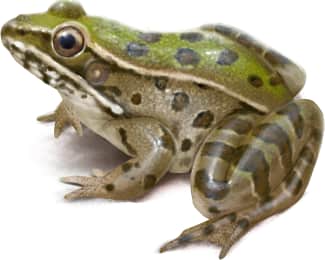
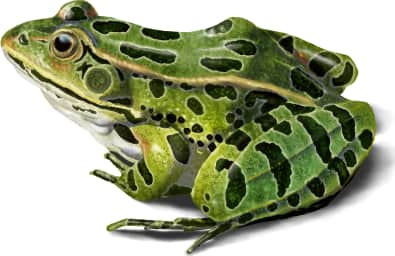
This medium-sized frog averages 2-3.5 inches in length. It has very distinct, cream-colored dorsolateral skin folds, and folds below each eye to the corners of the mouth. It also has a pointed snout and a prominent hip bone hump on its back. It ranges from shades of green to brown with dark irregular spots and bands on its legs. Light speckles adorn the backs of its hind legs.
Range
Small range on the east coast, from southern Connecticut, through New York City and Long Island, northern New Jersey, along the eastern border of Pennsylvania, northern Delaware, and along the coast of the Delaware Bay in New Jersey. It can also be found on the coast of Virginia and North Carolina.
Habitat
This frog prefers large wetland habitats, including marshes, wet meadows, or slow-moving streams. It is often found near clear, shallow water, and vegetation such as cattails, river shrubs, and reeds.
Variations
Aside from individual color variations, this species is also known to change color from day to night, and during different seasons; displaying darker tones at night and lighter tones during the day.
Similar species
Quite similar to the southern leopard frog (*Lithobates sphenocephalus*) and northern leopard frog (*Lithobates pipiens*). It also resembles the wood frog (*Lithobates sylvaticus*).
Name and etymology
Genus
Lithobates
Greek for rock (litho-) climber (bates).
Origin
Sources
- Linnaeus, 1758. Syst. Nat., 10th ed., Vol. 1, p. 210 ↗
Rana. Linnaeus, 1758 - Syst. Nat., 10th ed., Vol. 1, p. 210
Species epithet
kauffeldi
Honoring Carl Kauffeld.
Origin
Honors
Sources
- Wikipedia: Lithobates kauffeldi ↗
“Lithobates kauffeldi.” Wikipedia. https://en.wikipedia.org/wiki/Atlantic_Coast_leopard_frog
Explore more names in the etymology index.
At a glance
Range
Small range on the east coast, from southern Connecticut, through New York City and Long Island, northern New Jersey, along t…
Habitat
This frog prefers large wetland habitats, including marshes, wet meadows, or slow-moving streams. It is often found near clea…
Guide
Reptiles and Amphibians of North America
Range map
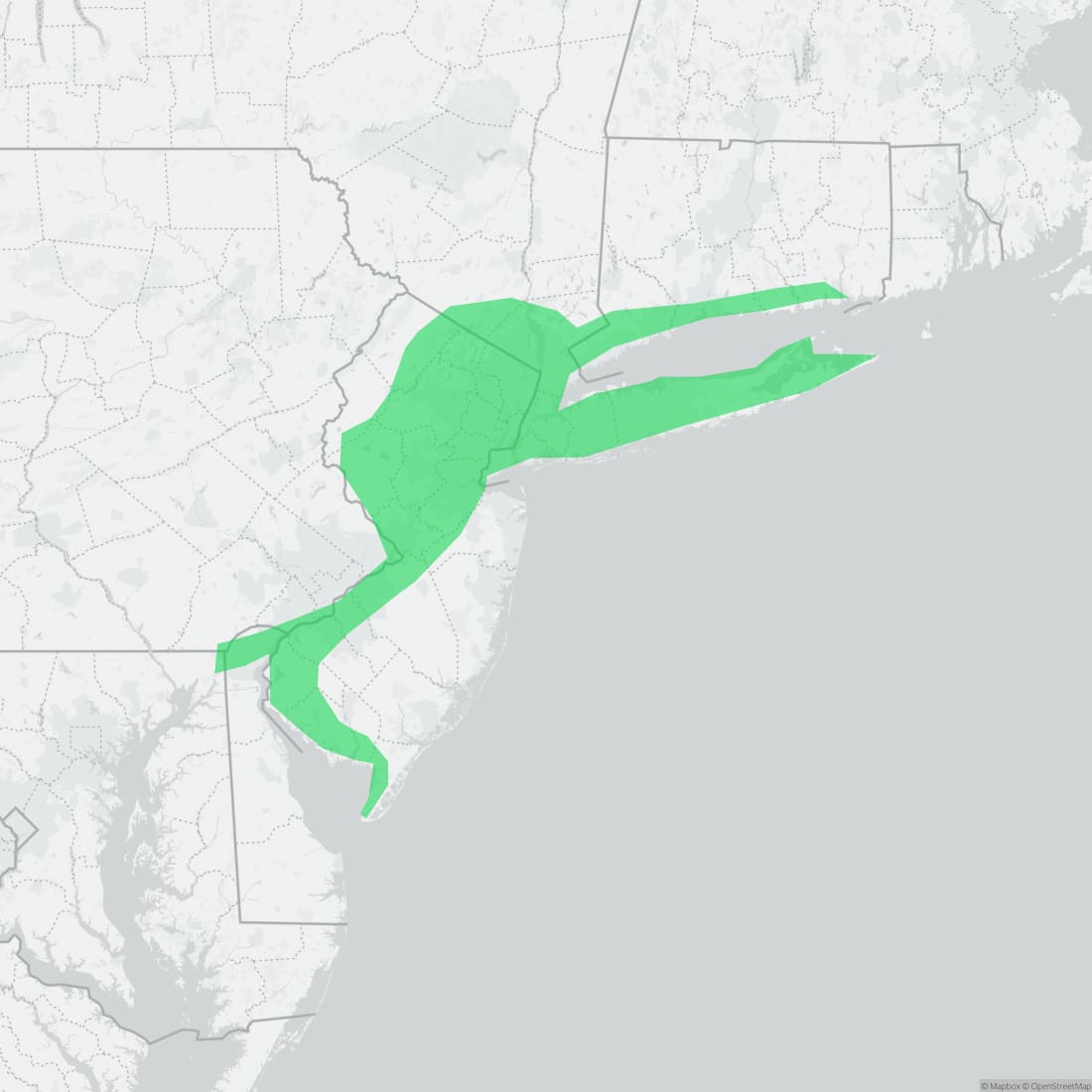
Approximate range. © Mapbox © OpenStreetMap