Jefferson Salamander
Ambystoma jeffersonianum
Jefferson salamander has a long (5.5 – 8.3 inches) and slender body and toes. The dorsal surface is typically brown, dark gray or black with a lighter shade near the hea…
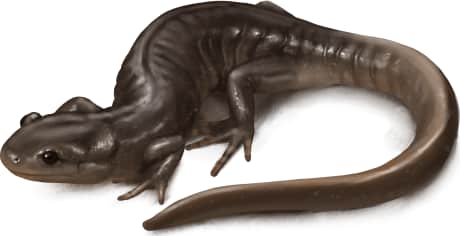
How to identify
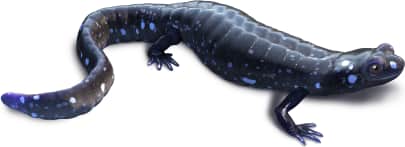
Jefferson salamander has a long (5.5 – 8.3 inches) and slender body and toes. The dorsal surface is typically brown, dark gray or black with a lighter shade near the head and pale blue flecks on the sides. Although the blue flecks may be absent in adults while juvenile salamanders possess more apparent flecks.. Costal grooves on this salamander count up to 12. Sexual dimorphism is apparent with larger males, with longer legs, broader snouts, and lighter colors. The females occur in gray to gray-brown.
Range
This salamander has a wide range from eastern Illinois to southeastern New York through Pennsylvania and eastern and southern Ohio to southern Indiana, and southward to south-central Kentucky, northern Virginia, West Virginia and southwestern England.
Habitat
They can be found in deciduous woodland with swamps, streams, and pools. You can find them in large numbers on river flats where they seek shelter from day underneath logs, bark, leaf litter, and other surfaces. They lay eggs in ponds and sinkholes where the aquatic stage juveniles feed in the stratum near the surface at night. Breeding is triggered by the first spring rains and it occurs in vernal pools. Females then migrate to the ponds to lay eggs in March or early April. Generally, these salamanders feed on insects and a variety of other invertebrates. Larvae feed on zooplankton and graduate to bigger organisms like nematodes, insects, and snails or even small larvae of their kind.
Similar species
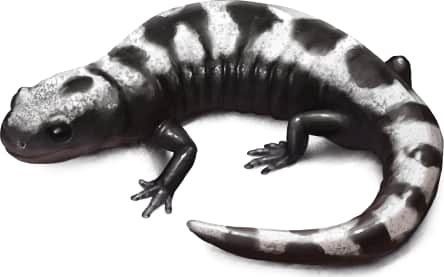
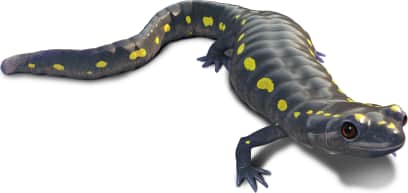
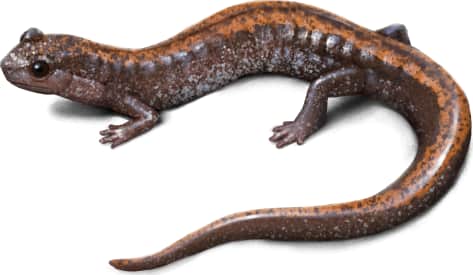
Unisexual Mole Salamander or Ambystoma 'unisexual complex' have prominent costal grooves. They can also be differentiated by their patterns with vivid colors. The blue-spotted salamander or Ambystoma laterale is smaller and slender, but not quite as slender as the Jefferson salamander. The younglings here have yellow blotches that later turn to when they mature. Eastern Red-backed Salamander or Plethodon cinereus is relatively smaller and is especially unique by its red-backed or red-striped polymorphism on a dark ground color. It may not necessarily occur in red but can be yellow-backed, orange-backed, and white-backed.
Name and etymology
Genus
Ambystoma
Greek phrase meaning "to cram into the mouth".
Origin
Sources
- Tschudi, "1838" 1839. Classif. Batr., Mem. Soc. Sci. Nat. Neuchatel, p. 92 ↗
Ambystoma. Tschudi, "1838" 1839 - Classif. Batr., Mem. Soc. Sci. Nat. Neuchatel, p. 92
Species epithet
jeffersonianum
Honoring Jefferson College, Pennsylvania
Origin
Honors
Sources
- (Green, 1827). Contr. Maclurean Lyc., Vol. 1, No. 1, p. 4, pl. 1, fig. 1
Ambystoma jeffersonianum. (Green, 1827) - Contr. Maclurean Lyc., Vol. 1, No. 1, p. 4, pl. 1, fig. 1
Explore more names in the etymology index.
At a glance
Range
This salamander has a wide range from eastern Illinois to southeastern New York through Pennsylvania and eastern and southern…
Habitat
They can be found in deciduous woodland with swamps, streams, and pools. You can find them in large numbers on river flats wh…
Guide
Reptiles and Amphibians of North America
Range map
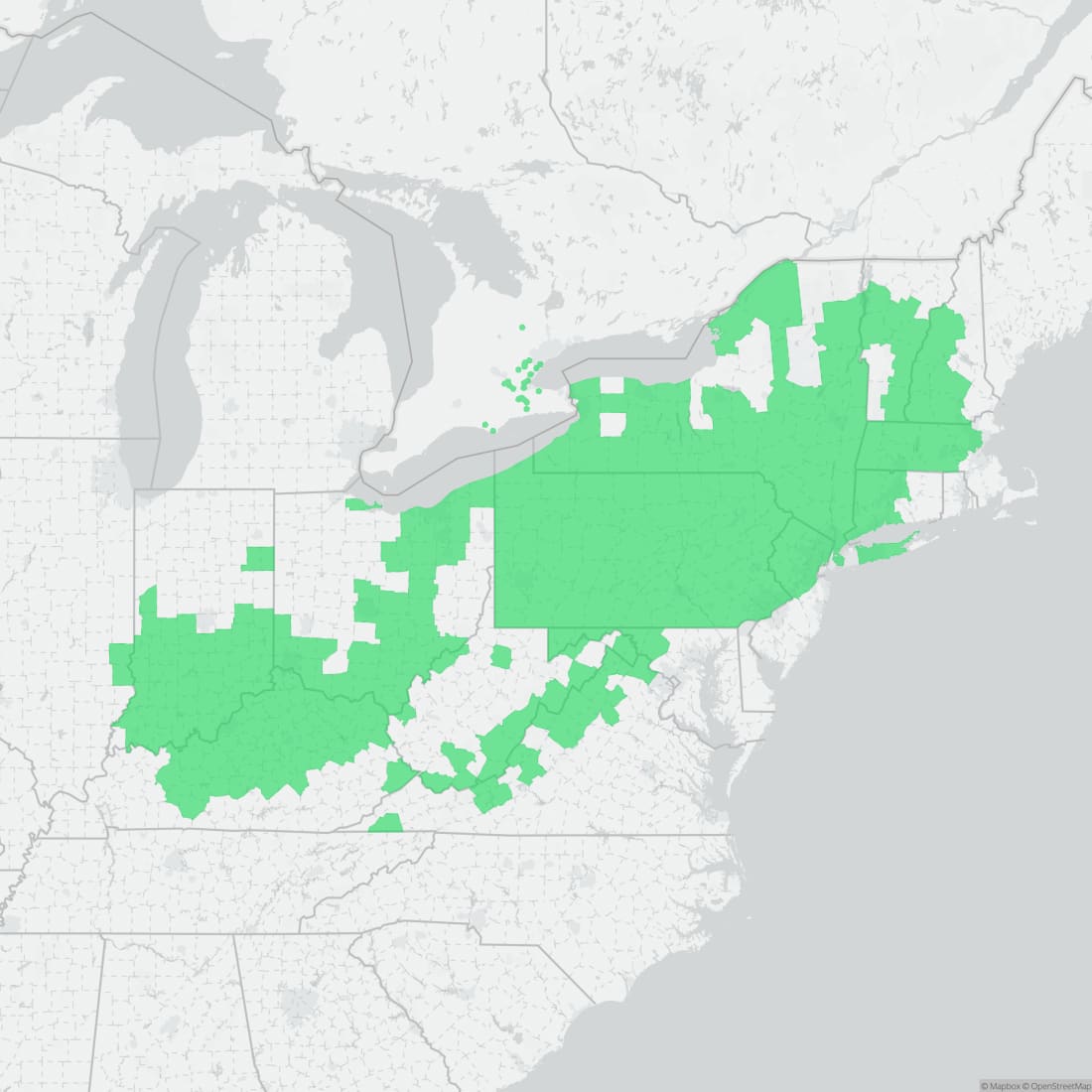
Approximate range. © Mapbox © OpenStreetMap