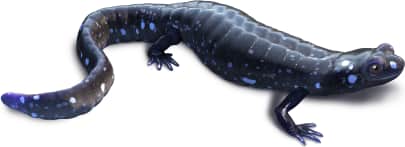
Blue-spotted Salamander
Ambystoma laterale
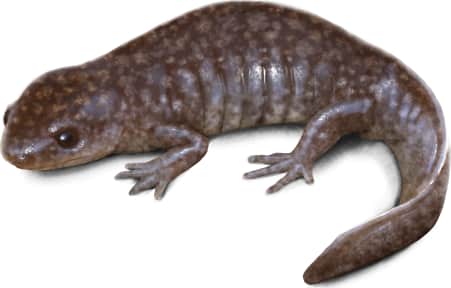
Total length can reach 14 cm. Dorsum varies from black to gray and contains small blue blotches mainly on sides. Venter is similar in color. Typically have 12 to 15 groov…
How to identify
Total length can reach 14 cm. Dorsum varies from black to gray and contains small blue blotches mainly on sides. Venter is similar in color. Typically have 12 to 15 grooves between ribs. Larvae display gills on front and back of legs and behind head; also possess a tail fin. Juveniles exhibit brown to light gray coloring and more scattered, diminished spots. Females lay as many as 500 eggs in globules of up to 12 eggs; attaches them to floating vegetation.
Range
South-central and southeastern Canada; north-central and northeastern United States.
Habitat
Typically inhabit marshes, swamps, and adjacent upland areas. Spend most time hidden under rocks and logs or in mammal burrows. During the winter, usually spend all of their time underground. Diet includes small invertebrates like earthworms, snails, spiders, and beetles.
Variations
Variant, uni-sex populations have formed after breeding with the spotted salamander, the Jefferson salamander, and the tiger salamander. As a clonal triploid, it reproduces by using a sperm to only initiate egg development but not contribute any genetic information.
Similar species
Name and etymology
Genus
Ambystoma
Greek phrase meaning "to cram into the mouth".
Origin
Sources
- Tschudi, "1838" 1839. Classif. Batr., Mem. Soc. Sci. Nat. Neuchatel, p. 92 ↗
Ambystoma. Tschudi, "1838" 1839 - Classif. Batr., Mem. Soc. Sci. Nat. Neuchatel, p. 92
Species epithet
laterale
Latin for to the side.
Origin
Sources
- Hallowell, 1856. Proc. Acad. Nat. Sci. Philadelphia, Vol. 8, p. 6 ↗
Ambystoma laterale. Hallowell, 1856 - Proc. Acad. Nat. Sci. Philadelphia, Vol. 8, p. 6
Explore more names in the etymology index.
At a glance
Range
South-central and southeastern Canada; north-central and northeastern United States.
Habitat
Typically inhabit marshes, swamps, and adjacent upland areas. Spend most time hidden under rocks and logs or in mammal burrow…
Guide
Reptiles and Amphibians of North America
Range map
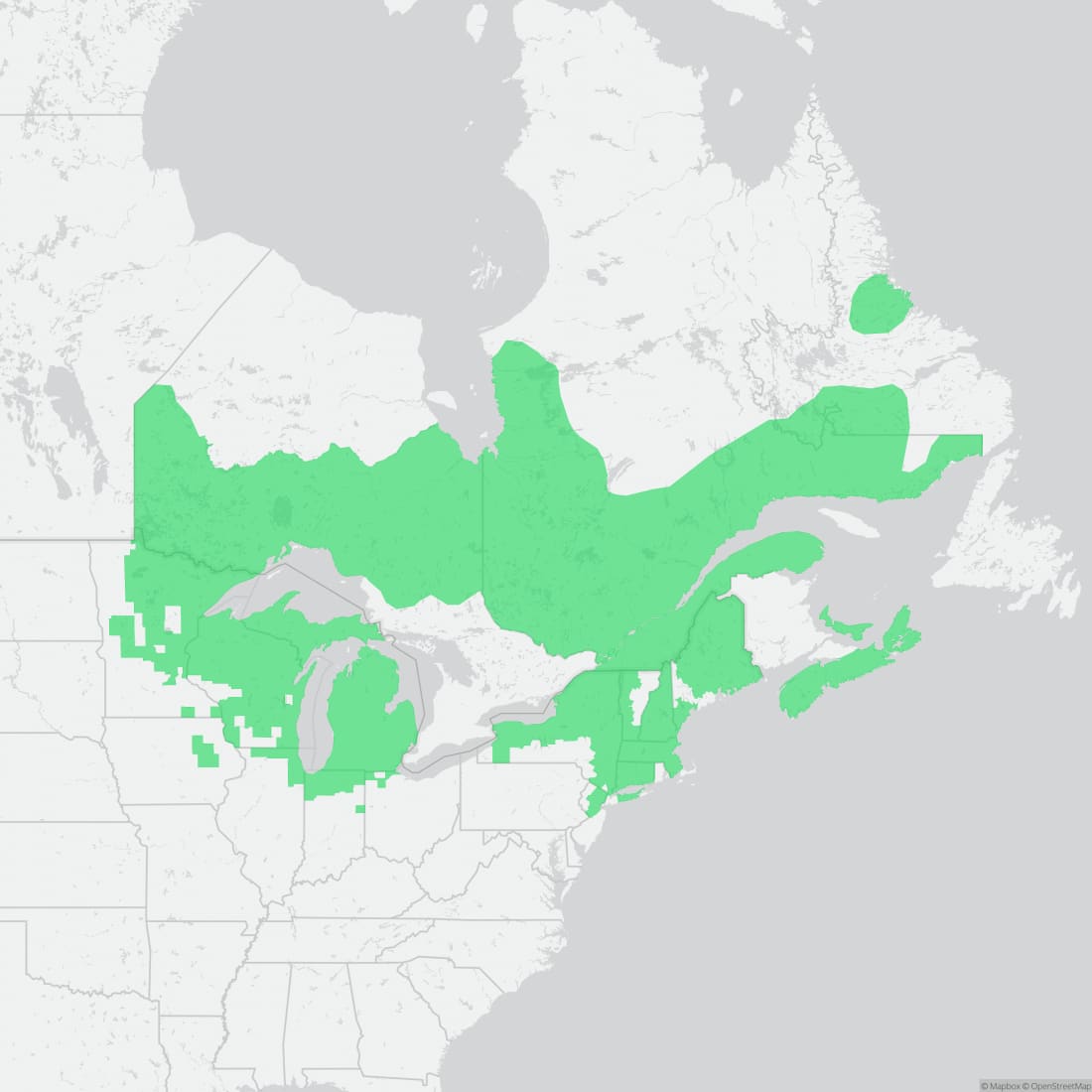
Approximate range. © Mapbox © OpenStreetMap