Laredo Striped Whiptail
Aspidoscelis laredoensis
Typical of whiptails, this species has a pointed snout, plate-like scales on the head, granular body scales, and sharply keeled scales on the long tail. It averages 6-11…
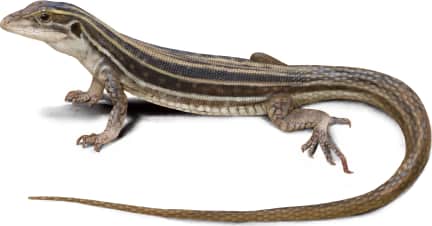
How to identify
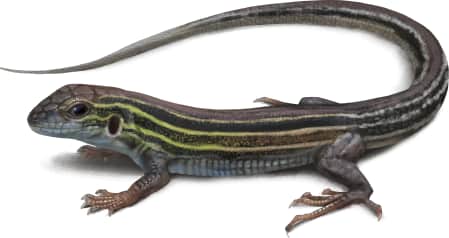
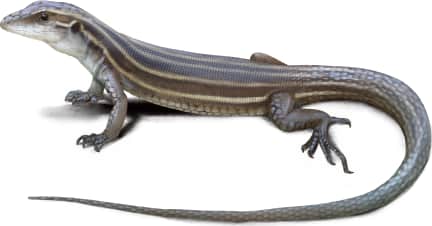
Typical of whiptails, this species has a pointed snout, plate-like scales on the head, granular body scales, and sharply keeled scales on the long tail. It averages 6-11 inches in total length. It has 7 light lines on a dark background, stretching from the plate-like scales on the head to about halfway down the tail. The central 7th line may be incomplete, and there may be faint light spots between the lines. Its legs have light mottling on a dark background.
Range
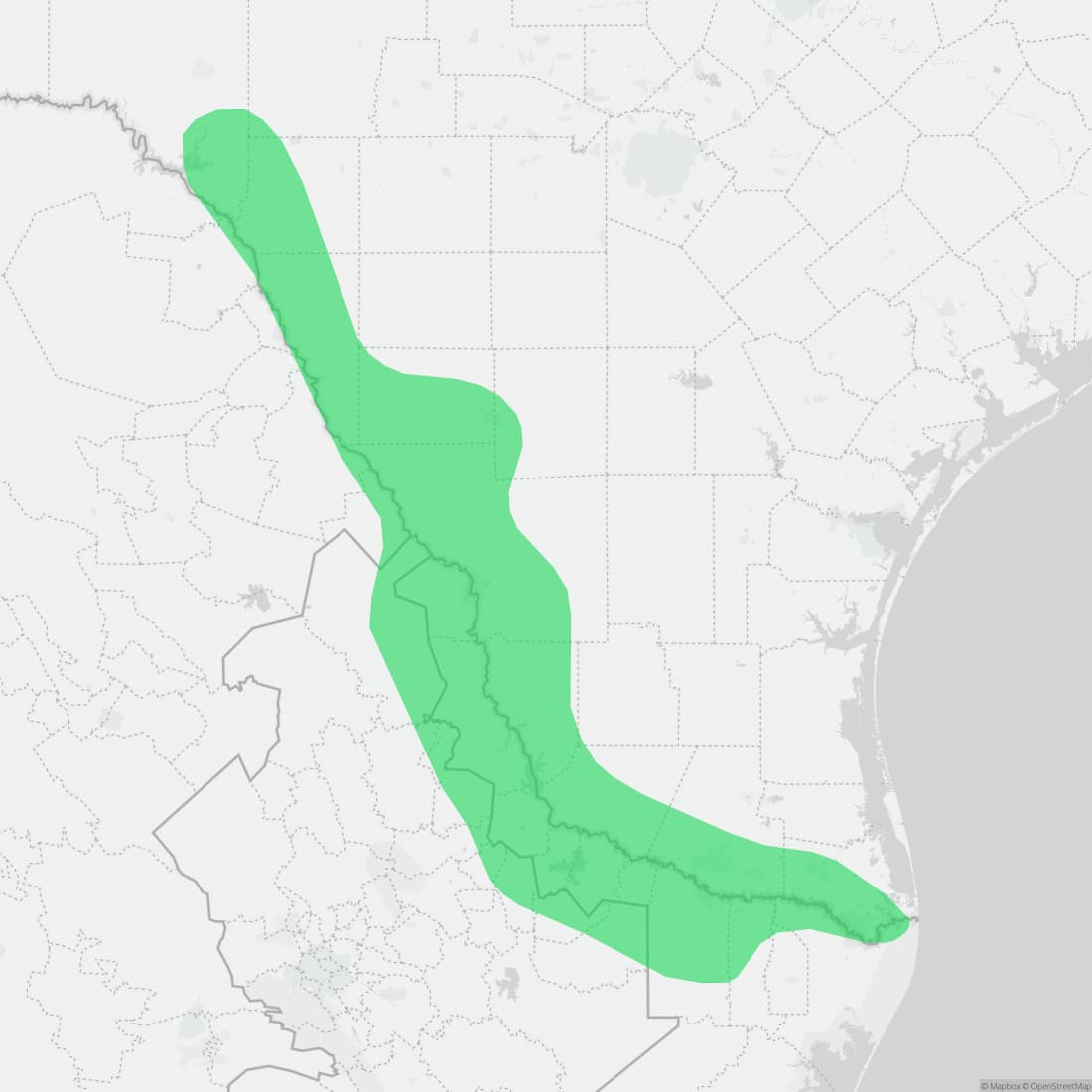
Range stretches along both sides of the Rio Grande River on the southern half of the Texas-Mexico border.
Habitat
This species prefers semiarid disturbed open areas with sandy substrate, such as cultivated fields, weedy lots, dirt roadsides, and heavily grazed pastures.
Variations
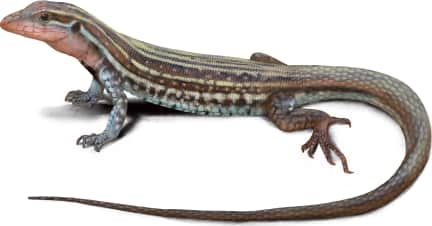
The light patterning may be tinted yellow or greenish.
Similar species
Some believe this species to be the result of hybridization between the common spotted whiptail (*Aspidoscelis gularis*) and six-lined racerunner (*Aspidoscelis sexlineatus*). It is also similar to the desert grassland whiptail (*Aspidoscelis uniparens*).
Name and etymology
Genus
Aspidoscelis
Greek for shield (aspido) leg (skelos).
Origin
Sources
- Wagler, 1830. Nat. Syst. Amph., p. 154
Cnemidophorus. Wagler, 1830 - Nat. Syst. Amph., p. 154
Species epithet
laredoensis
Belonging to Laredo, Texas
Origin
Sources
- McKinney, Kay and Anderson, 1973. Herpetologica, Vol. 29, p. 361
Cnemidophorus laredoensis. McKinney, Kay and Anderson, 1973 - Herpetologica, Vol. 29, p. 361
Explore more names in the etymology index.
At a glance
Range
Range stretches along both sides of the Rio Grande River on the southern half of the Texas-Mexico border.
Habitat
This species prefers semiarid disturbed open areas with sandy substrate, such as cultivated fields, weedy lots, dirt roadside…
Guide
Reptiles and Amphibians of North America
Range map
Approximate range. © Mapbox © OpenStreetMap