Eastern Hognose Snake
Heterodon platirhinos
This small snake is named for the upturned scale at the tip of its stubby snout. It averages a total length of 28 inches, but can reach over 40 inches. It has keeled scal…
How to identify
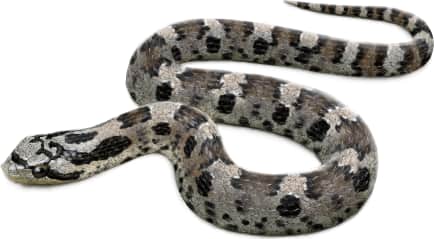
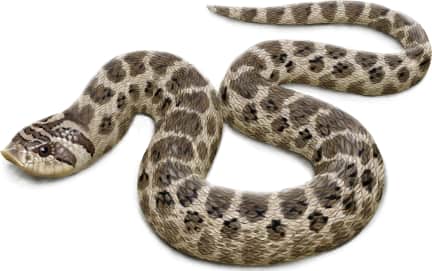
This small snake is named for the upturned scale at the tip of its stubby snout. It averages a total length of 28 inches, but can reach over 40 inches. It has keeled scales and will drastically flatten its head and neck when threatened. It will also flip dramatically onto its back to play dead. Their coloration and pattern are highly variable, but most individuals have a dark band running from behind each eye and across the face. The underside of its tail tends to be lighter than the belly.
Range
Wide-ranging through most of the eastern United States, southern New England, and southeastern Ontario.
Habitat
This species prefers sandy substrate in woodland, open field, farmland, or coastal habitats.
Variations
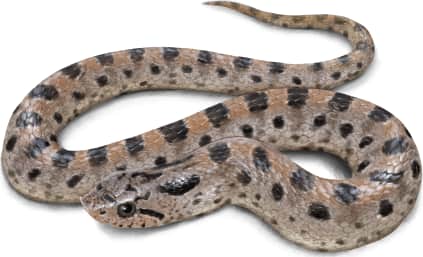
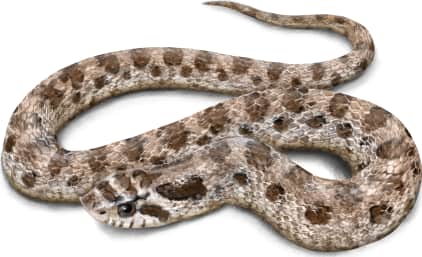
They can be a solid color without markings, or have spots, checkering, or blotchy patterns. When patterned, they have a lighter background with darker patterning. Their color palettes range from buff and tan, grey and black, shades of brown, shades of olive green, or shades of orange and yellow.
Similar species
Easy to confuse with the southern hognose snake (*Heterodon simus*), plains hognose snake (*Heterodon nasicus*), or Mexican hognose snake (*Heterodon kennerlyi*).
Name and etymology
Genus
Heterodon
Greek for different (heteros) tooth (odotos).
Origin
Sources
- Latreille, 1801.
Heterodon. Latreille, 1801 -
Species epithet
platirhinos
Greek for flat (plati) nose (rhinos).
Origin
Sources
- Latreille, 1801.
Heterodon. Latreille, 1801 -
Explore more names in the etymology index.
More illustrations
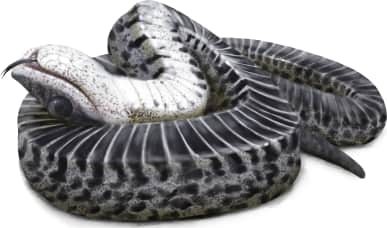
Hognose playing dead
At a glance
Size
45 to 105 cm
Range
Wide-ranging through most of the eastern United States, southern New England, and southeastern Ontario.
Habitat
This species prefers sandy substrate in woodland, open field, farmland, or coastal habitats.
Range map
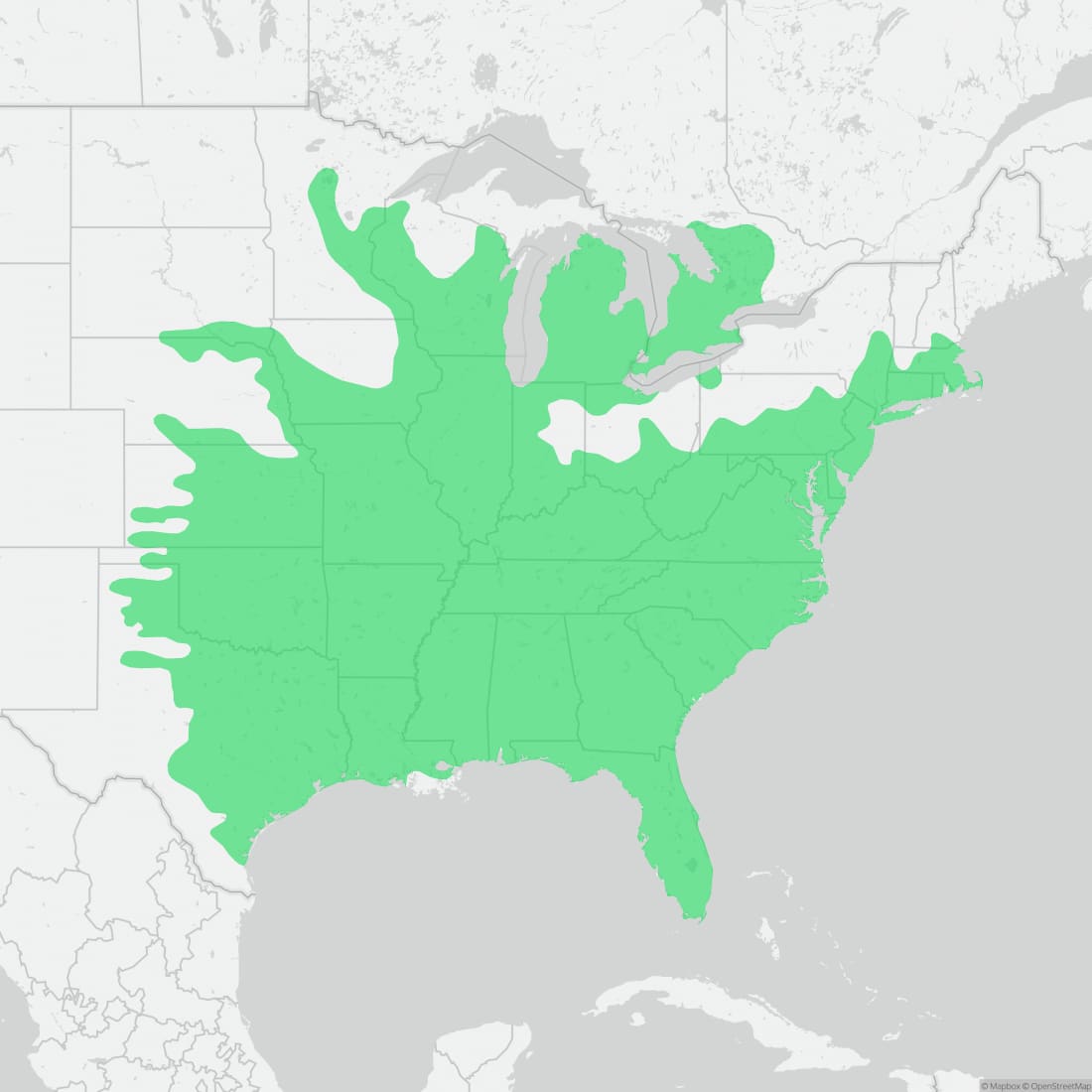
Approximate range. © Mapbox © OpenStreetMap