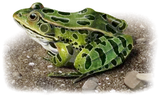
Plains Hognose Snake
Heterodon nasicus
A small snake with a stout body and drastically upturned snout for which it is named. It has rough, keeled scales, and its colors are believed to mimic the appearance of…
How to identify
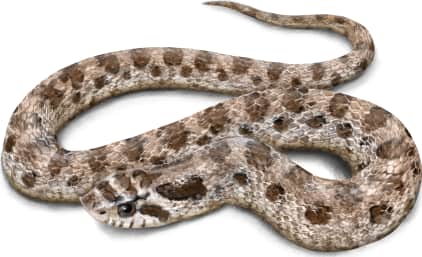
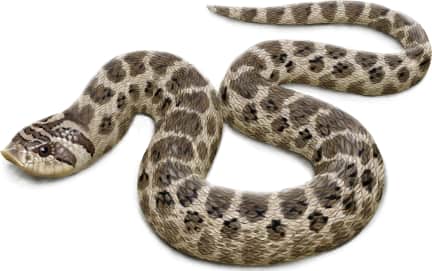
A small snake with a stout body and drastically upturned snout for which it is named. It has rough, keeled scales, and its colors are believed to mimic the appearance of rattlesnakes. It has dark irregular spots on a light background which are larger on the center of the back, and smaller down the sides. These spots can be uniform in color, or have different shades. It has 2 distinct dark bands across its face, separated by jagged light lines, and 3 separate or connected dark patches on the neck. Males are smaller than females, which can reach a length of 15-20 inches. It will drastically flatten its head and neck or play dead when threatened.
Range
Wide ranging down the middle of the United States, from south central Canada to central and west Texas, with patchy areas in the midwestern United States. It's more prevalent in the southern half of its range.
Habitat
Found in a wide range of habitats, but generally prefers sandy or gravelly substrate. Live in prairies, scrub, grasslands, river floodplains, semideserts, and agricultural areas.
Variations
Colors vary from shades of grey to brown to dark olive and depend on the snake's regional surroundings. Number of spots can vary but is in the range of 30-50.
Similar species
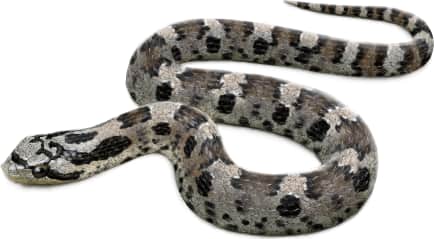
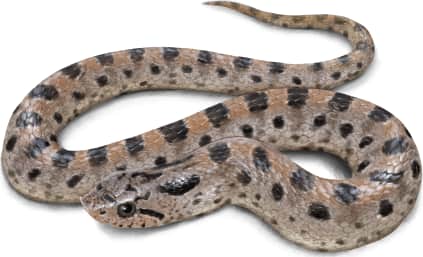
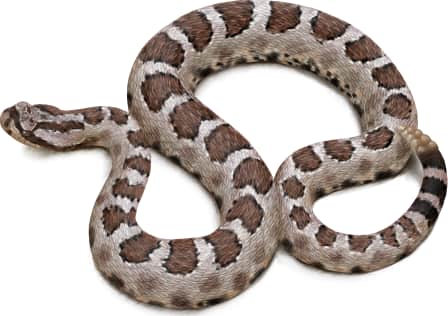
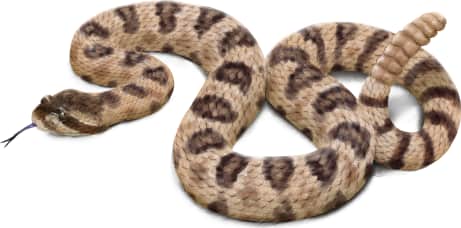
Could easily be confused with the eastern hognose snake (*Heterodon platirhinos*) which overlaps in range, or the Mexican hognose snake (*Heterodon kennerlyi*) which ranges further south. Its colors also resemble the unrelated western massasauga (*Sistrurus tergeminus*) which overlaps, or western rattlesnake (*Crotalus oreganus*) which does not.
Name and etymology
Genus
Heterodon
Greek for different (heteros) tooth (odotos).
Origin
Sources
- Latreille, 1801.
Heterodon. Latreille, 1801 -
Species epithet
nasicus
New Latin for with a large or pointed nose
Origin
Sources
- Baird and Girard, 1852. Proc. Acad. Nat. Sci. Philadelphia, Vol. 6, p. 70 ↗
Heterodon nasicus. Baird and Girard, 1852 - Proc. Acad. Nat. Sci. Philadelphia, Vol. 6, p. 70
Explore more names in the etymology index.
More illustrations
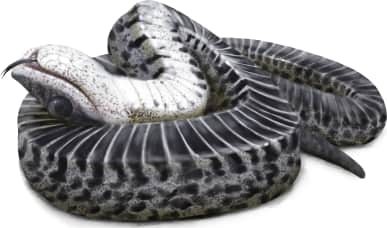
Hognose playing dead
At a glance
Size
36 to 93 cm
Range
Wide ranging down the middle of the United States, from south central Canada to central and west Texas, with patchy areas in…
Habitat
Found in a wide range of habitats, but generally prefers sandy or gravelly substrate. Live in prairies, scrub, grasslands, ri…
Range map
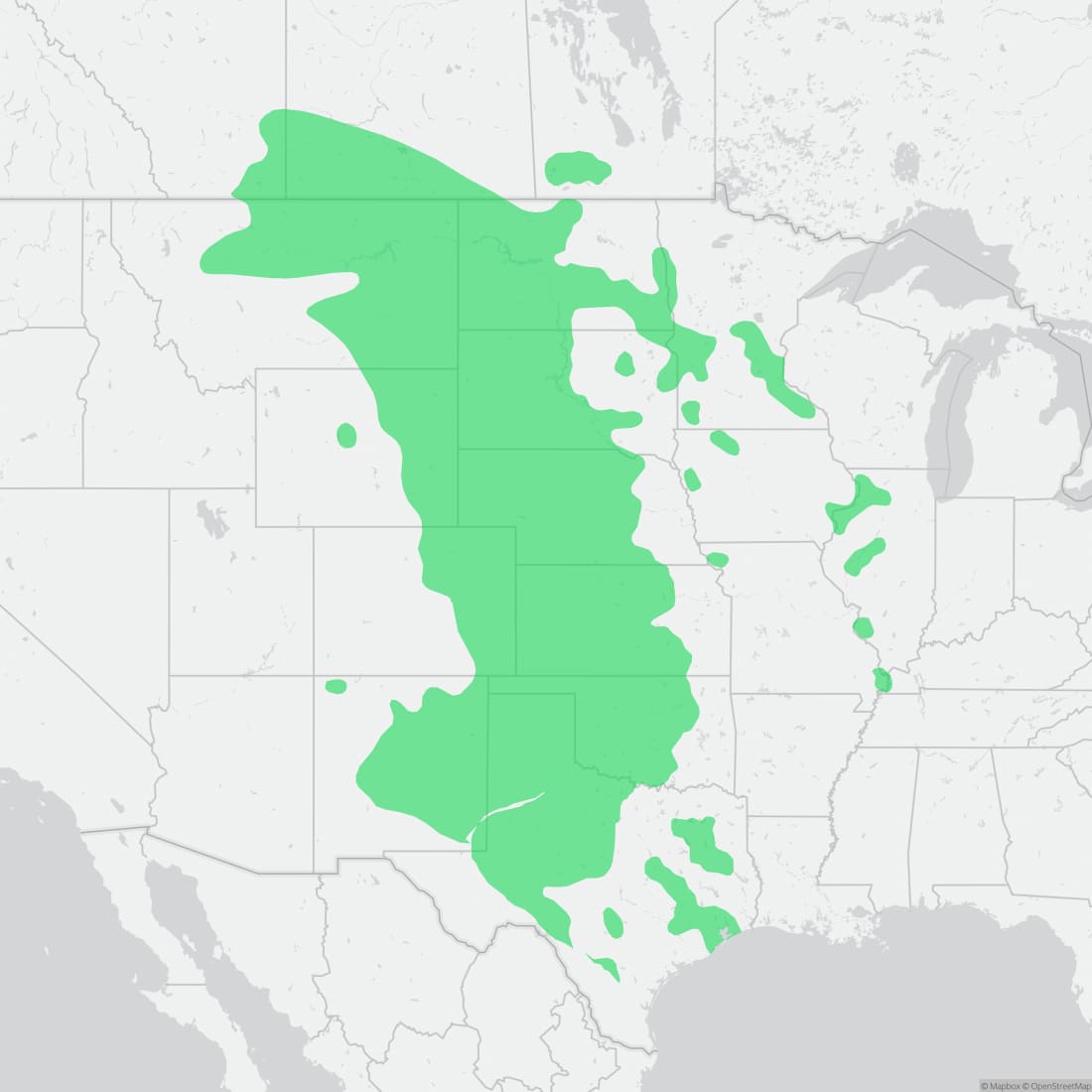
Approximate range. © Mapbox © OpenStreetMap