Western Rattlesnake
Crotalus oreganus
There are many variations as regards the size of this specie, as some may come out stunted and some come out very large. The mainland specimens could reach a total length…
How to identify
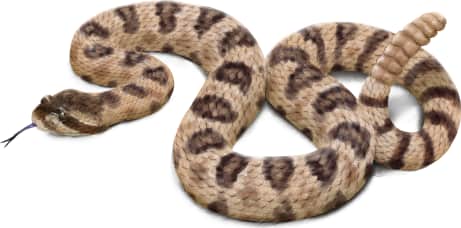
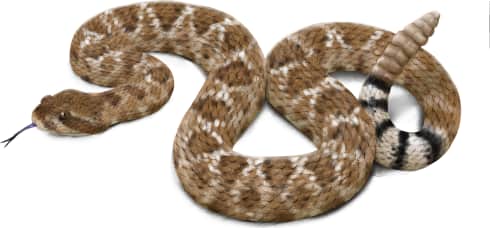
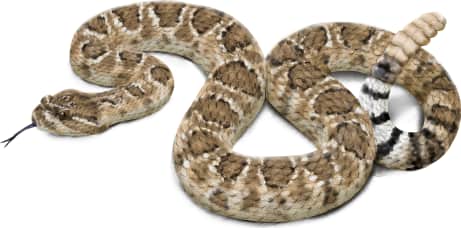
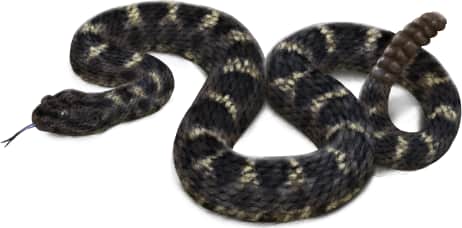
There are many variations as regards the size of this specie, as some may come out stunted and some come out very large. The mainland specimens could reach a total length of about 1,000 mm. As regards patterns, the juveniles have more distinct patterns which then fade as they grow older. The colour of this specimen’s iris usually matches the ground colour which could be gold, bronze, or varying shades of tan, pink or grey. The usual colour pattern of this specie is a dark-brown, dark-grey, olive-brown or it could be black or a pale yellowish ground colour. This background is then overlapped dorsally with a succession of large, dark blotches with uneven white edges.
Range
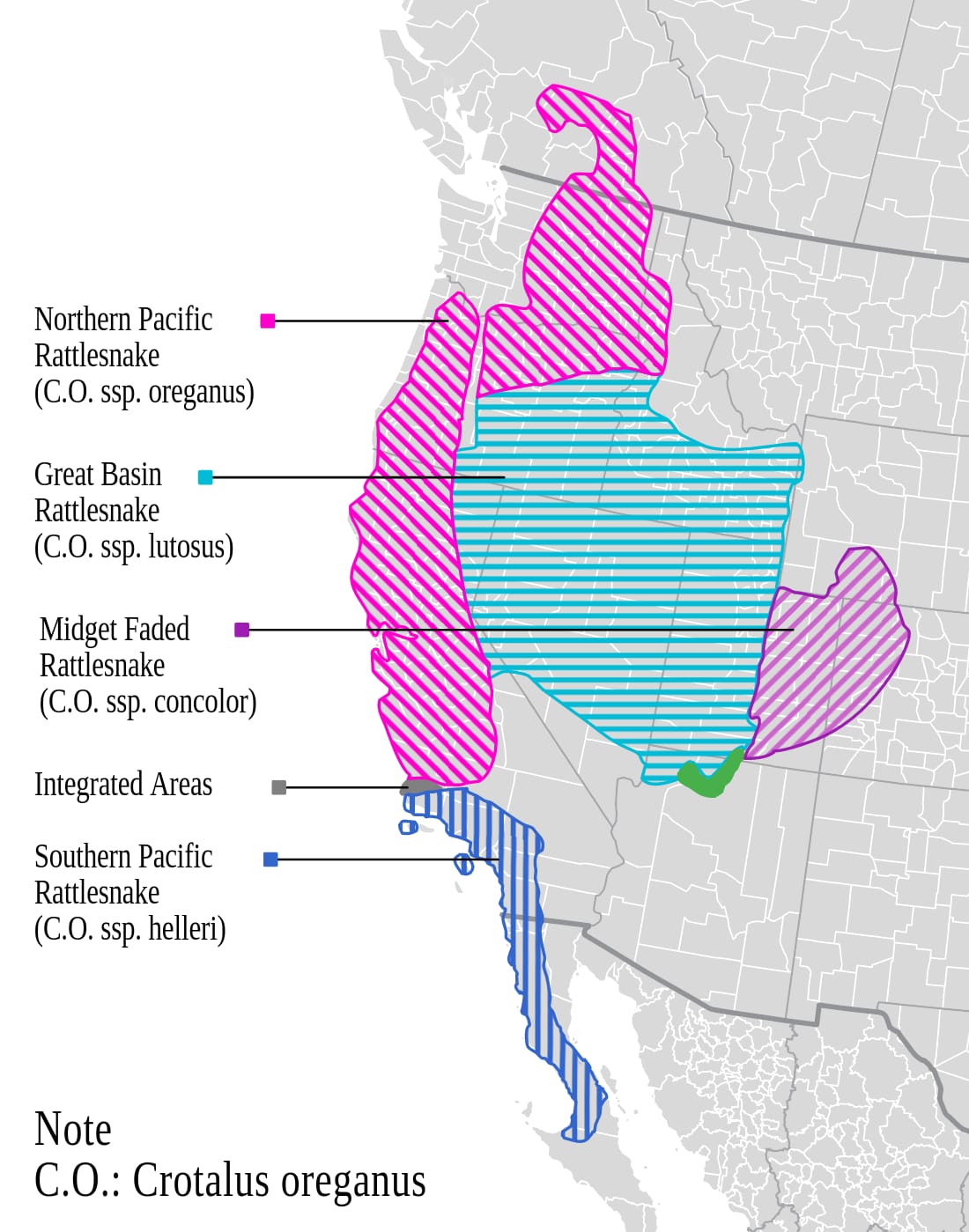
This specie can be found in North America. Its range goes from southwestern Canada through a lot of the western half of the United States. In Canada, it can be found in southern British Columbia while in the US, it can be found in Washington, Oregon, western and southern Idaho and California.
Habitat
This specie stays in rocky hillsides, talus slopes and outcrops. It also inhabits rocky stream courses, rocky areas in grasslands and mixed woodlands. Lastly, they stay in montane forests, pinyon-juniper and sagebrush. They are nocturnal creatures and not active during cool periods. They feed on birds, lizards, snakes, frogs, insects and small mammals. These include mice, rats, rabbits, hares and ground squirrels. They are oviparous creatures and breed during spring. Their litter is usually about 4 – 12 young. These are given birth to from August to October.
Similar species
Crotalus cerberus or the Arizona Black Rattlesnake. The specie’s colour pattern comprises of a brownish-black, dark greyish, reddish-brown, blackish ground colour. This background is then overlaid with dorsal pattern blotches. Crotalus catalinensis or the Santa Catalina Rattlesnake. The specie has two colour variants. The first has a light cream-coloured base while the other has a much lighter, ash grey colour as its base. Crotalus cerastes or the Horned Rattlesnake. They usually have 21 rows of keeled dorsal scales which are found midbody. Their ground colour may be cream, buff, yellowish-brown, pink, or ash grey.
Name and etymology
Genus
Crotalus
Greek for rattle (krotalon).
Origin
Sources
- Linnaeus, 1758. Syst. Nat., 10th ed., Vol. 1, p. 214 ↗
Crotalus. Linnaeus, 1758 - Syst. Nat., 10th ed., Vol. 1, p. 214
Species epithet
oreganus
Belonging to Oregon.
Origin
Sources
- Holbrook, 1840. N. Amer. Herp., Ed. 1, Vol. 4, p. 115, pl. 29 ↗
Crotalus viridis oreganus. Holbrook, 1840 - N. Amer. Herp., Ed. 1, Vol. 4, p. 115, pl. 29
Explore more names in the etymology index.
More illustrations
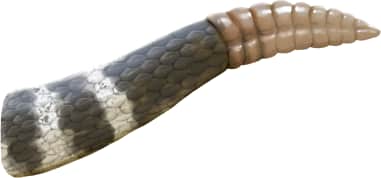
Southern Pacific Rattlesnake
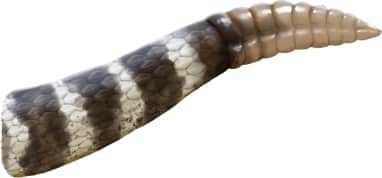
Northern Pacific Rattlesnake
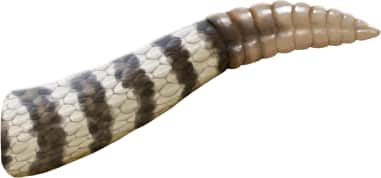
Great Basin Rattlesnake
At a glance
Range
This specie can be found in North America. Its range goes from southwestern Canada through a lot of the western half of the U…
Habitat
This specie stays in rocky hillsides, talus slopes and outcrops. It also inhabits rocky stream courses, rocky areas in grassl…
Guide
Reptiles and Amphibians of North America
Range map
Approximate range. © Mapbox © OpenStreetMap