Mexican Hognose Snake
Heterodon kennerlyi
A smallish snake reaching 16-25 inches in length. It has a thick body and small, stubby head with an upturned scale at the tip of its snout. It has keeled scales with a b…
How to identify
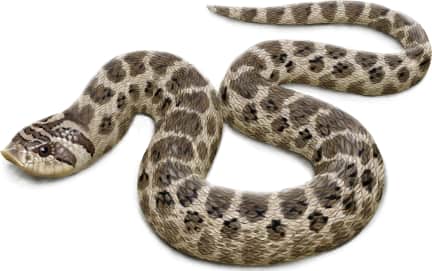
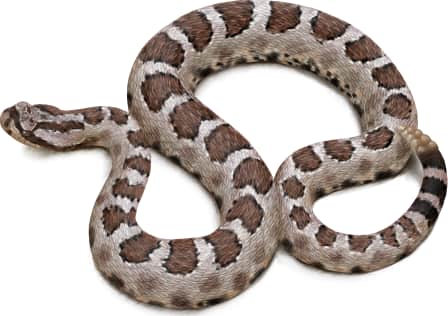
A smallish snake reaching 16-25 inches in length. It has a thick body and small, stubby head with an upturned scale at the tip of its snout. It has keeled scales with a background color of light grey or tan, adorned with alternating rows of circular blotches with undefined edges. The blotches on the sides of the body are generally darker than those down the center of the back. It typically has a dark mask from the corners of the mouth, through the eyes, and across the center of the face, with a thin light band between the eyes, separating the center of the dark mask into 2 bands. Just behind the mask, it has 3 dark patches on the back of its head and neck. Ventral scales are dark grey to black with random yellow patches all over. When threatened, this snake will readily hiss, open its mouth and drastically flatten its head and neck to appear wider. It will also play dead by dramatically flipping onto its back and opening its mouth with its tongue hanging out.
Range
From southern New Mexico along the Texas/Mexico border, and south into northeastern and central Mexico.
Habitat
This ground-dwelling snake prefers loose, sandy or gravelly substrate in open areas of semidesert grasslands or desert scrublands.
Variations
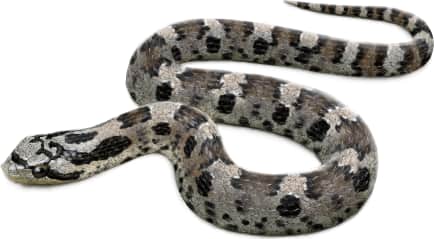
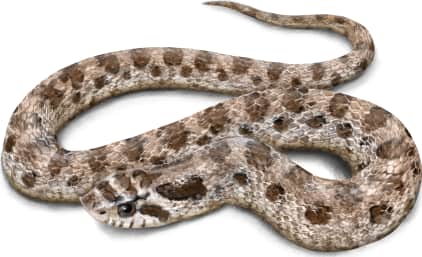
Some are shades of tan and brown, while others are shades of grey to black. Some have more distinct markings, while others have faded spots.
Similar species
This snake could be confused with the venomous western massasauga (*Sistrurus tergeminus*) which may overlap in some areas. It is more similar to the related plains hog-nosed snake (*Heterodon nasicus*) and eastern hog-nosed snake (*Heterodon platirhinos*), which range nearby but further north and east, respectively.
Name and etymology
Genus
Heterodon
Greek for different (heteros) tooth (odotos).
Origin
Sources
- Latreille, 1801.
Heterodon. Latreille, 1801 -
Species epithet
kennerlyi
Honoring Caleb B.R. Kennerly.
Origin
Honors
Sources
- Kennicott, 1860. Proc. Acad. Nat. Sci. Philadelphia, Vol. 12, p. 336 ↗
Heterodon nasicus kennerlyi. Kennicott, 1860 - Proc. Acad. Nat. Sci. Philadelphia, Vol. 12, p. 336
Explore more names in the etymology index.
More illustrations
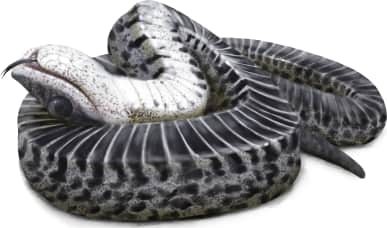
Hognose playing dead
At a glance
Range
From southern New Mexico along the Texas/Mexico border, and south into northeastern and central Mexico.
Habitat
This ground-dwelling snake prefers loose, sandy or gravelly substrate in open areas of semidesert grasslands or desert scrubl…
Guide
Reptiles and Amphibians of North America
Range map
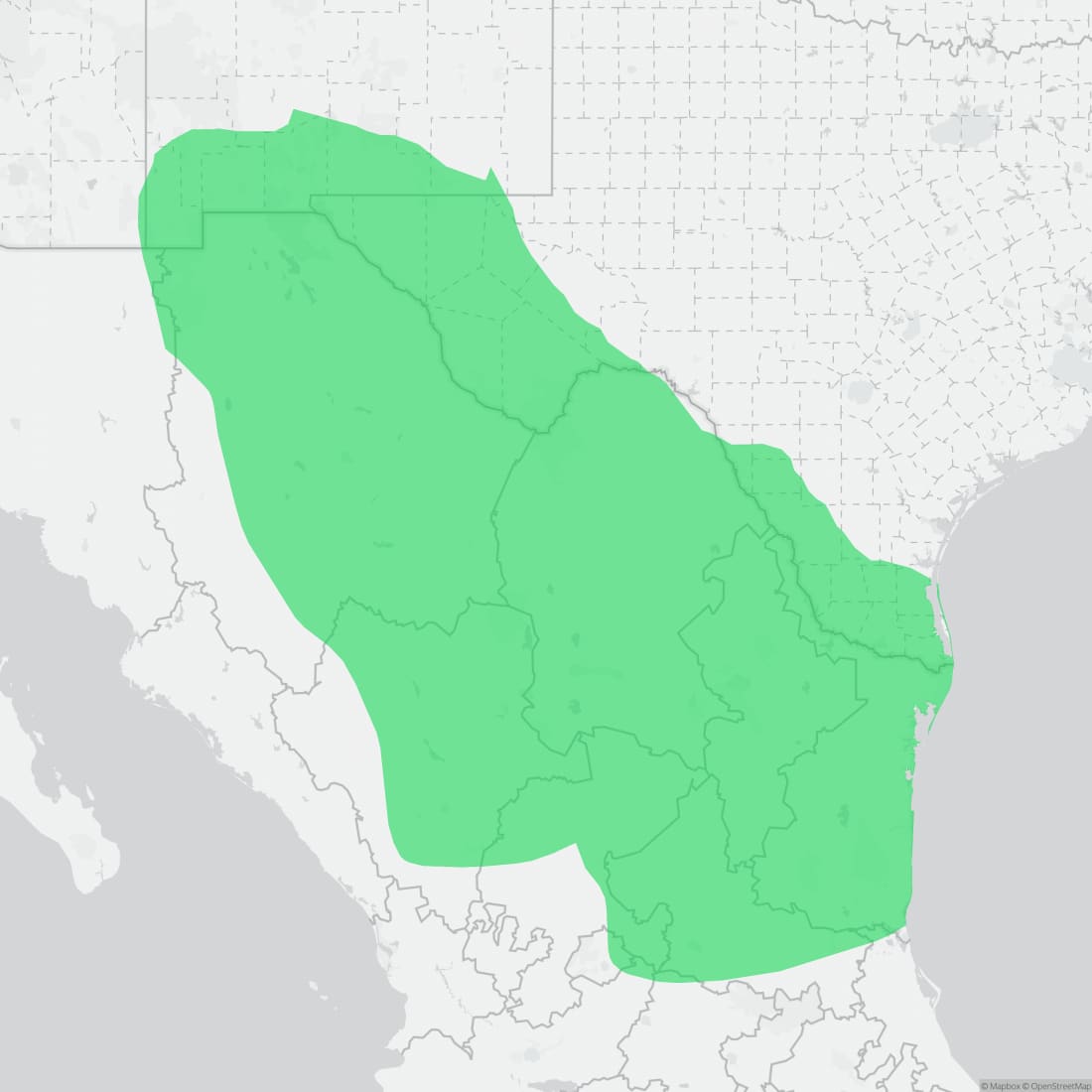
Approximate range. © Mapbox © OpenStreetMap