Frosted Flatwoods Salamander
Ambystoma cingulatum
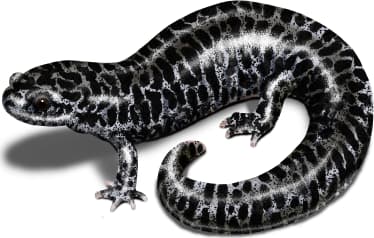
A heavy-bodied salamander with a small narrow head and a thick vertically flattened tail. Its color is typically a black background with a speckled white reticulated patt…
How to identify
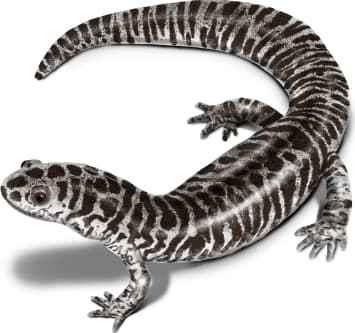
A heavy-bodied salamander with a small narrow head and a thick vertically flattened tail. Its color is typically a black background with a speckled white reticulated pattern all over. It averages 9-13 cm in total length and has well-developed legs. Aquatic juveniles are dark brown with light brown longitudinal stripes.
Range
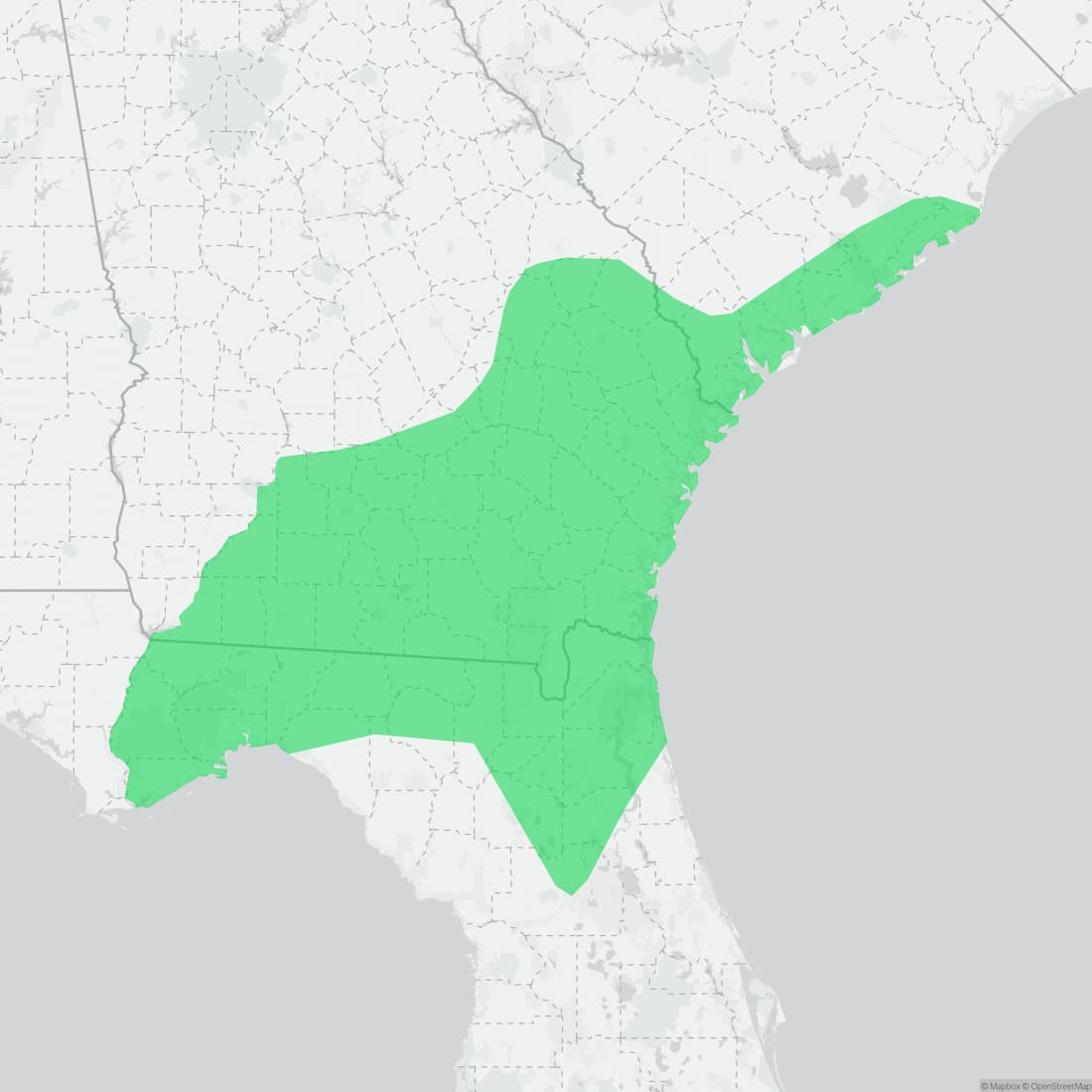
Populations are widely fragmented in northern Florida through southeastern Georgia into coastal South Carolina.
Habitat
Adults spend most of the year underground, often in crayfish burrows, then emerge and travel to wetland habitats to breed. They are found in pine flatwoods and savannahs east of the Apalachicola River. They prefer to breed near heavy growth of pond cypress or blackgum.
Variations
Some have a very distinct pattern while others are more faded in pattern. They can have a spotted or banded pattern rather than reticulations.
Similar species
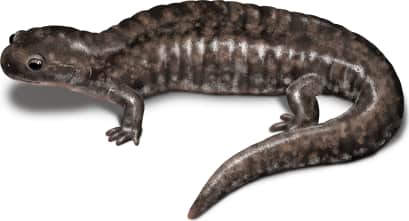
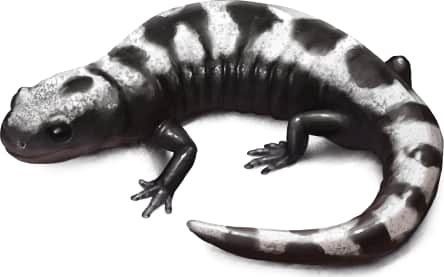
Unique patterning makes this species hard to misidentify, but it is somewhat similar to the small-mouthed salamander (*Ambystoma texanum*) and marbled salamander (*Ambystoma opacum*).
Name and etymology
Genus
Ambystoma
Greek phrase meaning "to cram into the mouth".
Origin
Sources
- Tschudi, "1838" 1839. Classif. Batr., Mem. Soc. Sci. Nat. Neuchatel, p. 92 ↗
Ambystoma. Tschudi, "1838" 1839 - Classif. Batr., Mem. Soc. Sci. Nat. Neuchatel, p. 92
Species epithet
cingulatum
Latin for belt or girdle.
Origin
Sources
- (Cope, "1867" 1868). Proc. Acad. Nat. Sci. Philadelphia, Vol. 19, p. 205 ↗
Ambystoma cingulatum. (Cope, "1867" 1868) - Proc. Acad. Nat. Sci. Philadelphia, Vol. 19, p. 205
Explore more names in the etymology index.
At a glance
Size
9 to 13.5 cm
Range
Populations are widely fragmented in northern Florida through southeastern Georgia into coastal South Carolina.
Habitat
Adults spend most of the year underground, often in crayfish burrows, then emerge and travel to wetland habitats to breed. Th…
Range map
Approximate range. © Mapbox © OpenStreetMap