Reticulated Flatwoods Salamander
Ambystoma bishopi
This species of mole salamander is named for the reticulated pattern covering its dorsal surfaces. The pattern is frosted white on a solid black background. On its ventru…
How to identify
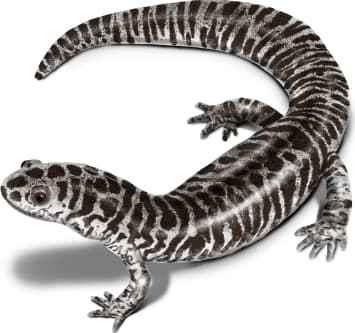
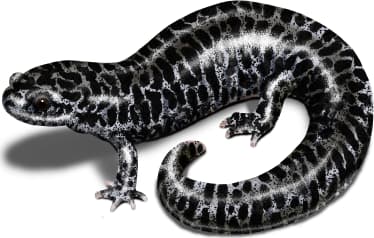
This species of mole salamander is named for the reticulated pattern covering its dorsal surfaces. The pattern is frosted white on a solid black background. On its ventrum, the pattern loses definition and becomes mottled. It has a small, blunt, rounded head with wide set eyes. Its legs are short and skinny and it has long toes. Its tail is laterally compressed and generally shorter than its body. It has 14-16 costal grooves and averages 4-5 cm in snout to vent length.
Range
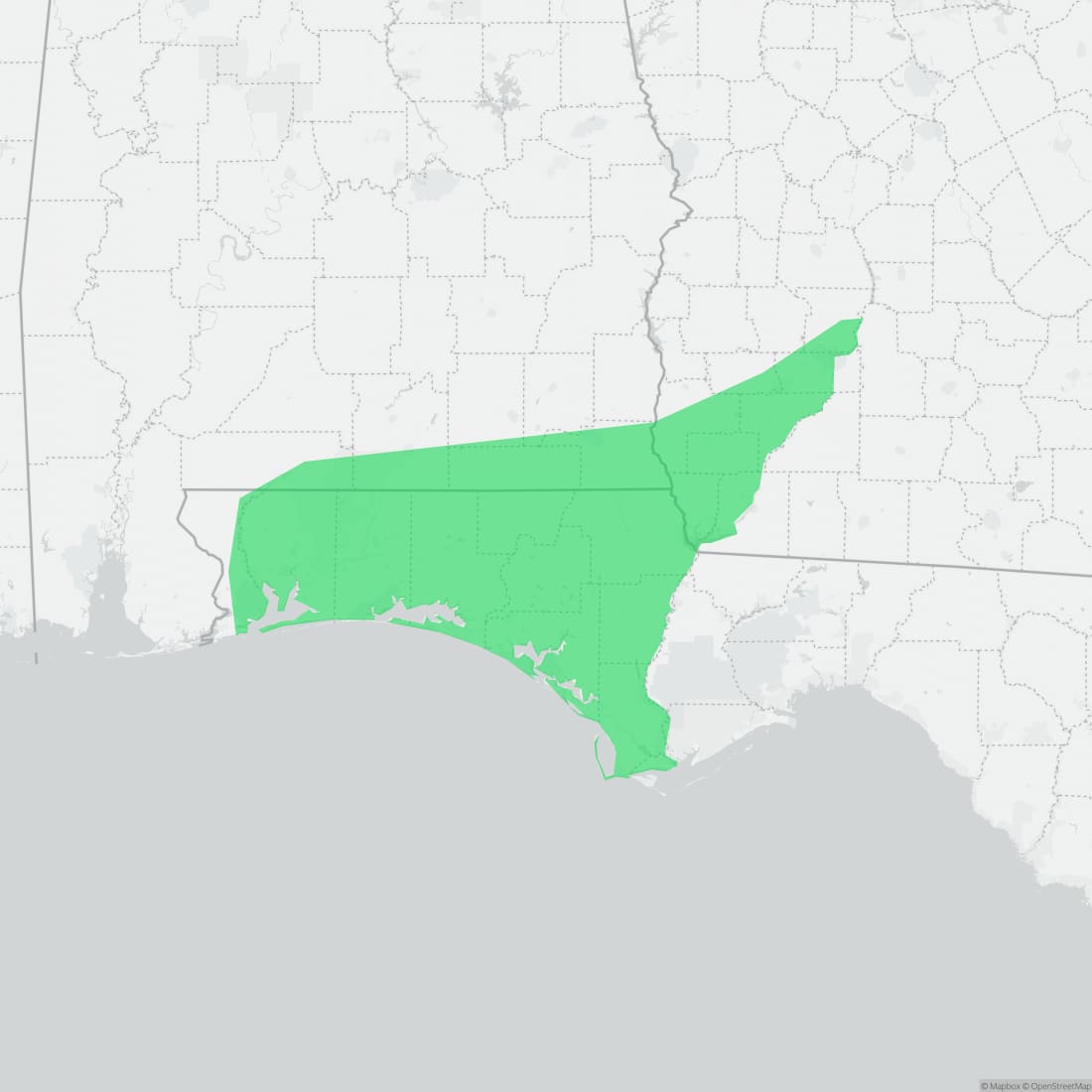
Occurs mainly in the western half of the Florida panhandle, and adjacent southwestern Georgia.
Habitat
Inhabits grassy upland regions with sparse longleaf pine trees and poorly drained substrate. Spends most of its time burrowed underground or within damp leaf litter. Breeds in acidic temporary wetlands with emergent vegetation.
Variations
Some have a less defined reticulated pattern and appear mottled all over.
Similar species
Very similar in appearance to the frosted flatwoods salamander (*Ambystoma cingulatum*) which has a neighboring range to the east.
Name and etymology
Genus
Ambystoma
Greek phrase meaning "to cram into the mouth".
Origin
Sources
- Tschudi, "1838" 1839. Classif. Batr., Mem. Soc. Sci. Nat. Neuchatel, p. 92 ↗
Ambystoma. Tschudi, "1838" 1839 - Classif. Batr., Mem. Soc. Sci. Nat. Neuchatel, p. 92
Species epithet
bishopi
Honoring Sherman C. Bishop.
Origin
Honors
Sources
- Wikipedia: Ambystoma bishopi ↗
“Ambystoma bishopi.” Wikipedia. https://en.wikipedia.org/wiki/Reticulated_flatwoods_salamander
Explore more names in the etymology index.
At a glance
Range
Occurs mainly in the western half of the Florida panhandle, and adjacent southwestern Georgia.
Habitat
Inhabits grassy upland regions with sparse longleaf pine trees and poorly drained substrate. Spends most of its time burrowed…
Guide
Reptiles and Amphibians of North America
Range map
Approximate range. © Mapbox © OpenStreetMap