
Cajun Chorus Frog
Pseudacris fouquettei
Small species of frog measuring 27-30 millimeters from snout to vent. Rostrum comes to a point. Legs and toes are moderately long and toes are not webbed. Coloration rang…
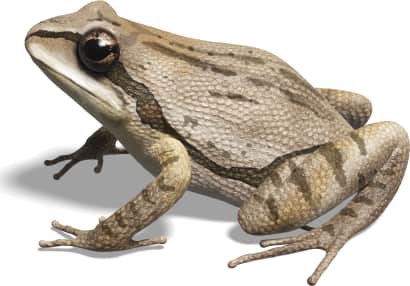
How to identify
Small species of frog measuring 27-30 millimeters from snout to vent. Rostrum comes to a point. Legs and toes are moderately long and toes are not webbed. Coloration ranges from shades of brown to green, with a dark irregular stripe running latterally from the rostrum down the side of their face and body, through the eye. Other unique dark splotches, stripes, and speckles can be found on their sides and legs, with more faded patterns occurring on their backs. Tadpoles grow up to 43 millimeters in length.
Range
Southern United States, from southern Missouri to the gulf coast. Ranging from eastern Oklahoma and Texas, through Arkansas, Louisiana, and western Mississippi.
Habitat
Ground-dwelling species that prefers moist, forested or grassy habitats. Can be found living around irrigation ditches, swamps, marshes, and areas with temporary flooding.
Variations
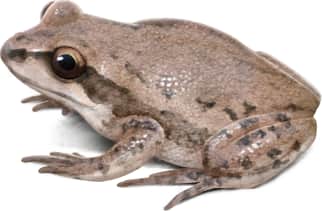
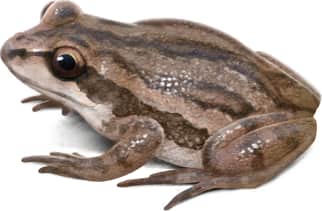
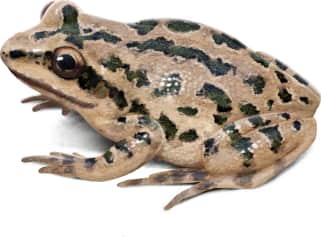
Some individuals are more olive or mossy green with dark green to black patterns. Others are light brown with dark brown patterns.
Similar species
Similar to upland chorus frog (*Pseudacris feriarum*), western chorus frog (*Pseudacris triseriata*), and spotted chorus frog (*Pseudacris clarkii*). Pattern of cajun chorus frog is more varied and distinct than the upland species, which is found further east in the southern US. Western chorus frogs have a range further north in the midwest. Spotted chorus frogs have much larger distinct spots all over their body. All of these species have different vocalizations.
Name and etymology
Genus
Pseudacris
Greek for false(pseudes) locus(akris) referencing genus Acris.
Origin
Sources
- Fitzinger, 1843. Syst. Rept., p. 31 ↗
Pseudacris. Fitzinger, 1843 - Syst. Rept., p. 31
Species epithet
fouquettei
Honoring Martin J. “Jack” Fouquette, Jr., who studied Pseudacris in the 1960s and 1970s.
Origin
Honors
Sources
- Wikipedia: Pseudacris fouquettei ↗
“Pseudacris fouquettei.” Wikipedia. https://en.wikipedia.org/wiki/Pseudacris_fouquettei
Explore more names in the etymology index.
At a glance
Range
Southern United States, from southern Missouri to the gulf coast. Ranging from eastern Oklahoma and Texas, through Arkansas,…
Habitat
Ground-dwelling species that prefers moist, forested or grassy habitats. Can be found living around irrigation ditches, swamp…
Guide
Reptiles and Amphibians of North America
Range map
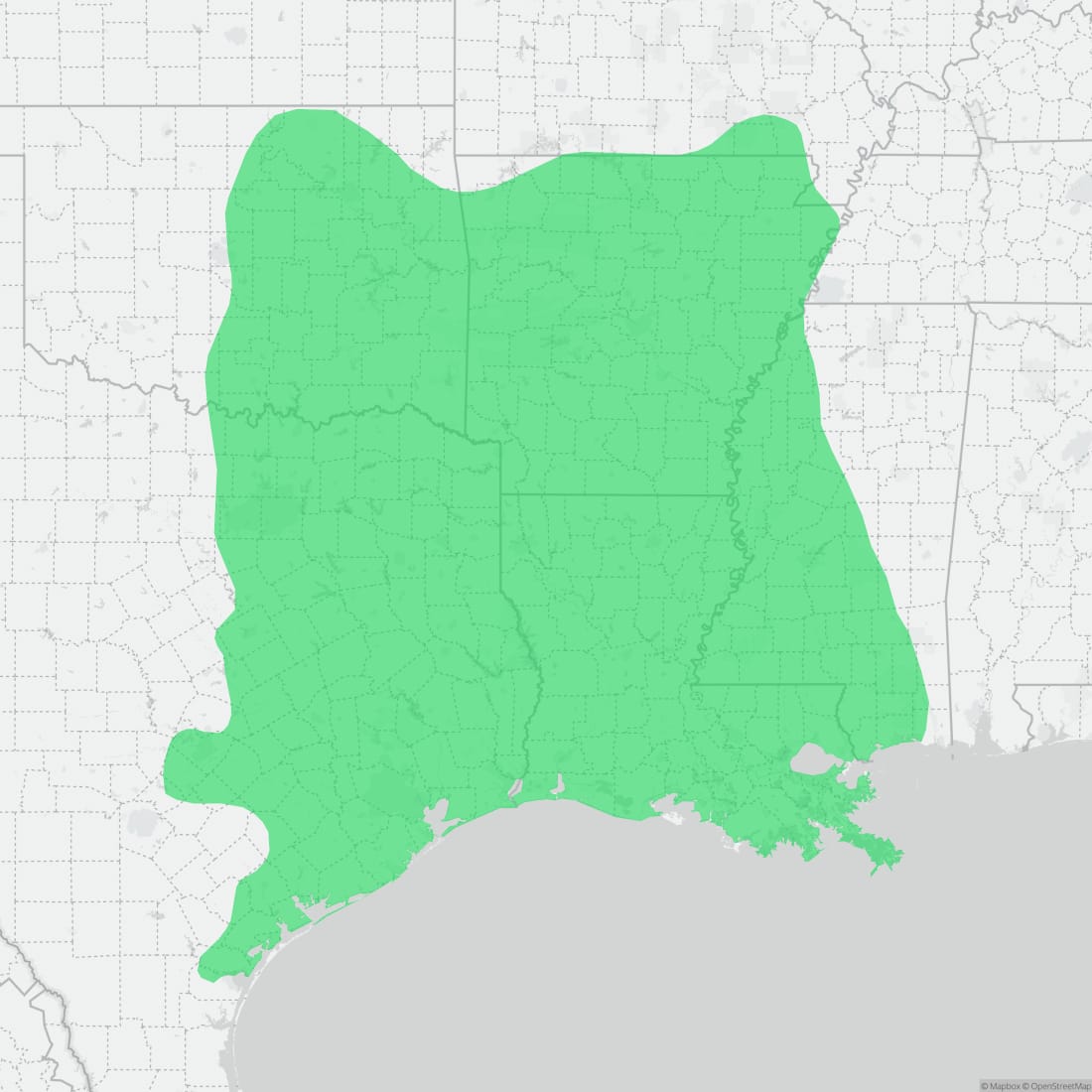
Approximate range. © Mapbox © OpenStreetMap