Blanco Blind Salamander
Eurycea robusta
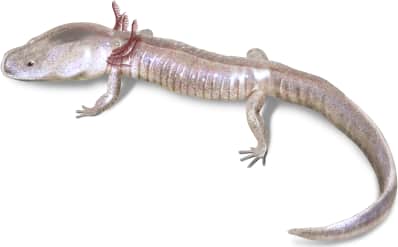
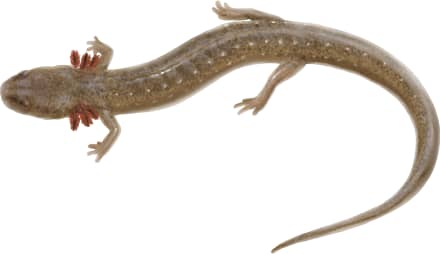
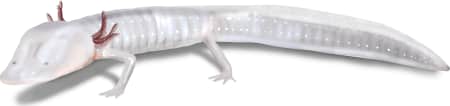
The salamander is aquatic, blind, cave-dwelling and one of the species of lungless salamanders. Lacking pigment and seemingly colorless, it is gilled and has a pair of re…
How to identify
The salamander is aquatic, blind, cave-dwelling and one of the species of lungless salamanders. Lacking pigment and seemingly colorless, it is gilled and has a pair of reduced eyes. The average length for this salamander is 4 inches. It has relatively robust limbs, a stalwart body, a thick tail and a reasonably tall tail fin of about 2 inches.
Range
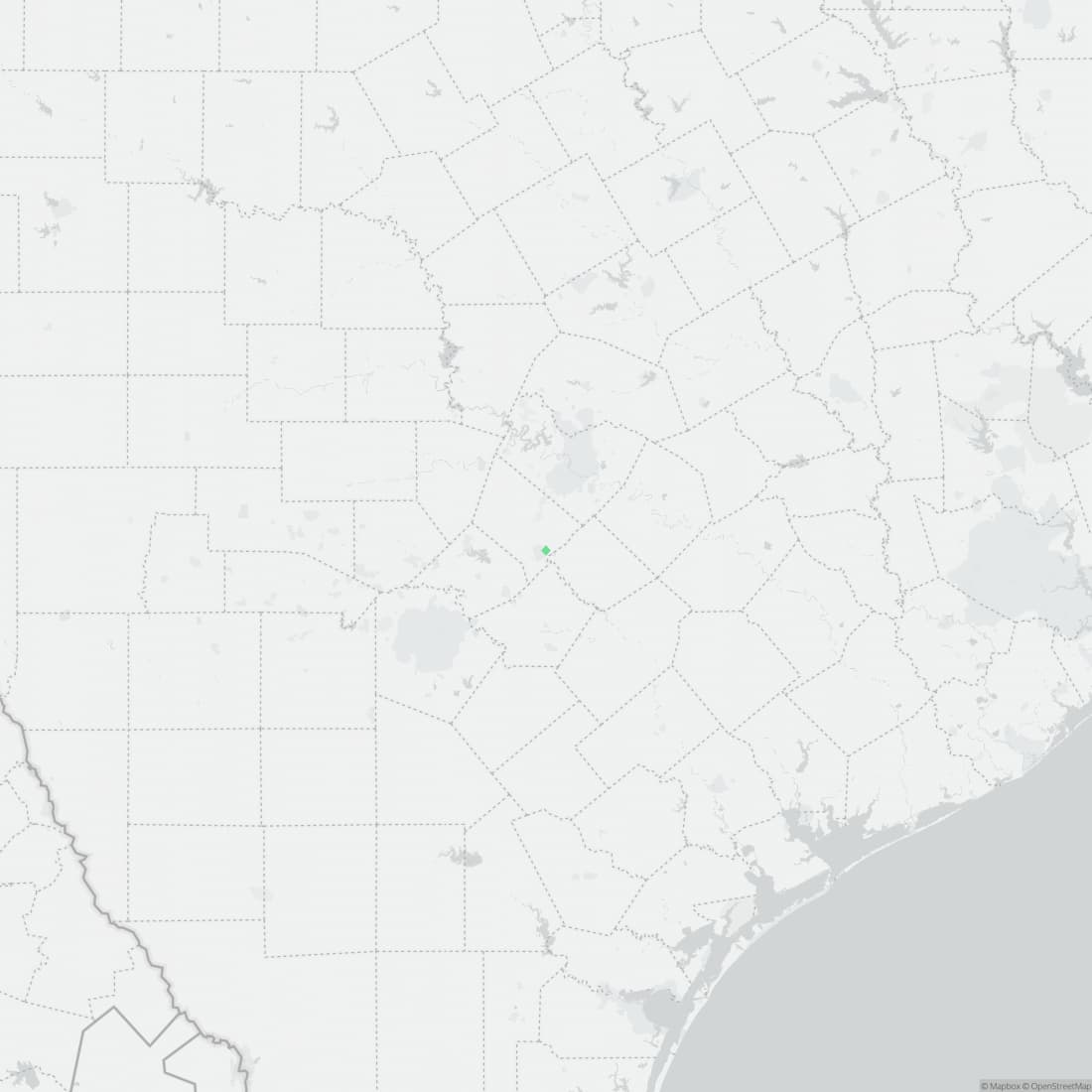
It is extremely rare and can only be found in one locality in San Marcos, Hays County, Texas. The species was first discovered during a spring excavation in the Blanco River. Its range is restricted to the Balcones Aquifer in the vicinity of the Blanco River.
Habitat
Underwater aquatic habitats; water-filled caves and subterranean water sources that maintain clean, cool water. They may feed on snails, shrimps, and amphipods. Not much is known of their reproductive methods. However, based on knowledge of the E. rathbuni, females mature and reproduce throughout the year as is typical of many cave-dwelling species.
Similar species
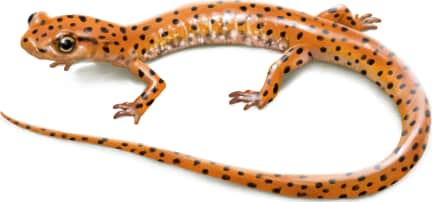
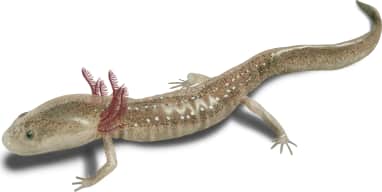
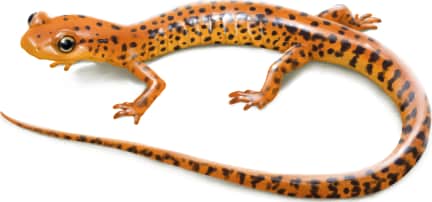
Barton Springs salamander or Eurycea sosorum is smaller and pigmented with up to five varying tints and shades of gray and brown. Texas Cave salamander or Eurycea rathbuni is of roughly similar size, blind and share very similar physical features, habitat, and range. The difference lies in its slimmer limbs and its finned tail. Long-tailed salamander or Eurycea longicauda typically appears yellow and have very long tails. Their tails take up to 60% of their total body length.
Name and etymology
Genus
Eurycea
Probably honoring Eurydice the wife of Orpheus in Greek mythology. Although Rafinesque, who named the genus, only wrote "mythological"
Origin
Honors
Sources
- Rafinesque, 1822. Kentucky Gazette, Lexington, N. S., Vol. 1, No. 9, Feb. 28, p. 3, column 6
Eurycea. Rafinesque, 1822 - Kentucky Gazette, Lexington, N. S., Vol. 1, No. 9, Feb. 28, p. 3, column 6
Species epithet
robusta
Latin for robust, strong, or tough bodied. Referencing stronger build compared to T. rathbuni, Texas Blind Salamander.
Origin
Sources
- Wikipedia: Eurycea robusta ↗
“Eurycea robusta.” Wikipedia. https://en.wikipedia.org/wiki/Blanco_blind_salamander
Explore more names in the etymology index.
At a glance
Range
It is extremely rare and can only be found in one locality in San Marcos, Hays County, Texas. The species was first discovere…
Habitat
Underwater aquatic habitats; water-filled caves and subterranean water sources that maintain clean, cool water. They may feed…
Guide
Reptiles and Amphibians of North America
Range map
Approximate range. © Mapbox © OpenStreetMap