Apalachicola Waterdog
Necturus moleri
Necturus moleri is a type of water-dwelling salamander that keeps its gills even as an adult. It belongs to the Proteidae family and has four strong legs with four toes o…
How to identify
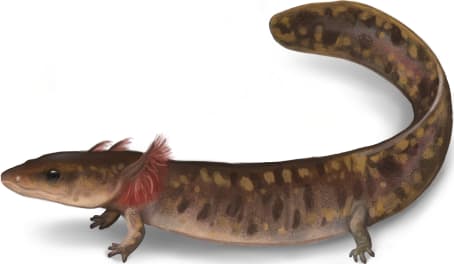
Necturus moleri is a type of water-dwelling salamander that keeps its gills even as an adult. It belongs to the Proteidae family and has four strong legs with four toes on each back leg. It usually has 16 grooves along its sides (sometimes 17). The adult size can be up to 173 mm long, but males are about 24 mm longer than females on average. The males also have a bigger and bumpy cloaca with two spurs at the back. The tail length can be up to 73 mm in males and 63 mm in females. The adult's upper body has a pinkish-gray to light brown or pinkish-tan color with many small dark purple or black spots. The spots are usually the same size as the eyes, but some individuals have no spots (11%) or larger spots (4%). The lower body is dull white with dark spots on the chin and sides, but some individuals have spots all over (25%) or no spots at all (4%). The belly color changes from white to light brown at the edges. When preserved, the upper body is dark grayish-brown with small dark brown spots on the head. The lower body is light brown with dark spots on the chin and white on the throat. The belly is shiny white with light smoky brown at the edges.
Range
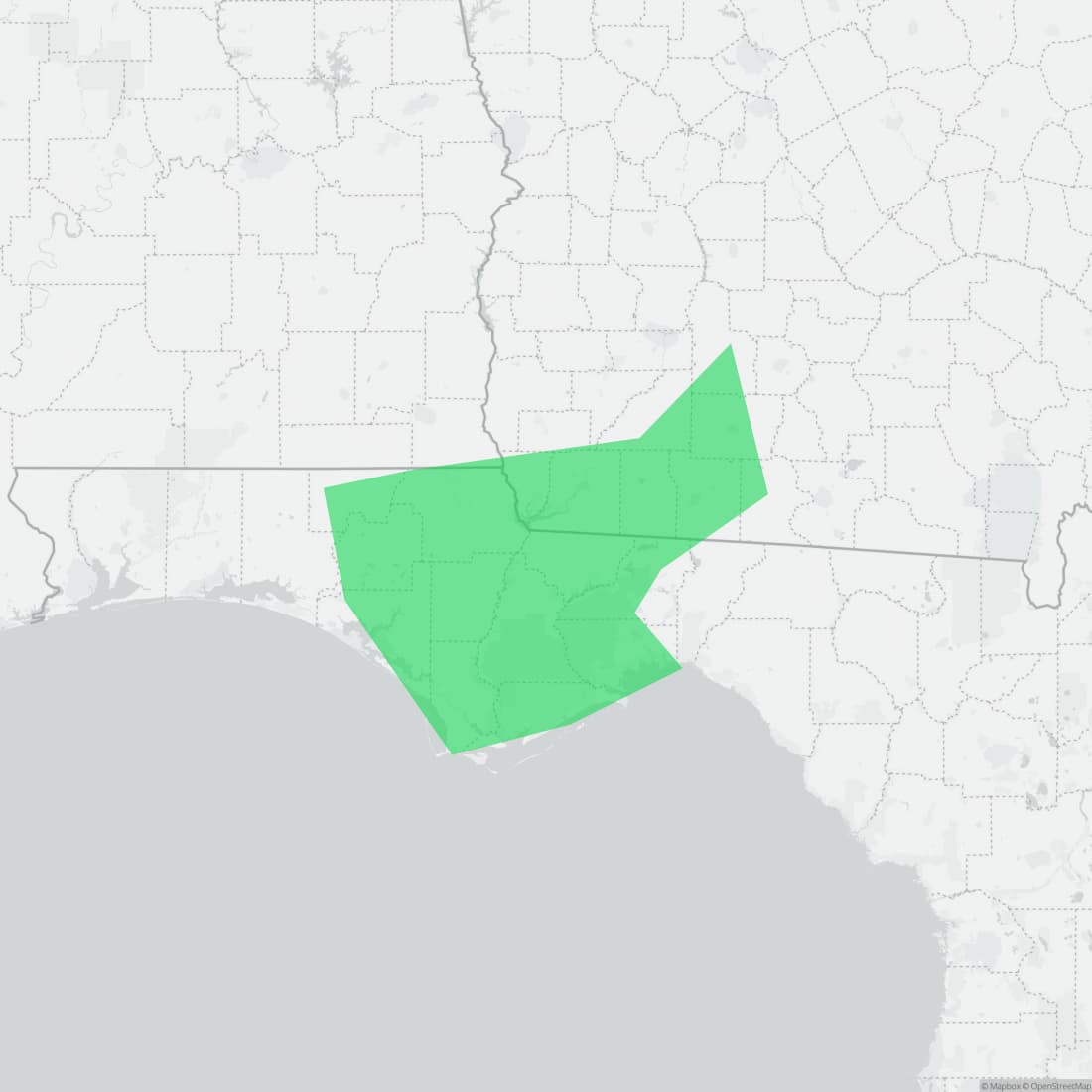
Necturus moleri is a species of aquatic salamander that inhabits a limited range in the southeastern United States. It is endemic to five river basins in Alabama, Florida, and Georgia: the Apalachicola, Chipola, Choctawhatchee/Pea, Econfina, and Ochlockonee.
Habitat
Apalachicola Waterdogs live in slow-moving streams with submerged leaf litter piles. They can be collected by various methods, such as dipnets, minnow traps, or litter bags . The mating season for these salamanders is in winter (November – January), when they exchange spermatophores for fertilization. The females retain the eggs until they lay them in leaf packs in spring (April or May). The larvae hatch and grow into adults in 4 - 6 years.
Similar species
Necturus moleri can be distinguished from other similar species by its coloration and patterning. Unlike the larvae of N. alabamensis, N. lewisi, and N. maculosus, it does not have dark stripes along its back or sides. It also lacks the white spots that characterize the larvae of N. beyeri. The adult Apalachicola Waterdog has dark spots on its body that are absent in the adult N. punctatus. The most closely related species to the Apalachicola Waterdog is the Escambia Waterdog (N. mounti), but they can be differentiated by their belly color: the Escambia Waterdog has a clear belly while the Apalachicola Waterdog has dark spots on its lower sides.
Name and etymology
Genus
Necturus
Greek for swimming (nektos) tail (oura).
Origin
Sources
- Rafinesque, 1819. Journ. Phys. Chim. Hist. Nat. Blainville, Vol. 88, June, pp. 417-418
Necturus. Rafinesque, 1819 - Journ. Phys. Chim. Hist. Nat. Blainville, Vol. 88, June, pp. 417-418
Species epithet
moleri
Honoring Paul E. Moler.
Origin
Honors
Sources
- Wikipedia: Necturus moleri ↗
“Necturus moleri.” Wikipedia. https://en.wikipedia.org/wiki/Apalachicola_waterdog
Explore more names in the etymology index.
At a glance
Range
Necturus moleri is a species of aquatic salamander that inhabits a limited range in the southeastern United States. It is end…
Habitat
Apalachicola Waterdogs live in slow-moving streams with submerged leaf litter piles. They can be collected by various methods…
Guide
Reptiles and Amphibians of North America
Range map
Approximate range. © Mapbox © OpenStreetMap