African Five-lined Skink
Trachylepis quinquetaeniata
The average size is a length of about 8 inches. It has a basic olive-brown color or sometimes dark brown. Can appear with whitish spots and brown stripes that run from it…
How to identify
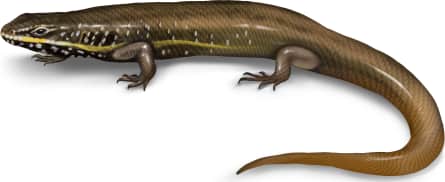
The average size is a length of about 8 inches. It has a basic olive-brown color or sometimes dark brown. Can appear with whitish spots and brown stripes that run from its head to the blue tail. Colors vary depending on age and gender factors. It has glossy scales, with metallic reflections. On the head is a pointed snout and at the sides are ear holes with black spots behind them. The legs are strong and dark brown and the under belly is white.
Range
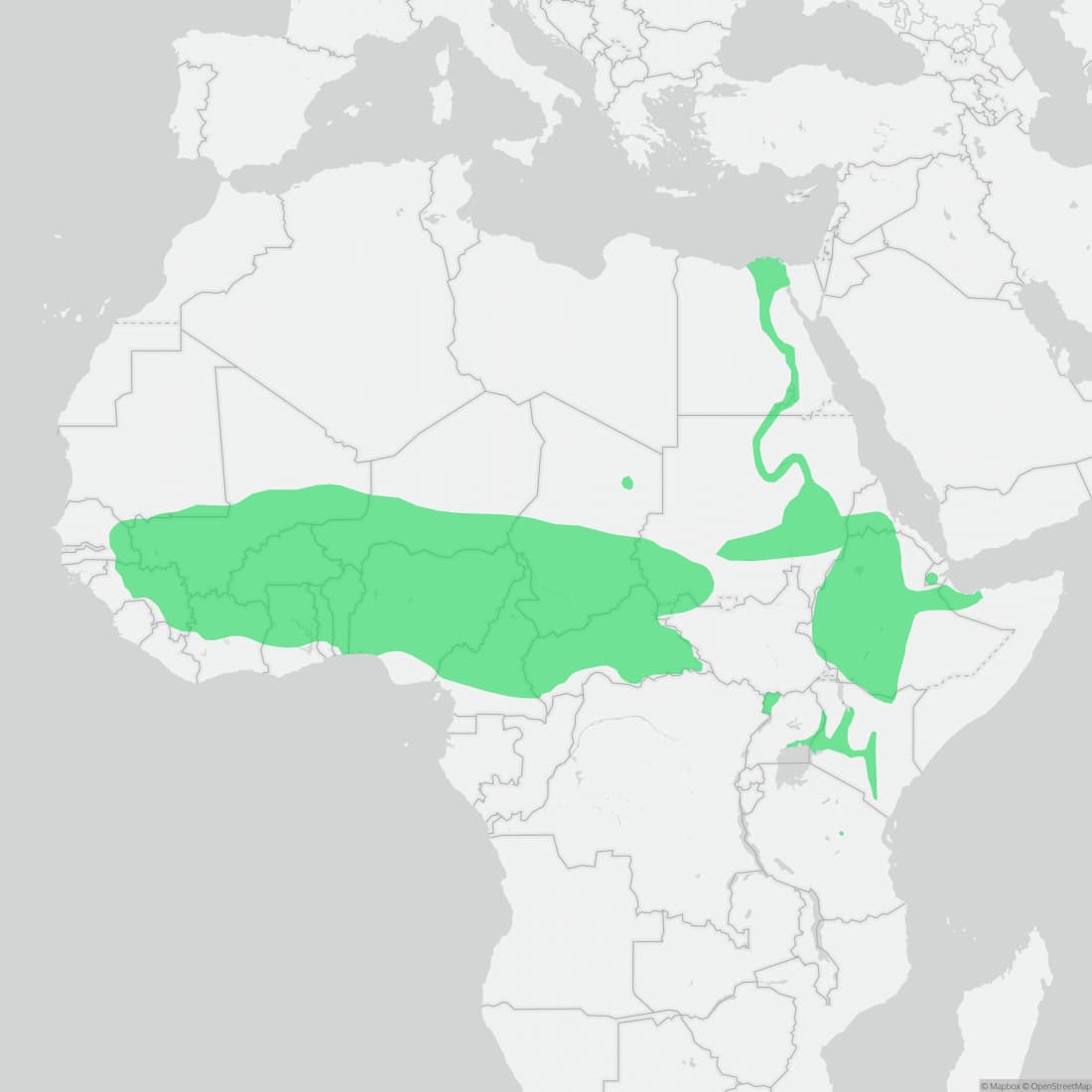
Usually found in Egypt and southern Africa, they can be found in only two parts of America: Florida and Los Angeles – California as an invasive species.
Habitat
They found in rocky or grassy terrains. Most use trees to make their homes and nests but can also used improvised man-made structure for the same purpose. The five-lined skink is mostly insectivorous and may feed on millipedes, grasshoppers, termites but also can be found eating invertebrates like snails and vertebrates such as frogs and baby mice. The female lays 6 - 10 eggs in summer. The young hatch after 61 - 62 days. It is possible that 2 clutches are laid per season, particularly in the northern populations.
Variations
There are four sub species: trachylepis quinquetaeniata quinquetaeniata trachylepis quinquetaeniata riggenbachi trachylepis quinquetaeniata langheldi trachylepis quinquetaeniata scharica
Similar species
The rainbow skink (trachylepis margaritifera) is often mistaken for the African five-lined skink. They are very similar except of course, the brighter more variant colors more common in the rainbow skink.
Name and etymology
Genus
Trachylepis
Greek for rough (trachys) scale (lepis).
Origin
Sources
- Wikipedia: Trachylepis ↗
“Trachylepis.” Wikipedia. https://en.wikipedia.org/wiki/Trachylepis
Species epithet
quinquetaeniata
Latin for five (quinque) lines (taenia).
Origin
Sources
- Wikipedia: Trachylepis quinquetaeniata ↗
“Trachylepis quinquetaeniata.” Wikipedia. https://en.wikipedia.org/wiki/Trachylepis_quinquetaeniata
Explore more names in the etymology index.
At a glance
Range
Usually found in Egypt and southern Africa, they can be found in only two parts of America: Florida and Los Angeles – Califor…
Habitat
They found in rocky or grassy terrains. Most use trees to make their homes and nests but can also used improvised man-made st…
Guide
Reptiles and Amphibians of North America
Range map
Approximate range. © Mapbox © OpenStreetMap