Mexican Fox Squirrel
Sciurus nayaritensis
S. nayaritensis is a relatively large tree squirrel. It has a grayish-brown coat with a darker dorsal stripe. The underside is paler. Its tail is bushy and often has a da…
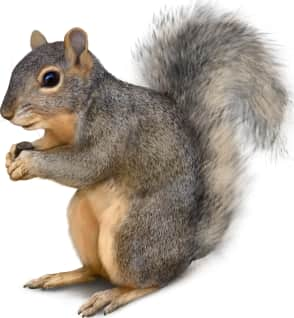
How to identify
S. nayaritensis is a relatively large tree squirrel. It has a grayish-brown coat with a darker dorsal stripe. The underside is paler. Its tail is bushy and often has a dark tip. It lacks the prominent ear tufts seen in S. aberti.
Range
S. nayaritensis is primarily found in the Sierra Madre Occidental of Mexico. Its range extends into a small portion of the southwestern United States, specifically in Arizona.
Habitat
This species prefers coniferous forests, particularly pine-oak forests, in mountainous regions. It is well-adapted to the high-elevation habitats of the Sierra Madre Occidental.
Similar species
S. nayaritensis may overlap in range with S. arizonensis in some limited areas. It is generally larger than S. arizonensis and may have a more pronounced dark tip on the tail. It is differentiated from S. aberti by the absence of ear tufts and its overall coloration.
Name and etymology
Genus
Sciurus
Greek for shadow (skia) tail (oura)
Origin
Sources
- Palmer, Index Generum Mammalium (1904) ↗
Palmer, T. S. 1904. Index Generum Mammalium: a list of the genera and families of mammals. North American Fauna 23. Government Printing Office, Washington. https://doi.org/10.5962/bhl.title.39809
Species epithet
nayaritensis
Latin for from Nayarit
Origin
Sources
- Wikipedia: Sciurus nayaritensis ↗
“Sciurus nayaritensis.” Wikipedia. https://en.wikipedia.org/wiki/Mexican_fox_squirrel
Explore more names in the etymology index.
At a glance
Range
S. nayaritensis is primarily found in the Sierra Madre Occidental of Mexico. Its range extends into a small portion of the so…
Habitat
This species prefers coniferous forests, particularly pine-oak forests, in mountainous regions. It is well-adapted to the hig…
Guide
Mammals of North America
Range map
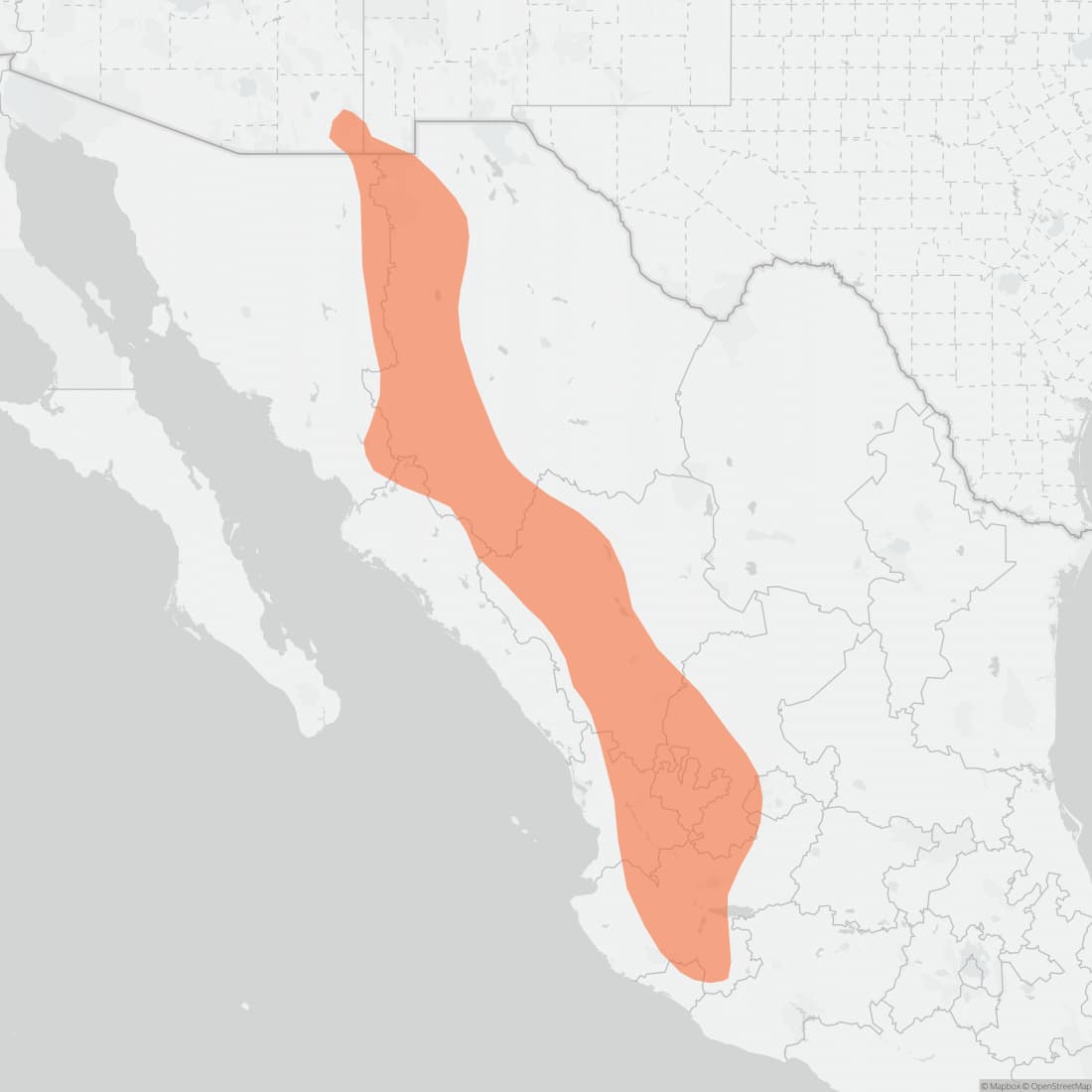
Approximate range. © Mapbox © OpenStreetMap