Yonahlossee Salamander
Plethodon yonahlossee
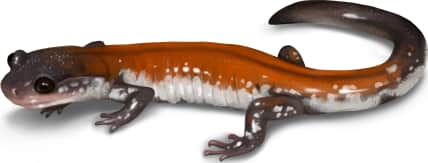
It has a length of 11–22 cm. The lungless salamander has a black dorsal surface that is covered with red or rust colored spots. In adults the spot comes together to for…
How to identify
It has a length of 11–22 cm. The lungless salamander has a black dorsal surface that is covered with red or rust colored spots. In adults the spot comes together to form a wide band throughout the entire length of their dorsal surface. The side of its body has gray or white spots. It's belly and throat are pigmented like the dorsal surface. It has 15-16 coastal grooves.
Range
This species of Salamander is found in the mountains of North Carolina, more specifically in Avery, Yancey and Rutherford Counties in North Carolina. They are also found at the Southern Blue Ridge Mountains of Northern Tennessee, Western North Carolina and some parts of Western Virginia. They are also found in Rocky Fork State Park and Limestone Cove in Unicoi County, Tennessee and White Top Mountain Virginia.
Habitat
They are found under rotten woods and debris. They move from forest floors to underground sites during cold season. They feed on collembola, isoptera, lepidopteran larvae, dipteran larvae, coleopteran adults and larvae, chelonethida, araneida, acarina, diplopoda, chilopoda, Isopoda, and pulmonata. Some were also noticed to feed on centipedes, ants, and beetles. They aggressively defend their territories by producing secretions from their tails that ward off predators like birds. Courtship is in August. Females lay their eggs in august and underground.
Similar species
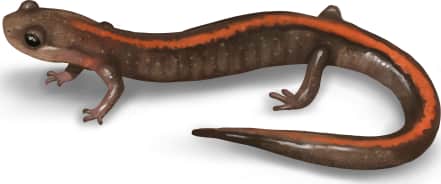
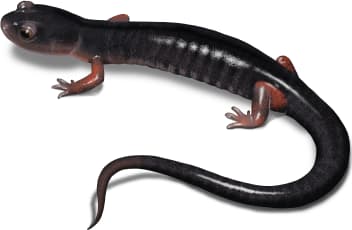
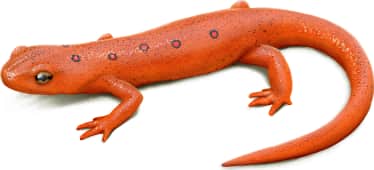
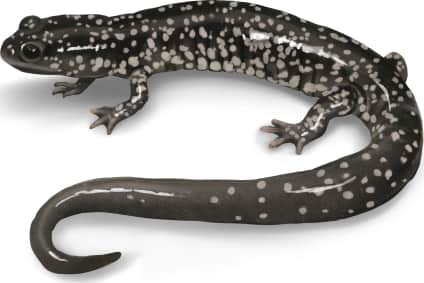
Western Slimy Salamander or Plethodon Albagula has a head that is slightly wider than its body. They are black and have white spots located on the dorsal surface of their bod, leg and tail. Their belly is black and the underside of their head have a reddish pink coloration. Ozark Zigzag Salamander or Plethodon Angusticlavius is a small dark salamander with a narrow mid dorsal stripe. The stripe may vary from yellow to orange to red. Belly has white and black spots. Cheoah Bald Salamander or Plethodon Cheoah are easily identified by the presence of dark gray bodies and lighter gray cheek spots. They can also be identified by the color of their legs which is red. Eastern Newts or Notophthalmus Viridescens vary in color from yellow to greenish brown, with red spots and black border on their dorsal surface. They have rough and moist skin.
Name and etymology
Genus
Plethodon
Greek for full of (plethore) teeth (odon).
Origin
Sources
- Tschudi, "1838" 1839. reprinted in Classif. Batr., Mem. Soc. Sci. Nat. Neuchatel, p. 92 ↗
Plethodon. Tschudi, "1838" 1839 - reprinted in Classif. Batr., Mem. Soc. Sci. Nat. Neuchatel, p. 92
Species epithet
yonahlossee
Belonging to yonahlossee Road, North Carolina.
Origin
Sources
- Dunn, 1917. Bull. Amer. Mus. Nat. Hist., Vol. 37, p. 598
Plethodon yonahlossee. Dunn, 1917 - Bull. Amer. Mus. Nat. Hist., Vol. 37, p. 598
Explore more names in the etymology index.
At a glance
Range
This species of Salamander is found in the mountains of North Carolina, more specifically in Avery, Yancey and Rutherford Cou…
Habitat
They are found under rotten woods and debris. They move from forest floors to underground sites during cold season. They feed…
Guide
Reptiles and Amphibians of North America
Range map
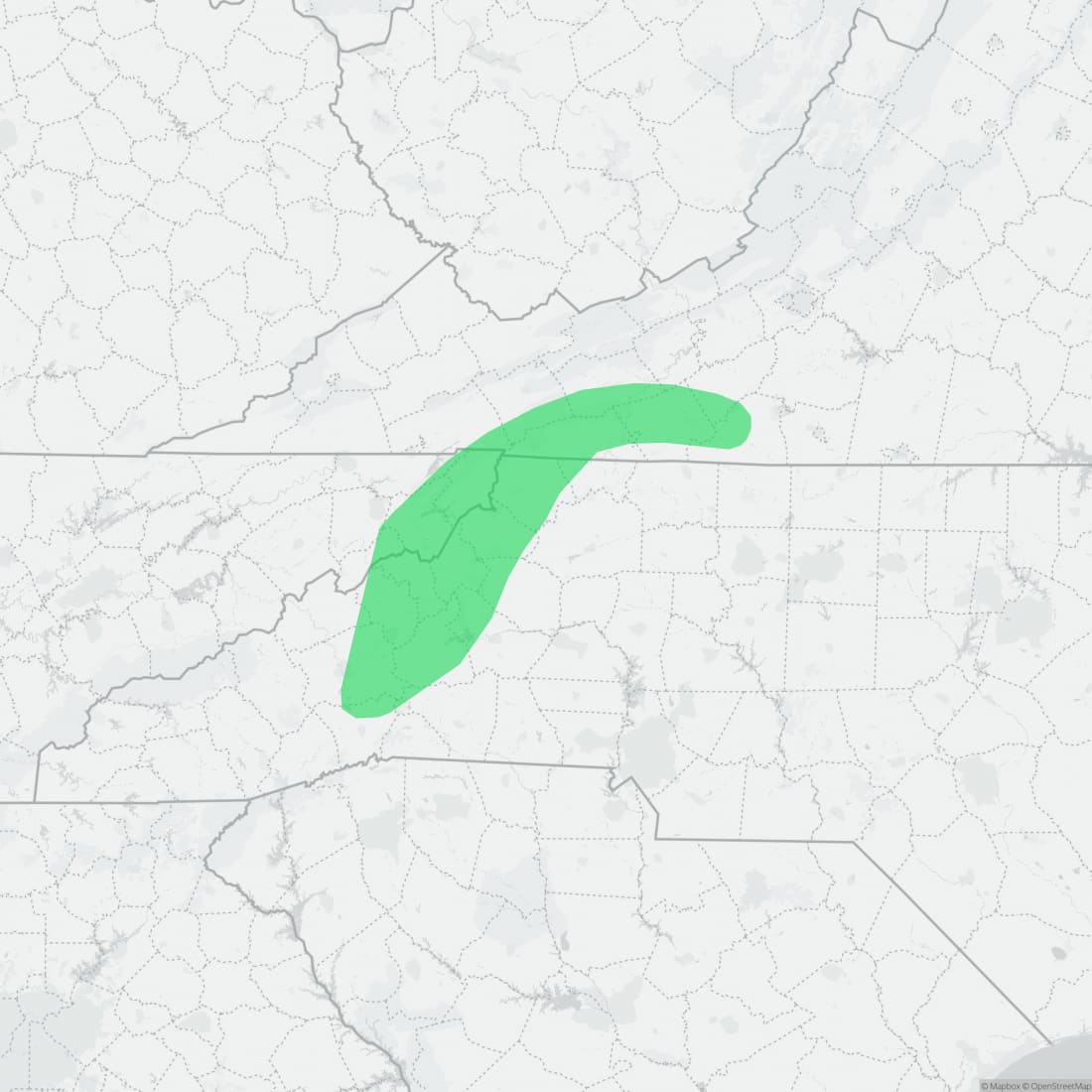
Approximate range. © Mapbox © OpenStreetMap