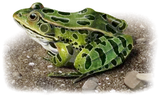
Eastern Newt
Notophthalmus viridescens
Notophthalmus viridescens has an average length range of 2.5 – 4 inches. They have a brown or green coloration patterned with fine black flecks all over the body. Some sp…
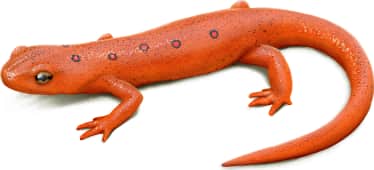
How to identify
Notophthalmus viridescens has an average length range of 2.5 – 4 inches. They have a brown or green coloration patterned with fine black flecks all over the body. Some specimens have a row of red spots on the body as well. The newts have brighter colors on the belly (orange or yellow). Newts have rough, dry skin that is not as slippery as salamander’s skins. The aquatic larvae of this newt have a length of 0.2 – 0.35 inches and they transform to the terrestrial ‘eft’ stage after 2 – 5 months. The efts have a reddish-orange color and also have the red spots present in adults. Efts mature into adults after about 2 – 3 years on land.
Range
This newt is endemic to most of eastern North America, from the Canadian Maritime Provinces west to the Great Lakes and south to Texas, Alabama, Georgia and Florida.
Habitat
The eastern newt can be found in both deciduous and coniferous woodland. Adult newts and larvae thrive in small freshwater pools like ponds, small lakes, marshes and dishes preferably with muddy floors. It is not unusual to see adults on land if the aquatic habitat becomes unsuitable or when the climate is dry. Juvenile eft stage newts can be found in lake shores and woodland habitats. The efts are nocturnal and like to rest in cool, moist places. Females lay between 200 and 400 eggs on submerged vegetation each breeding season. Adult newts eat primarily midge larva and many other insect larva and almost any small invertebrate they come across.
Variations
Red-spotted newt (N. v. viridescens) Broken-striped newt (N. v. dorsalis) Central newt (N. v. louisianensis) Peninsula newt (N. v. piaropicola)
Similar species
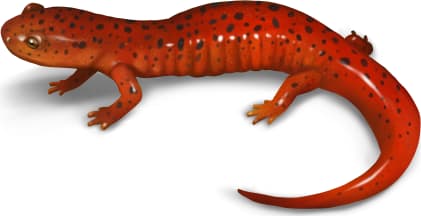
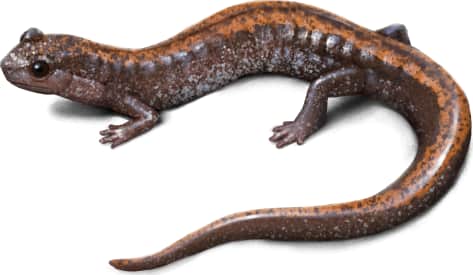
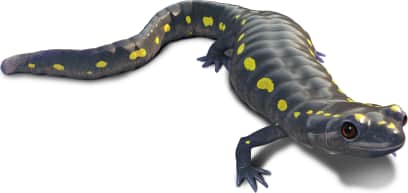
Red Salamander or Pseudotriton ruber is undoubtedly very similar to the N. viridescens especially because of its red color and its black spots. However, the black spots in the red salamander do not go beyond its back. This salamander is also longer with an average length range of 4.3 – 7.1 inches. The Red-backed Salamander Plethodon cinereus is a tiny bit smaller (2.2 – 3.9 inches). They have a red stripe dorsal color that runs down the back and tapers at the tail. Spotted Salamander or Ambystoma maculatum is considerably longer (5.9 – 9.8 inches). It has a wide snout and may have a black or bluish-black ground color. It can be easily differentiated by the rows of yellowish-orange spots that run from the top of the head to the tip of the tail.
Name and etymology
Genus
Notophthalmus
Greek for eye (ophtalmus) mark (noto), referencing eye spots on dorsum.
Origin
Sources
- Rafinesque, 1820. Ann. Nat., Lexington, Vol. 1, p. 5
Notophthalmus. Rafinesque, 1820 - Ann. Nat., Lexington, Vol. 1, p. 5
Species epithet
viridescens
Latin for slightly () green (virdis).
Origin
Sources
- (Rafinesque, 1820). Ann. Nat., Lexington, Vol. 1, p. 5
Notophthalmus viridescens. (Rafinesque, 1820) - Ann. Nat., Lexington, Vol. 1, p. 5
Explore more names in the etymology index.
More illustrations
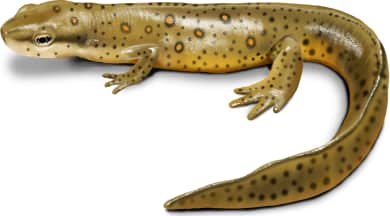
Red-spotted Newt
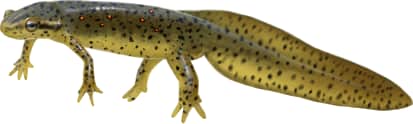
Red-spotted Newt
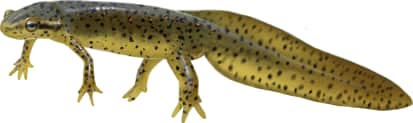
Central Newt
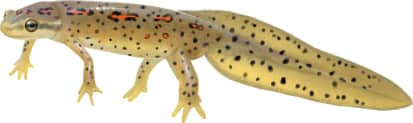
Broken-striped Newt
At a glance
Size
7 to 12.4 cm
Range
This newt is endemic to most of eastern North America, from the Canadian Maritime Provinces west to the Great Lakes and south…
Habitat
The eastern newt can be found in both deciduous and coniferous woodland. Adult newts and larvae thrive in small freshwater po…
Range map
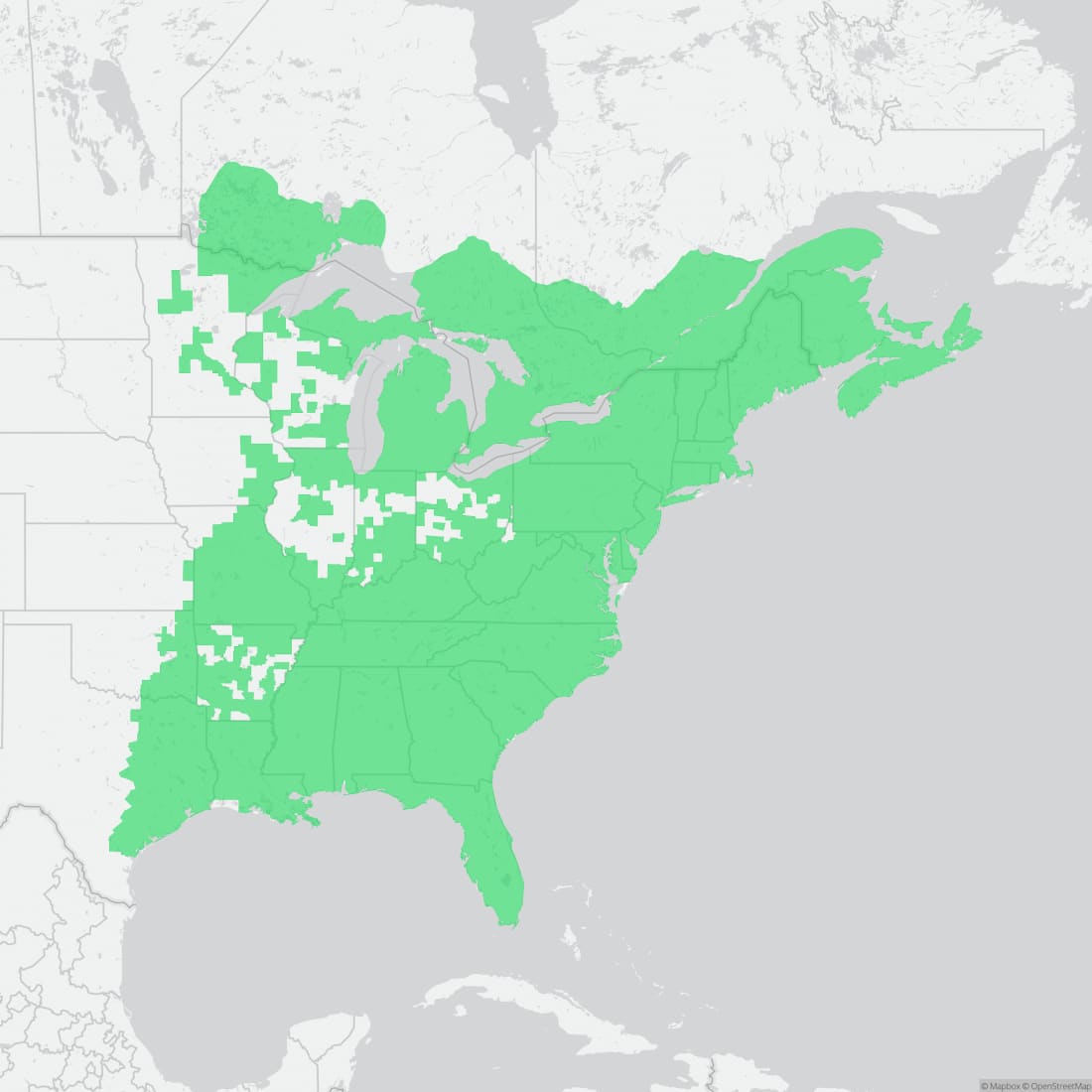
Approximate range. © Mapbox © OpenStreetMap