Barefoot Banded Gecko
Coleonyx switaki
The Coleonyx Switaki has a length of 2.0-3.4 inches from its snout to vent. Barefoot banded gecko has a moderate head that is wider than the necks in adult. Granular scal…
How to identify
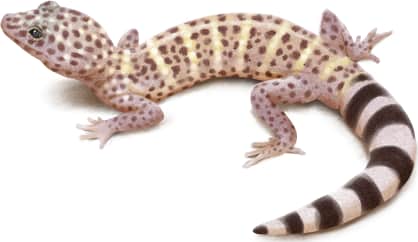
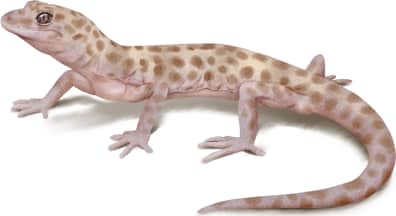
The Coleonyx Switaki has a length of 2.0-3.4 inches from its snout to vent. Barefoot banded gecko has a moderate head that is wider than the necks in adult. Granular scales cover the head and snout uniformly. The body of this species has a variable color pattern with round brown spots all over. It possesses a short, fleshy tail, movable eyelids and it lacks toepads.
Range
The barefoot banded gecko is native to Baja California Sur, Southern California in the United States and Isla San Marcos in Mexico.
Habitat
This species is usually found in rocky, dry habitats, rocky hillsides and dessert foothill. The barefoot banded gecko or Coleonyx switaki is nocturnal in nature, creeping under rocks or crevices during the day. It feeds on insects, spiders and arthropods. The females lay several clutches of eggs in twos under surface objects like rocks. It takes about two months for eggs to hatch. The hatchlings are bright yellow or orange in color with a distinctly white and black banded tail.
Variations
Coleonyx Switaki Gypsicolus differs from the barefoot banded gecko with its eyelid fringe scales, scales across its head and significantly higher number of post nasals.
Similar species
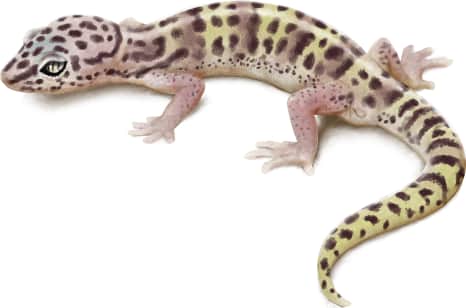
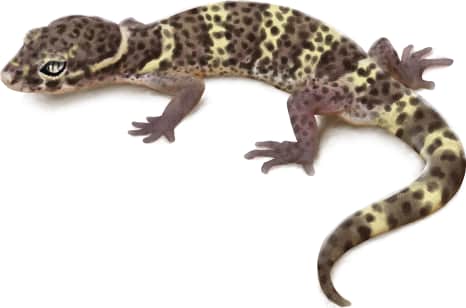
The Texas banded gecko or Coleonyx brevis has an alternating and of yellow and pink down its body with varying degree of black accenting on the bands. The Western banded gecko or Coleonyx variegatus is sandy-colored and has dark crossbands that are broken into patches. This species has a distinguishing feature of prominent eyes with lids that are movable unlike the typical geckos. It lacks small tubercles on the neck and sides. The Central American banded gecko or Coleonyx mitratus is moderately sized with black, brown or yellow horizontal bands on its dorsal surface.
Name and etymology
Genus
Coleonyx
Greek for sheath (koleos) claw (onyx).
Origin
Sources
- Gray, 1845. Ann. Mag. Nat. Hist., Ser. 1, Vol. 16, p. 162 ↗
Coleonyx. Gray, 1845 - Ann. Mag. Nat. Hist., Ser. 1, Vol. 16, p. 162
Species epithet
switaki
Honors Karl H. Switak.
Origin
Honors
Sources
- (Murphy, 1974). Proc. California Acad. Sci., Ser. 4, Vol. 40, No. 4, p. 87 ↗
Coleonyx switaki. (Murphy, 1974) - Proc. California Acad. Sci., Ser. 4, Vol. 40, No. 4, p. 87
Explore more names in the etymology index.
At a glance
Range
The barefoot banded gecko is native to Baja California Sur, Southern California in the United States and Isla San Marcos in M…
Habitat
This species is usually found in rocky, dry habitats, rocky hillsides and dessert foothill. The barefoot banded gecko or Cole…
Guide
Reptiles and Amphibians of North America
Range map
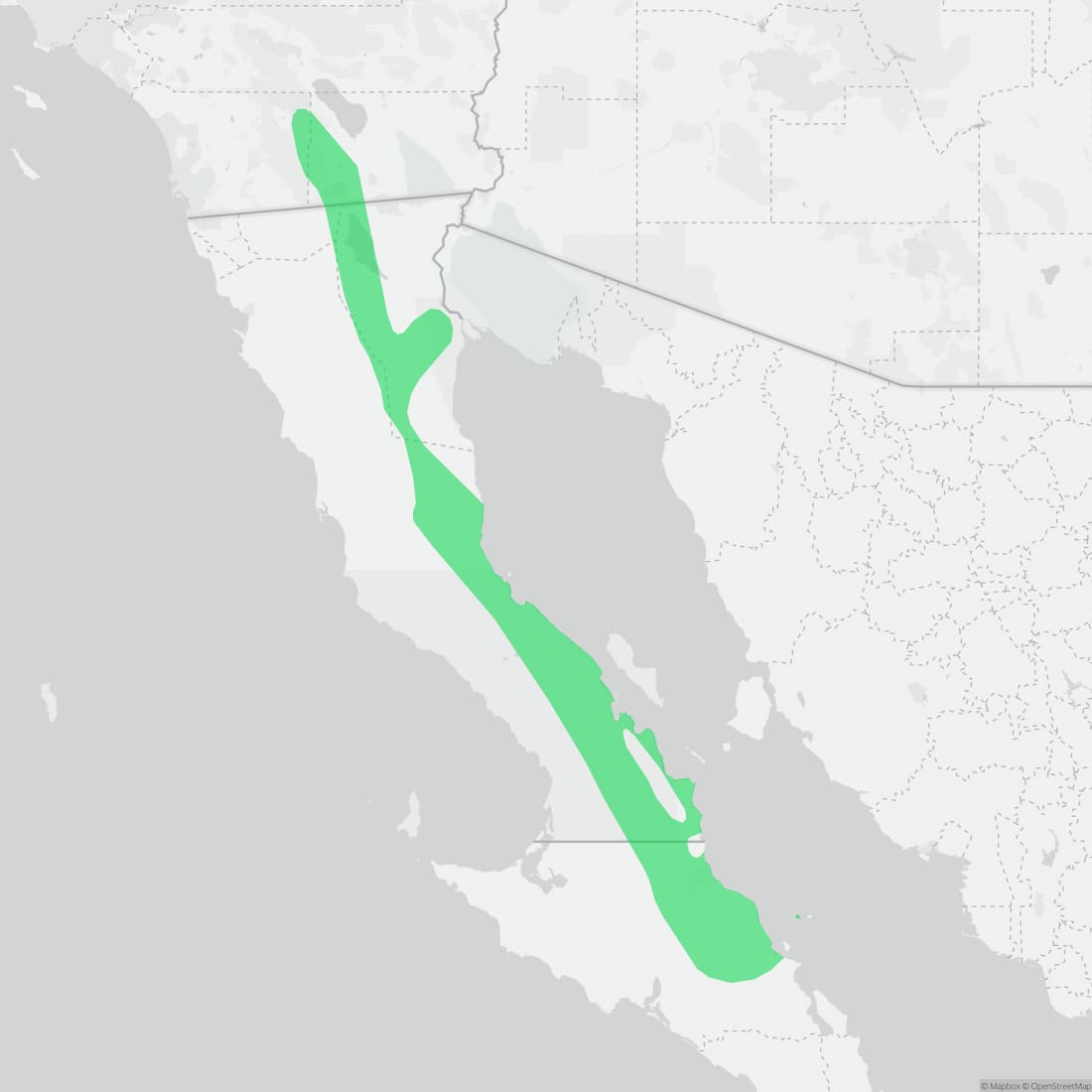
Approximate range. © Mapbox © OpenStreetMap