Diamondback Watersnake
Nerodia rhombifer
A medium to large semi-aquatic species with rough, keeled scales that averages 30-50 inches in length, but can grow a bit longer. They have a triangular head with large e…
How to identify
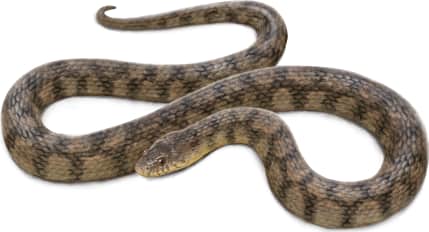
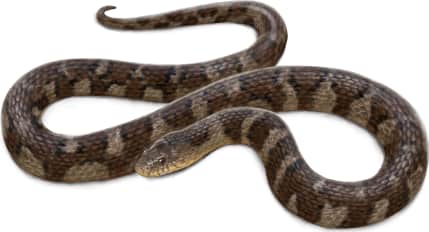
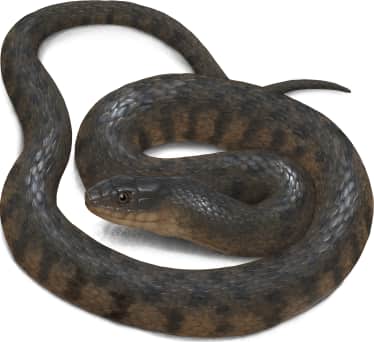
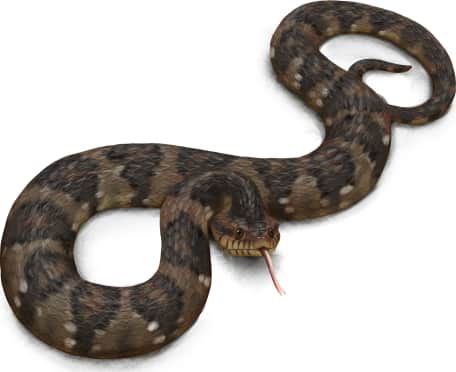
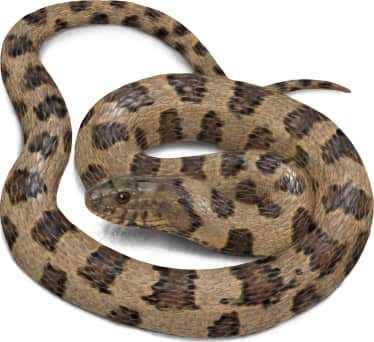
A medium to large semi-aquatic species with rough, keeled scales that averages 30-50 inches in length, but can grow a bit longer. They have a triangular head with large eyes angled slightly upward. Their background color is usually dark olive green to brown with a black net-like pattern down its back connecting to black bars on its sides. The ventral scales are yellow or light brown with black splotches. Adult males have papillae (tiny bumps) on the surface of their chin, which is unique to this species.
Range
East central United States and coastal Mexico; from southeastern Iowa at the northern border, to the Yucatan Peninsula at the south, and west Texas at the western border, to central Alabama on the east.
Habitat
A common snake within its range, this species lives near slow-moving bodies of freshwater. It will often drape itself from branches overhanging the water's edge.
Variations
Background color can be grey, dark green, or reddish brown.
Similar species
The banded watersnake (*Nerodia fasciata*) looks quite similar, as does the Mississippi green watersnake (*Nerodia cyclopion*). The northern watersnake (*Nerodia sipedon*) and brown watersnake (*Nerodia taxispilota*) bear resemblance, but have more distinct patterning.
Name and etymology
Genus
Nerodia
From Nereis the sea nymphs of Greek mythology.
Origin
Sources
- Baird and Girard, 1853. Cat. N. Amer. Rept., Pt. 1, p. 47 ↗
Nerodia. Baird and Girard, 1853 - Cat. N. Amer. Rept., Pt. 1, p. 47
Species epithet
rhombifer
Greek for bearing a rectagular shape (rhomobs) referencing its diamond shaped dorsal pattern.
Origin
Sources
- (Hallowell, 1852). Proc. Acad. Nat. Sci. Philadelphia, Vol. 6, p. 177 ↗
Nerodia rhombifer. (Hallowell, 1852) - Proc. Acad. Nat. Sci. Philadelphia, Vol. 6, p. 177
Explore more names in the etymology index.
At a glance
Range
East central United States and coastal Mexico; from southeastern Iowa at the northern border, to the Yucatan Peninsula at the…
Habitat
A common snake within its range, this species lives near slow-moving bodies of freshwater. It will often drape itself from br…
Guide
Reptiles and Amphibians of North America
Range map
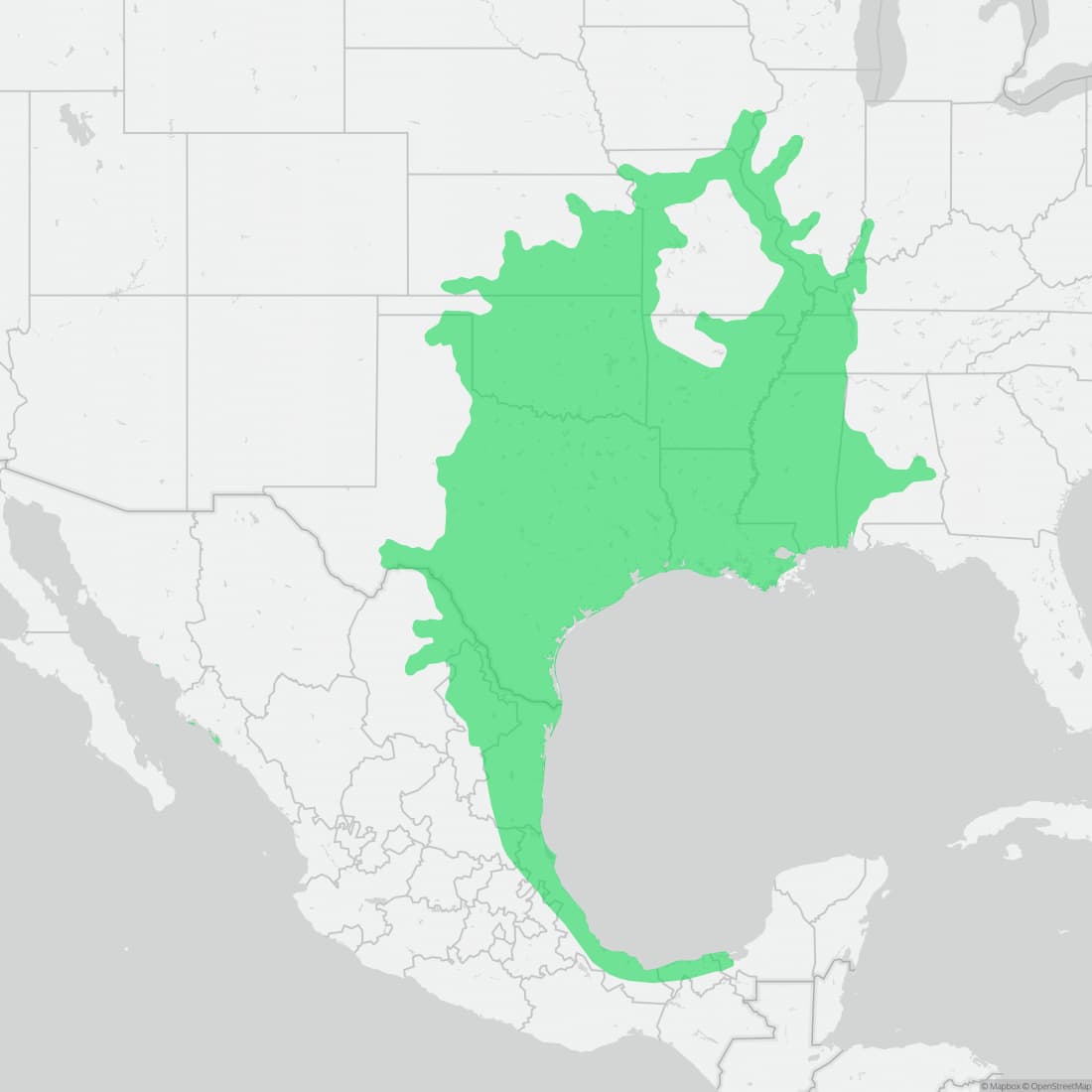
Approximate range. © Mapbox © OpenStreetMap