South Carolina Slimy Salamander
Plethodon variolatus
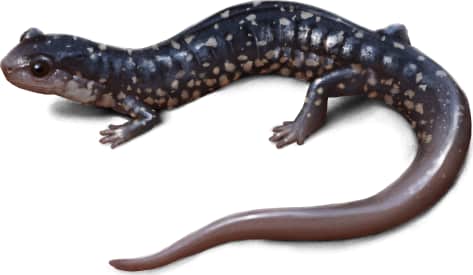
This is a slender, medium-sized and lungless salamander with an average total length of 6.5 inches. The limbs are relatively short and the eyes are bulbous and black. It…
How to identify
This is a slender, medium-sized and lungless salamander with an average total length of 6.5 inches. The limbs are relatively short and the eyes are bulbous and black. It has a thick tail that tapers at the end. The background color is typically shiny black with dark-grey, light-grey, or silvery spots from the neck to the end of the tail. The skin of this salamander has a gland that secretes a sticky noxious slime that can be used to ward off predators. Juveniles are jet black and begin to develop flecks from the sides to the dorsum as they age.
Range
This salamander is endemic to the Southern Coastal Plain Physiographic Province of South Carolina. Its range also includes far southeastern Georgia.
Habitat
The South Carolina salamanders thrive in thick damp woods with wood debris like bark scraps, fallen timber, and fallen foliage. They can also be found in mixed hardwood forests and longleaf pine savannas. The juveniles are found in pine bark around pine boles usually at the beginning of spring. Females deposit eggs under decaying logs. The salamander feeds on invertebrates especially insects.
Similar species
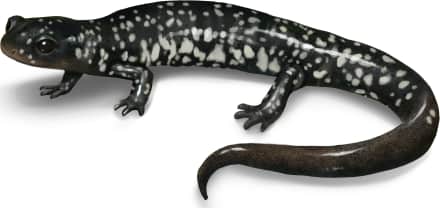
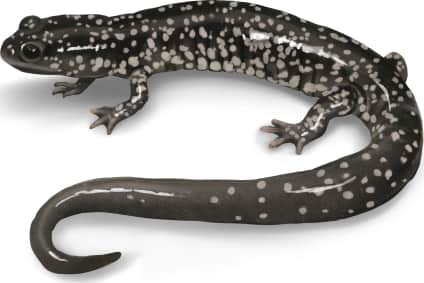
The White-spotted Slimy Salamander (Plethodon cylindraceus) has an average length range between 4.5-8 inches. It also secretes a sticky slime from skin glands. It has a shiny black body with white flecks on the body, tail, and head. The Northern Slimy Salamander (Plethodon glutinosus) is typically between 4.7-6.7 inches in total length. It has a black background color with numerous scattered gold or silvery flecks from its head to its tail. It has 15-17 costal grooves. The Western Slimy Salamander (Plethodon albagula) has an overall black color with white spots from head to tail. In some cases, the spots are large blotches on the sides of the body. The eyes are bulbous and large and they have long tails.
Name and etymology
Genus
Plethodon
Greek for full of (plethore) teeth (odon).
Origin
Sources
- Tschudi, "1838" 1839. reprinted in Classif. Batr., Mem. Soc. Sci. Nat. Neuchatel, p. 92 ↗
Plethodon. Tschudi, "1838" 1839 - reprinted in Classif. Batr., Mem. Soc. Sci. Nat. Neuchatel, p. 92
Species epithet
variolatus
Latin for spotted like small pox (variola).
Origin
Sources
- (Gilliams, 1818). Journ. Acad. Nat. Sci. Philadelphia, Vol. 1, p. 460, pl. 18, fig. 1 ↗
Plethodon variolatus. (Gilliams, 1818) - Journ. Acad. Nat. Sci. Philadelphia, Vol. 1, p. 460, pl. 18, fig. 1
Explore more names in the etymology index.
At a glance
Range
This salamander is endemic to the Southern Coastal Plain Physiographic Province of South Carolina. Its range also includes fa…
Habitat
The South Carolina salamanders thrive in thick damp woods with wood debris like bark scraps, fallen timber, and fallen foliag…
Guide
Reptiles and Amphibians of North America
Range map
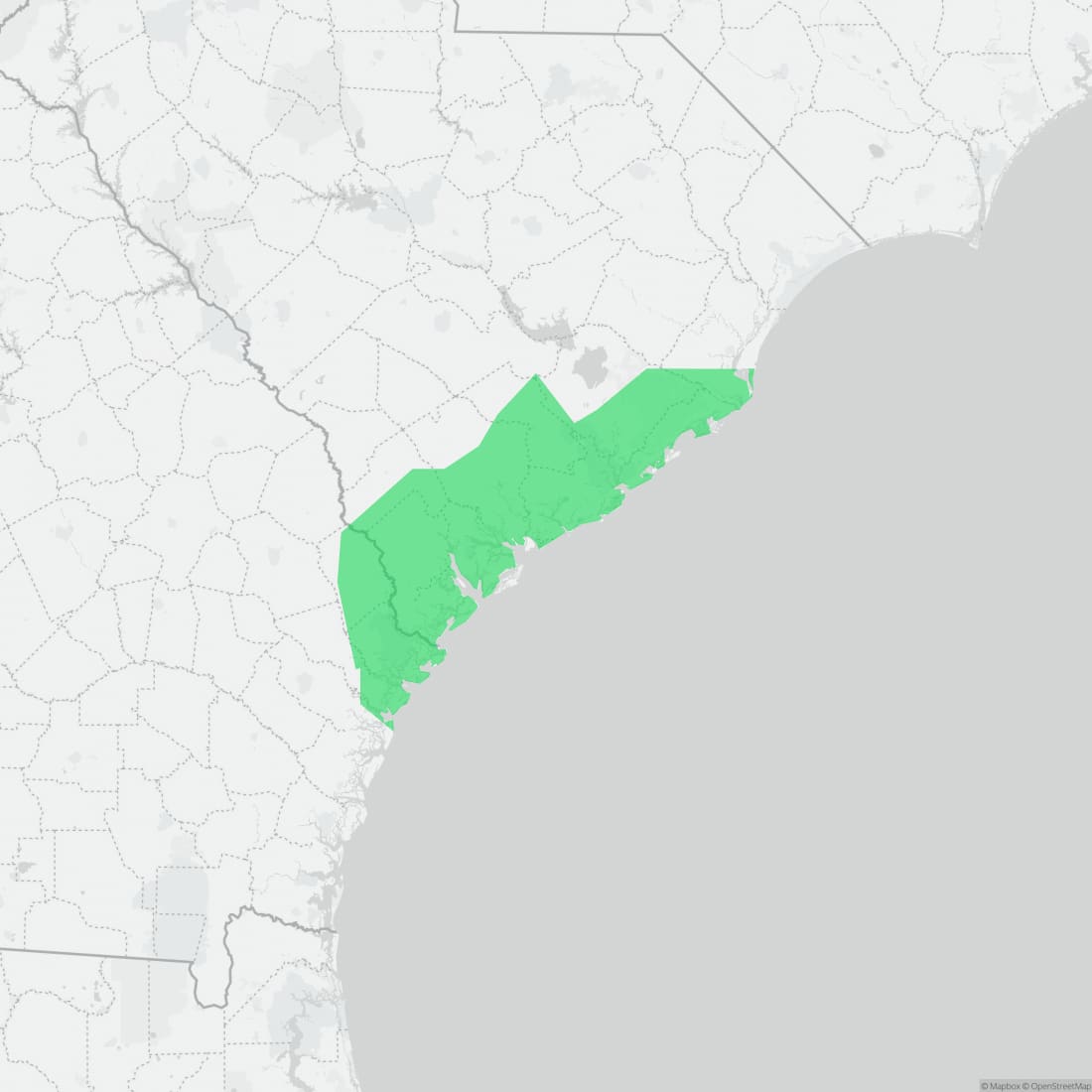
Approximate range. © Mapbox © OpenStreetMap