
Ornate Chorus Frog
Pseudacris ornata
A small, frog averaging 1-1.5 inches in body length. It has primarily smooth skin, with some tiny bumps. It has a moderately pointed snout and a somewhat narrow body. Dep…
How to identify
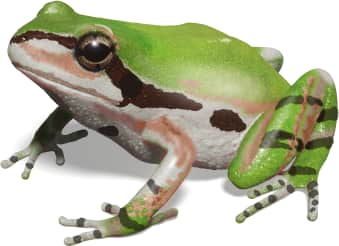
A small, frog averaging 1-1.5 inches in body length. It has primarily smooth skin, with some tiny bumps. It has a moderately pointed snout and a somewhat narrow body. Depending on location, it can be brown, green, or reddish, but all are characterized by very distinct dark brown to black markings, which extend from the tip of the snout down the sides of the face and body. These markings begin as stripes on the snout, but then become irregular, smooth-edged patches past the eyes. There are typically 2 adjacent patches on each side of the lower back, and the legs are banded with muted dark patches. Its ventrum is pale and unmarked.
Range
Range stretches through the southeast from coastal North Carolina through coastal and central South Carolina, the southern halves of Georgia and Alabama, northern Florida, and coastal Mississippi into the adjacent corner of Louisiana.
Habitat
This species spends most of its life buried underground among roots and vegetation in habitats with sandy substrate. From November to March, they emerge to breed in temporary wetlands, ponds, ditches, and flooded meadows. They can be found in pine woodlands, forests, and fallow fields near these temporary water sources.
Variations
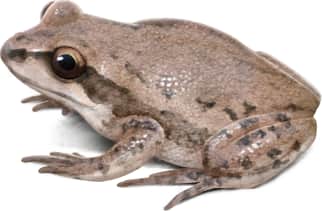
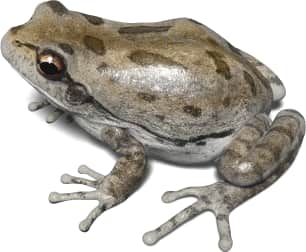
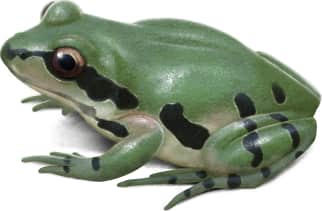
Primary dorsal coloration can be grey, tan, brown, burnt orange, or pale to bright green. Some have very subtle darker patches on their backs. Some have bright yellow to orange patches on the fronts of their legs.
Similar species
Could be confused with the overlapping upland chorus frog (*Pseudacris feriarum*) or pine woods tree frog (*Hyla femoralis*). It also looks a lot like the Baja California tree frog (*Pseudacris hypochondriaca*) which lives in the western US.
Name and etymology
Genus
Pseudacris
Greek for false(pseudes) locus(akris) referencing genus Acris.
Origin
Sources
- Fitzinger, 1843. Syst. Rept., p. 31 ↗
Pseudacris. Fitzinger, 1843 - Syst. Rept., p. 31
Species epithet
ornata
Latin for ornate or decorated.
Origin
Sources
- (Holbrook, 1836). N. Amer. Herp., Ed. 1, Vol. 1, p. 97, pl. 16 ↗
Pseudacris ornata. (Holbrook, 1836) - N. Amer. Herp., Ed. 1, Vol. 1, p. 97, pl. 16
Explore more names in the etymology index.
More illustrations
Green variant
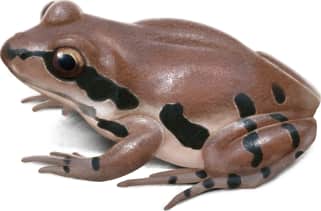
Red variant
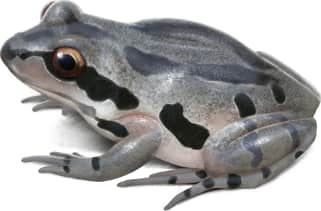
Grey variant
At a glance
Range
Range stretches through the southeast from coastal North Carolina through coastal and central South Carolina, the southern ha…
Habitat
This species spends most of its life buried underground among roots and vegetation in habitats with sandy substrate. From Nov…
Guide
Reptiles and Amphibians of North America
Range map
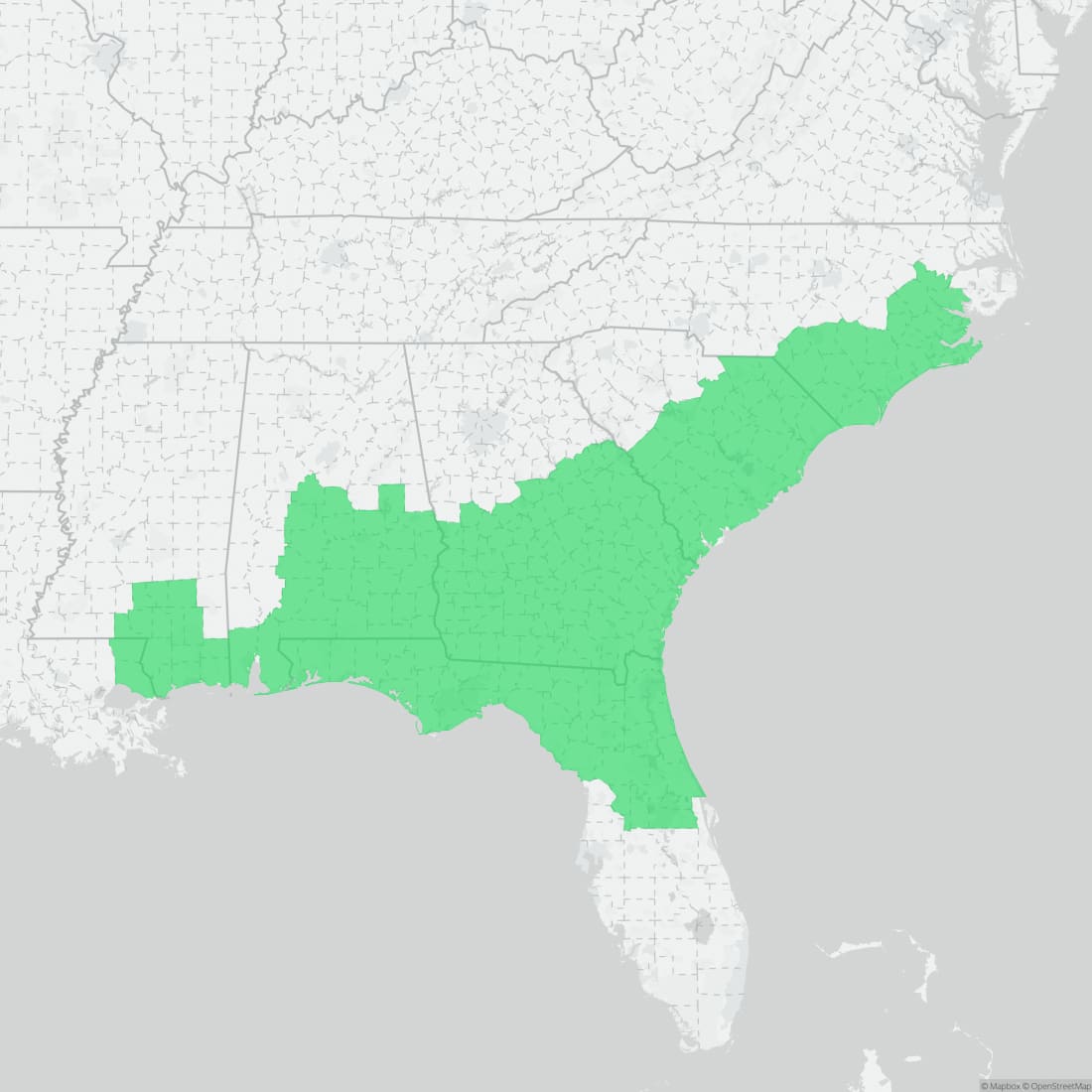
Approximate range. © Mapbox © OpenStreetMap