Black-necked Garter Snake
Thamnophis cyrtopsis
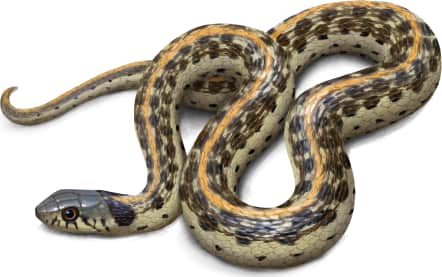
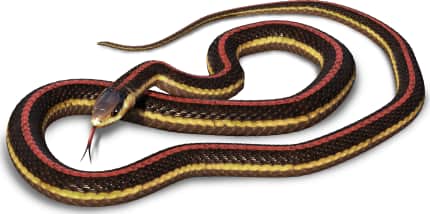
Dorsum is gray, olive, or brown and exhibits a stripe down the back that can be yellow or white; possess keeled dorsal scales. Head is gray with greenish to brownish vent…
How to identify
Dorsum is gray, olive, or brown and exhibits a stripe down the back that can be yellow or white; possess keeled dorsal scales. Head is gray with greenish to brownish ventral coloring. Males have longer tails than females. Females and males mate in the spring and females give birth in the summer. Clutch sizes can range from 3 to 25 young. Young typically exhibit brighter colors and overall greater color contrast than fully developed individuals.
Range
Central United States and Mexico starting in southern Utah and Colorado through Arizona, New Mexico, western and central Texas, and covering most of Mexico.
Habitat
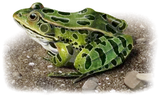
Can be found relatively far from water bodies in shrubland, forests, or deserts, but usually stays close to a steady source of water. This can include canals, streams, and springs. Prefers areas with rocky hillsides, ledges, and ravines. Mainly hunts for food near water sources on banks; diet can include toads, frogs, lizards, salamanders, and arthropods.
Variations
Subspecies Eastern Black-necked Gartersnake, or *Thamnophis cyrtopsis ocellatus*, is noticeably smaller than subspecies Western Black-necked Gartersnake, or *Thamnophis cyrtopsis cyrtopsis*. The former subspecies has an average total length of 51 cm (20 inches) while the latter can reach 107 cm (42 inches).
Similar species
Name and etymology
Genus
Thamnophis
Greek for bush (thamnos) snake (ophis).
Origin
Sources
- Fitzinger, 1843. Syst. Rept., p. 26 ↗
Thamnophis. Fitzinger, 1843 - Syst. Rept., p. 26
Species epithet
cyrtopsis
Greek for appearing (-opsis) curved (cyrto), referencing curvature of nuchal splotches.
Origin
Sources
- (Kennicott, 1860). Proc. Acad. Nat. Sci. Philadelphia, Vol. 12, p. 333 ↗
Thamnophis cyrtopsis. (Kennicott, 1860) - Proc. Acad. Nat. Sci. Philadelphia, Vol. 12, p. 333
Explore more names in the etymology index.
At a glance
Size
41 to 71 cm
Range
Central United States and Mexico starting in southern Utah and Colorado through Arizona, New Mexico, western and central Texa…
Habitat
Can be found relatively far from water bodies in shrubland, forests, or deserts, but usually stays close to a steady source o…
Range map
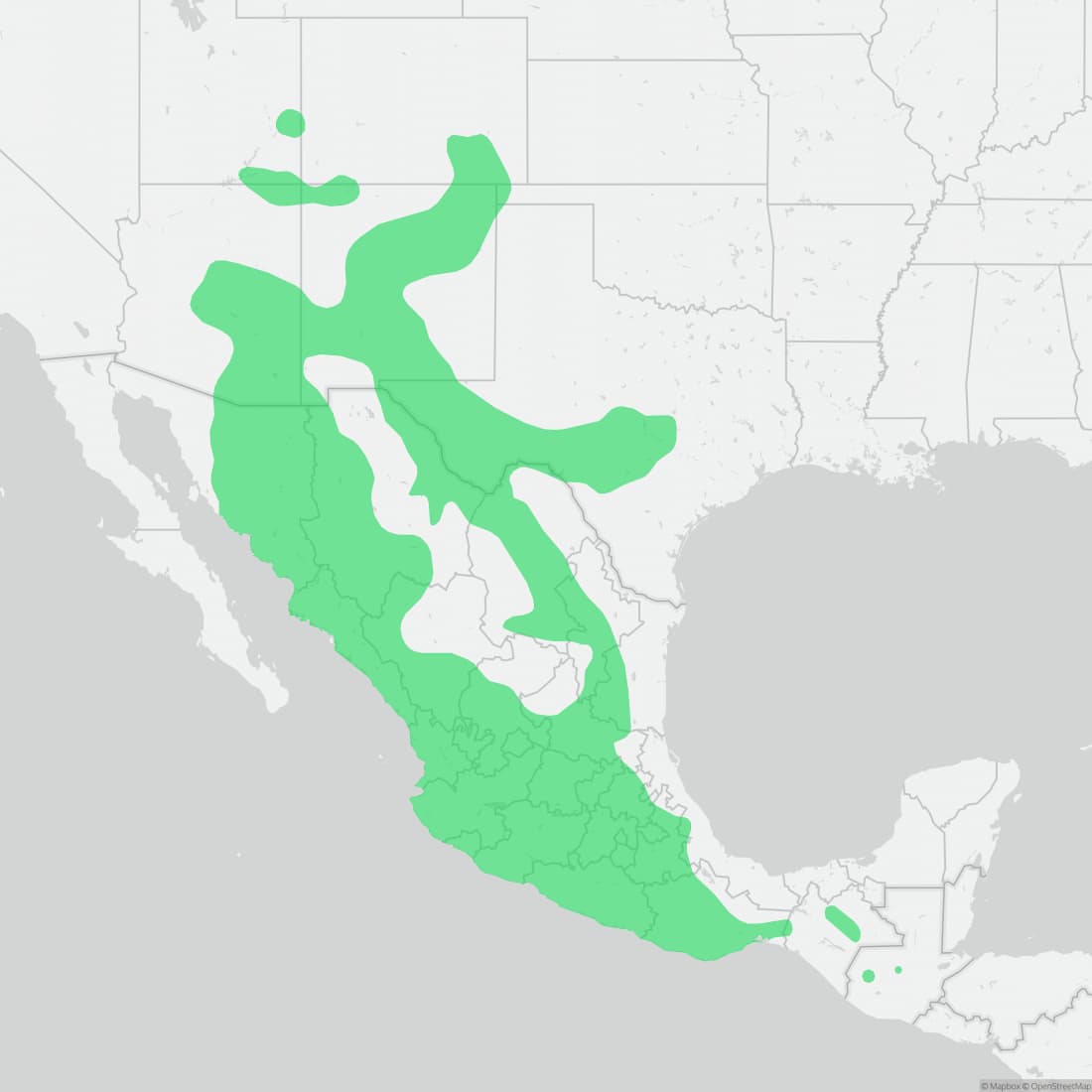
Approximate range. © Mapbox © OpenStreetMap