
Tamaulipan Milksnake
Lampropeltis annulata
The tamaulipan milk snake usually exceeds 24 inches in total length with large specimens known to have total lengths that ranges from 47-52 inches. The scales of this spe…
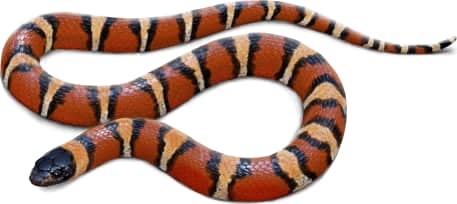
How to identify
The tamaulipan milk snake usually exceeds 24 inches in total length with large specimens known to have total lengths that ranges from 47-52 inches. The scales of this species are smooth and shiny with an alternating color pattern of red-black-yellow or white-black-red bands. Some members have red blotches instead of bands.
Range
This species ranges from southeastern Canada through United States to Central America. It is also found in Ecuador, northern Venezuela in northern South America.
Habitat
The Tamaulipan milk snake inhabits semi-arid brush areas that have Sandy soils. It feeds on earthworms, slugs, crickets and insects. This species also eats eggs, fish, frogs and other snakes. The milk snake is oviparous and lays about 10 eggs per clutch beneath logs, rocks, boards and rotting vegetation.
Similar species
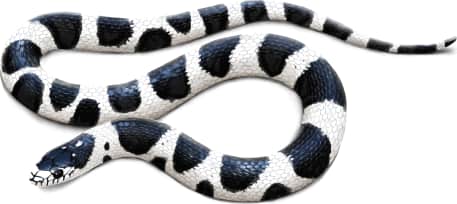
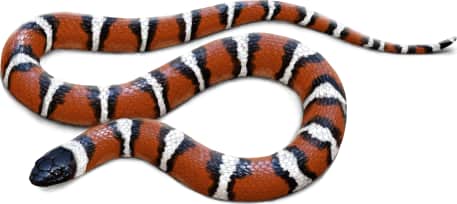
The Mexican king snake or Lampropeltis Mexicana has broad, red saddle-shaped markings that are bordered with black. Cream, brown or pinkish bars separate the saddles. Prairie kingsnake or Lampropeltis calligaster has two black spots that are behind its head and smaller black spots down its back on both sides of the stripe. This species has reddish-brown or dark brown blotching down the length of its body. The California mountain king snake or Lampropeltis zonata has a banded pattern of red, black and white crossbands which are arranged in the same order. Each crossband is surrounded by two black crossbands, forming a triad. The eastern milk snake or Lampropeltis Triangulum has a light-colored V-shaped or Y-shaped patch on its neck. The dorsal color pattern is made up of brownish dorsal saddles that are edged with black. The blotches in the dorsal series are larger than the two in the lateral series. The pattern of the belly is black and white checks.
Name and etymology
Genus
Lampropeltis
Greek for shiny (lampros) shield (pelta), referencing the shiny scales of the genus.
Origin
Sources
- Fitzinger, 1843. Syst. Rept., p. 25 ↗
Lampropeltis. Fitzinger, 1843 - Syst. Rept., p. 25
Species epithet
annulata
latin for ringed.
Origin
Sources
- Kennicott, 1860. Proc. Acad. Nat. Sci. Philadelphia, Vol. 12, p. 329 ↗
Lampropeltis triangulum annulata. Kennicott, 1860 - Proc. Acad. Nat. Sci. Philadelphia, Vol. 12, p. 329
Explore more names in the etymology index.
At a glance
Range
This species ranges from southeastern Canada through United States to Central America. It is also found in Ecuador, northern…
Habitat
The Tamaulipan milk snake inhabits semi-arid brush areas that have Sandy soils. It feeds on earthworms, slugs, crickets and i…
Guide
Reptiles and Amphibians of North America
Range map
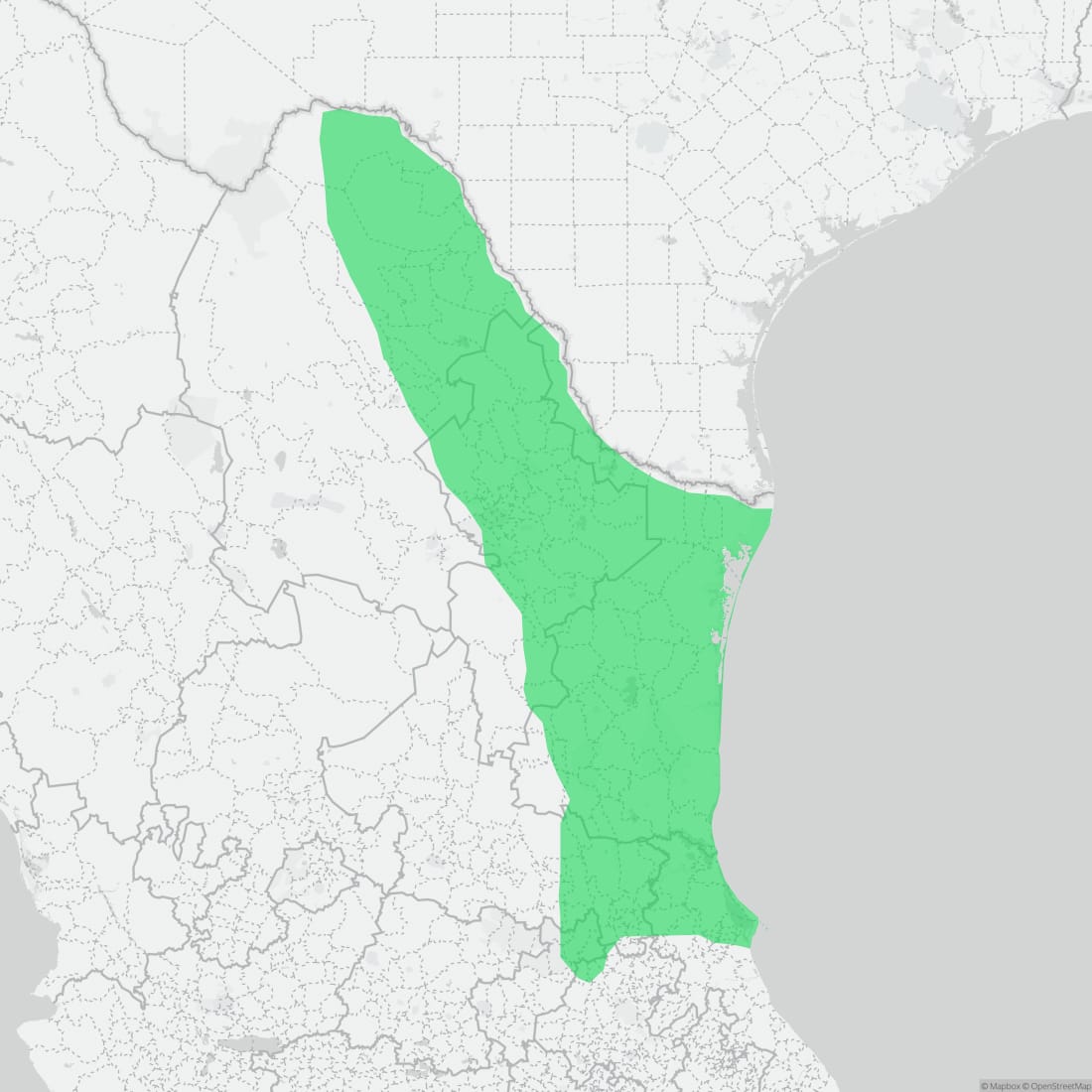
Approximate range. © Mapbox © OpenStreetMap