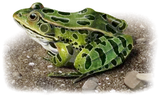
Gopher Frog
Lithobates capito
A stout frog with a small head and pointed snout. It has a prominent hip-bone hump on its lower back and very noticeable dorsolateral skin folds. It averages about 7.5 cm…
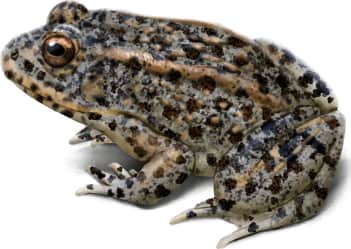
How to identify
A stout frog with a small head and pointed snout. It has a prominent hip-bone hump on its lower back and very noticeable dorsolateral skin folds. It averages about 7.5 cm in body length. Its color and pattern varies, but it's skin is mildly bumpy with a lighter background covered in many irregular dark spots or mottled pattern. The legs have dark banding. Its ventrum is primarily pale and unmarked, but its throat has black mottling.
Range
Ranges along the east coast from North Carolina through most of peninsular Florida and west along the Gulf coast to southern Mississippi. Small disjunct populations exist in central Alabama and central Tennessee.
Habitat
Primarily found in and around freshwater ponds in scrub, oak hammocks, flatwood, or sandhill habitats. Often hides in rodent or gopher tortoise burrows, or under rocks and inside stumps.
Variations
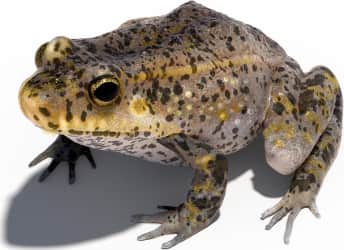
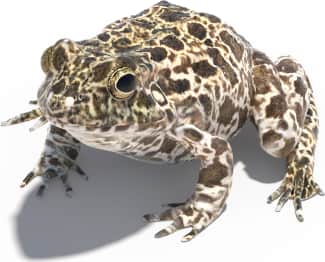
Background color ranges from light mossy green to olive to grey to brown. Dark patterning can be green, brown, grey, or black. Most have distinct spots, but some are just uniformly dark with subtle or no patterning.
Similar species
Very similar to the dusky gopher frog (*Lithobates sevosus*), which used to be considered a subspecies of the gopher frog. Also looks a bit like the crawfish frog (*Lithobates areolatus*).
Name and etymology
Genus
Lithobates
Greek for rock (litho-) climber (bates).
Origin
Sources
- Linnaeus, 1758. Syst. Nat., 10th ed., Vol. 1, p. 210 ↗
Rana. Linnaeus, 1758 - Syst. Nat., 10th ed., Vol. 1, p. 210
Species epithet
capito
Latin for large head.
Origin
Sources
- Le Conte, 1855. Proc. Acad. Nat. Sci. Philadelphia, Vol. 7, p. 425, pl. 5 ↗
Rana capito. Le Conte, 1855 - Proc. Acad. Nat. Sci. Philadelphia, Vol. 7, p. 425, pl. 5
Explore more names in the etymology index.
At a glance
Size
6 to 9 cm
Range
Ranges along the east coast from North Carolina through most of peninsular Florida and west along the Gulf coast to southern…
Habitat
Primarily found in and around freshwater ponds in scrub, oak hammocks, flatwood, or sandhill habitats. Often hides in rodent…
Range map
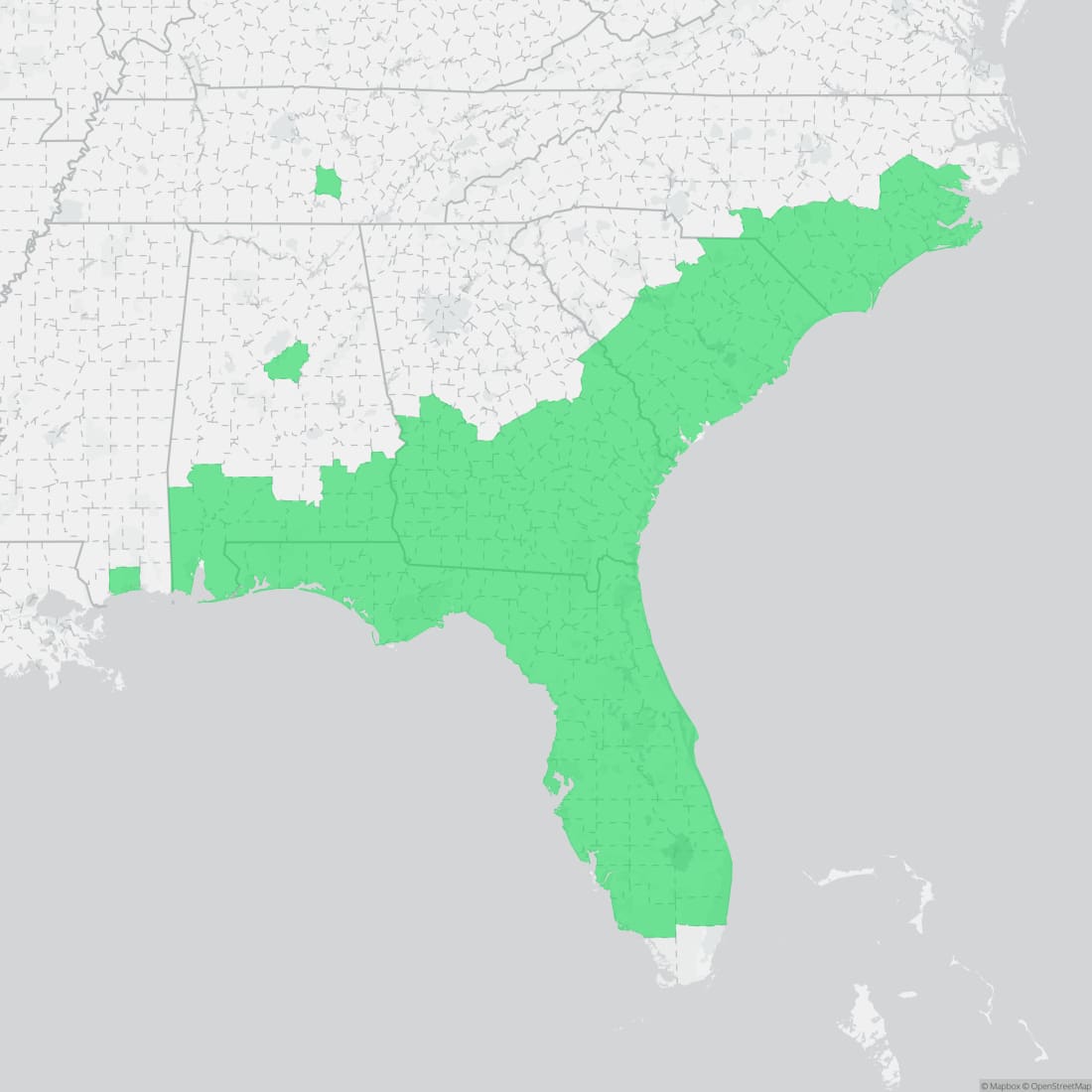
Approximate range. © Mapbox © OpenStreetMap