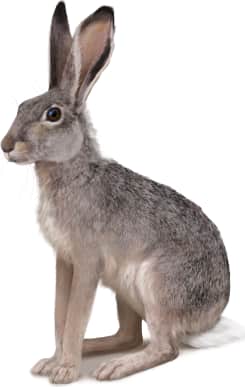
White-tailed Jackrabbit
Lepus townsendii
L. townsendii is one of the largest jackrabbit species. They have grayish-brown fur in summer and molt to pure white in winter, providing seasonal camouflage. The tail is…
How to identify
L. townsendii is one of the largest jackrabbit species. They have grayish-brown fur in summer and molt to pure white in winter, providing seasonal camouflage. The tail is entirely white, a key distinguishing feature. The ears are long, and the hind legs are powerful.
Range
L. townsendii is found in the western United States and southern Canada, primarily in the Great Plains, Great Basin, and surrounding areas. Its range extends from southern Alberta and Saskatchewan south through Montana, North Dakota, South Dakota, Wyoming, Nebraska, Colorado, Kansas, and into parts of New Mexico, Oklahoma, and Texas.
Habitat
L. townsendii inhabits open grasslands, prairies, and sagebrush steppe. They prefer areas with relatively flat terrain and sparse vegetation.
Similar species
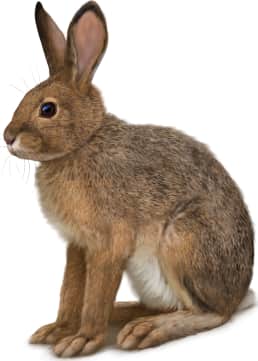
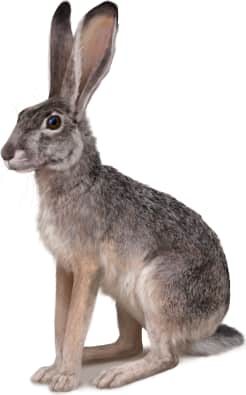
L. californicus (Black-tailed Jackrabbit) can overlap in some areas. L. townsendii is distinguished by its white tail and winter white pelage. L. americanus (Snowshoe Hare) also turns white in winter, but its feet are much larger and broader, adapted for snowshoeing, and its range is generally more forested and further north/east.
Name and etymology
Genus
Lepus
Latin for hare
Origin
Sources
- Palmer, Index Generum Mammalium (1904) ↗
Palmer, T. S. 1904. Index Generum Mammalium: a list of the genera and families of mammals. North American Fauna 23. Government Printing Office, Washington. https://doi.org/10.5962/bhl.title.39809
Species epithet
townsendii
Honoring American naturalist John Kirk Townsend
Origin
Honors
Sources
- Wikipedia: Lepus townsendii ↗
“Lepus townsendii.” Wikipedia. https://en.wikipedia.org/wiki/White-tailed_jackrabbit
Explore more names in the etymology index.
More illustrations
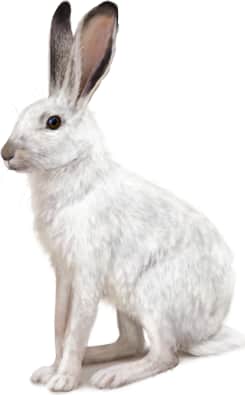
Winter
At a glance
Range
L. townsendii is found in the western United States and southern Canada, primarily in the Great Plains, Great Basin, and surr…
Habitat
L. townsendii inhabits open grasslands, prairies, and sagebrush steppe. They prefer areas with relatively flat terrain and sp…
Guide
Mammals of North America
Range map
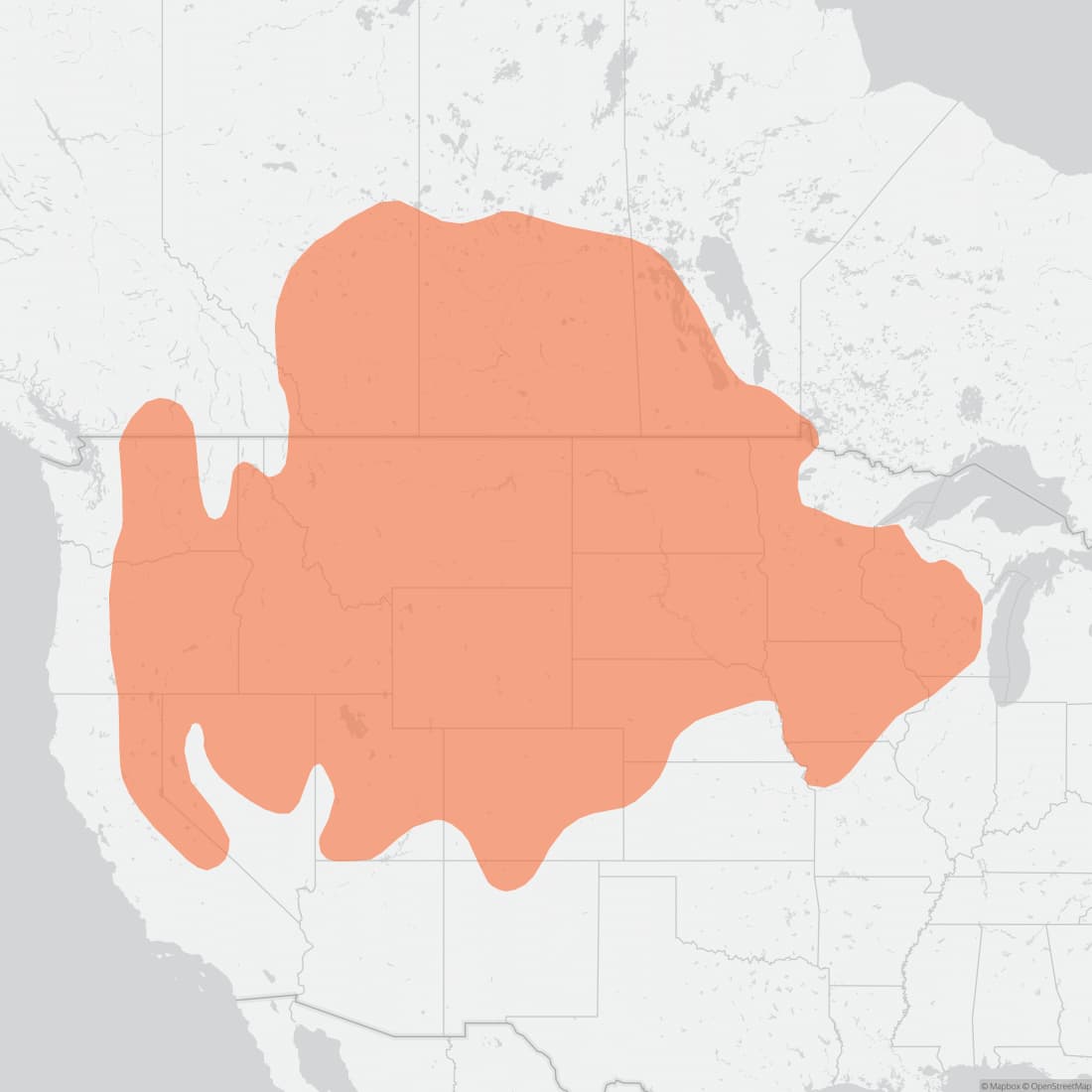
Approximate range. © Mapbox © OpenStreetMap