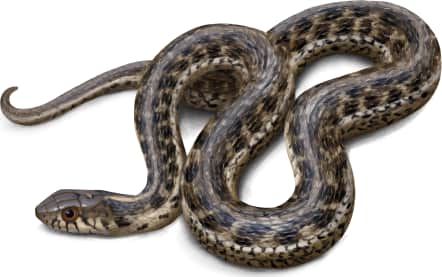
Sierra Garter Snake
Thamnophis couchii
Not particularly distinctive from other garter snakes, the Sierra garter snake is usually grey or brownish in color. As a result of its drab colors, it may be difficult t…
How to identify
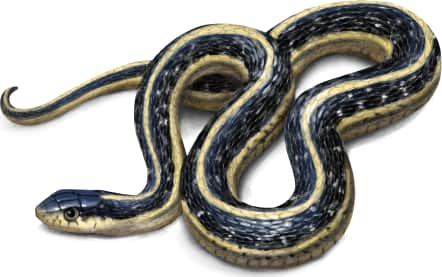
Not particularly distinctive from other garter snakes, the Sierra garter snake is usually grey or brownish in color. As a result of its drab colors, it may be difficult to see the rows of black spots between its stripes. These black spots are usually long. Its lateral stripes are not very distinct and may sometimes be totally absent. For a garter snake, it has a quite moderately sized head. Males generally have longer tails than the females It may grow to about 95 cm.
Range
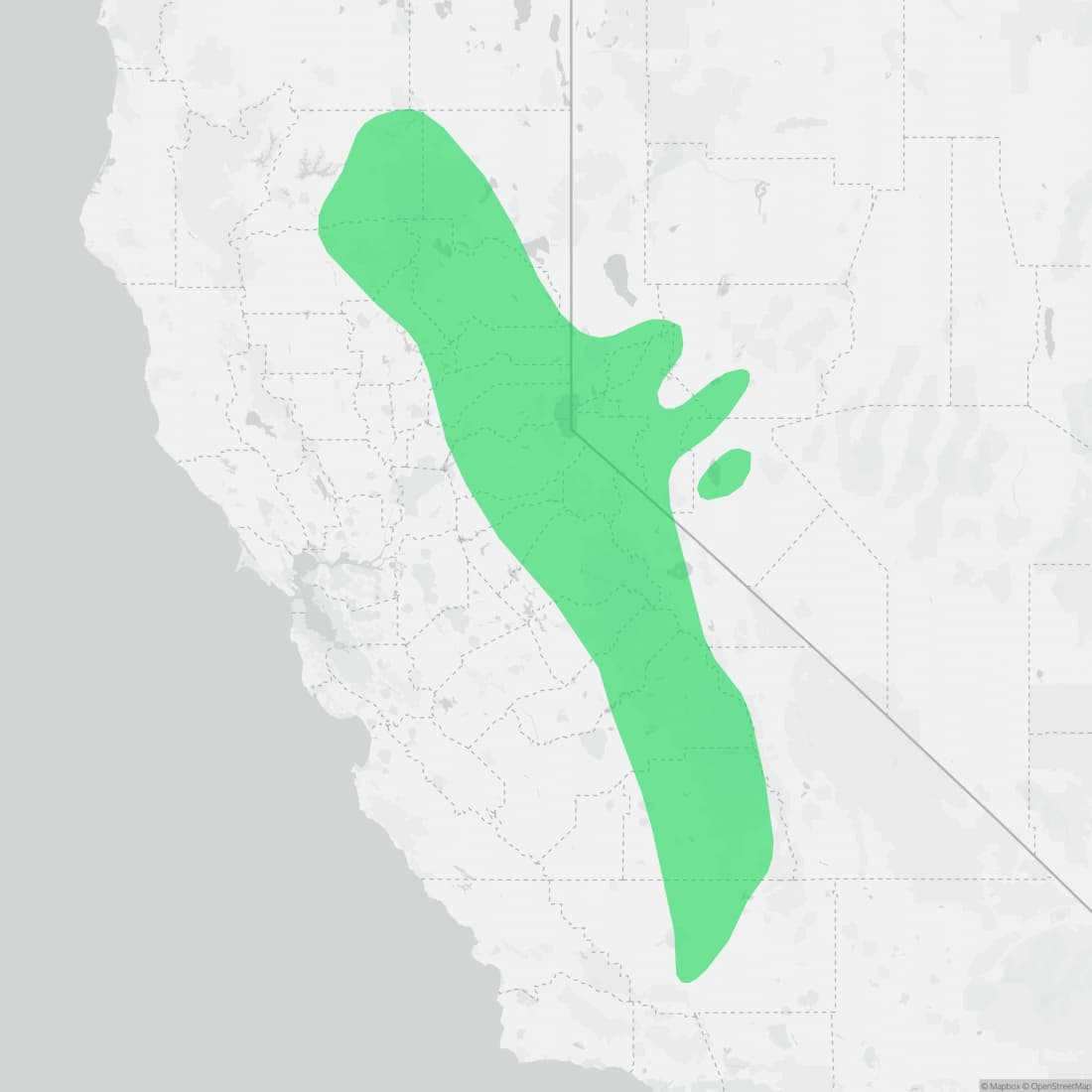
It is primarily seen in the United States. It is commonly found in Nevada, Oregon and California.
Habitat
At any time in the year, they may be found in bodies of water like pools and streams. Its diet chiefly consists of fish and amphibians. Breeding usually occurs between January and May. During this time, they may be found in their numbers. This garter snake is bisexual in nature. Unlike other garter snakes, it has a very efficient means of catching prey, especially when there is a scarcity. Its vision is very clear.
Similar species
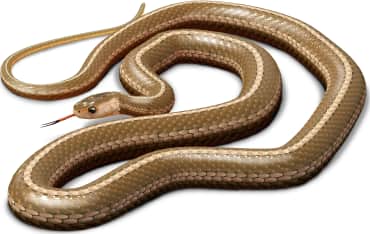
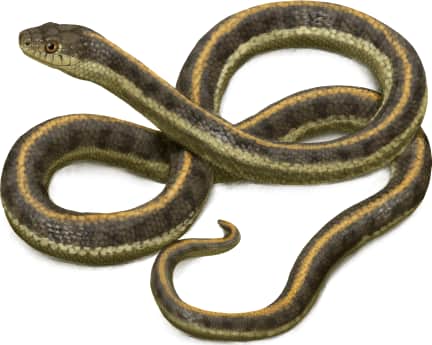
Aquatic Garter snake (Thamnophis atratus) can be located in bodies of water. It may be blue, gray, olive in color. Dark, brown or pale gray spots may be seen on its sides. Its belly and throat may be whitish or yellowish. A yellow stripe that runs the length of its back all through to its neck may be present. Shorthead garter snake (Thamnophis Brachystoma ) is generally small and has three stripes on its body. In comparison to other garter snakes, the short headed garter snake does not have dark spots in its stripes. Western terrestrial garter snake (Thamnophis elegans) has a dorsal background that is usually black, gray or brown and with faint stripes. It has a pale belly and yellow stripes that run through its body. Dark blotches may appear between the stripes. It may grow to about 90cm.
Name and etymology
Genus
Thamnophis
Greek for bush (thamnos) snake (ophis).
Origin
Sources
- Fitzinger, 1843. Syst. Rept., p. 26 ↗
Thamnophis. Fitzinger, 1843 - Syst. Rept., p. 26
Species epithet
couchii
Honoring Darius N. Couch.
Origin
Honors
Sources
- (Kennicott, 1859). U.S. Pacif. R.R. Surv., Vol. 10, Pt. 4, p. 10
Thamnophis couchii. (Kennicott, 1859) - U.S. Pacif. R.R. Surv., Vol. 10, Pt. 4, p. 10
- Baird, 1854. Proc. Acad. Nat. Sci. Philadelphia, Vol. 7, p. 62 ↗
Scaphiopus couchii. Baird, 1854 - Proc. Acad. Nat. Sci. Philadelphia, Vol. 7, p. 62
Explore more names in the etymology index.
At a glance
Range
It is primarily seen in the United States. It is commonly found in Nevada, Oregon and California.
Habitat
At any time in the year, they may be found in bodies of water like pools and streams. Its diet chiefly consists of fish and a…
Guide
Reptiles and Amphibians of North America
Range map
Approximate range. © Mapbox © OpenStreetMap