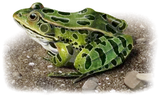
River Frog
Lithobates heckscheri
A medium to large frog reaching 3-5 inches in body length. It has mildly bumpy skin and lacks dorsolateral skin folds. Its hip bone hump is prominent, and it has long leg…
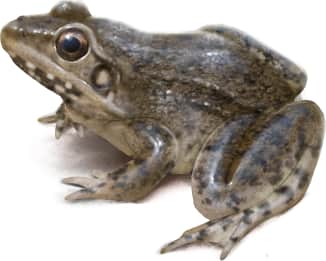
How to identify
A medium to large frog reaching 3-5 inches in body length. It has mildly bumpy skin and lacks dorsolateral skin folds. Its hip bone hump is prominent, and it has long legs and toes. Males have conspicuous tympana larger than their eyes, while those of females are smaller than their eyes, but still quite noticeable. It is typically brown, dark green, or almost black on its dorsum, and distinct white spots around its lips and lower jaw. Its ventrum is grey to black with pale mottling.
Range
Ranges along the Gulf coast and Atlantic coast from southern Mississippi to southern North Carolina, extending south to central Florida.
Habitat
This nocturnal, aquatic species inhabits swampy wetland habitats. It prefers slow-moving blackwater creeks and cypress swamps with lots of emergent vegetation.
Variations
Coloration is quite variable between green, brown, and black. Some have subtle dark mottling on their dorsum, and banding on their legs, while others are unpatterned. Males have a yellowish throat.
Similar species
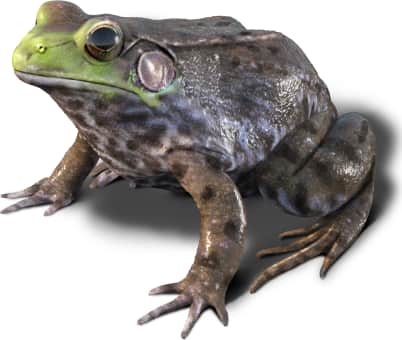
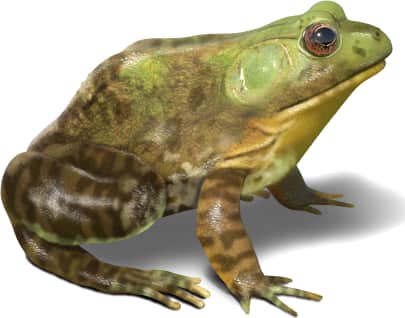
Most often confused with the green frog (*Lithobates clamitans*) or American bullfrog (*Lithobates catesbeianus*).
Name and etymology
Genus
Lithobates
Greek for rock (litho-) climber (bates).
Origin
Sources
- Linnaeus, 1758. Syst. Nat., 10th ed., Vol. 1, p. 210 ↗
Rana. Linnaeus, 1758 - Syst. Nat., 10th ed., Vol. 1, p. 210
Species epithet
heckscheri
Honoring August Heckscher.
Origin
Honors
Sources
- Wright, 1924. Proc. Biol. Soc. Washington, Vol. 37, p. 143, pl. 11 and 12, fig. 2 ↗
Rana heckscheri. Wright, 1924 - Proc. Biol. Soc. Washington, Vol. 37, p. 143, pl. 11 and 12, fig. 2
Explore more names in the etymology index.
At a glance
Range
Ranges along the Gulf coast and Atlantic coast from southern Mississippi to southern North Carolina, extending south to centr…
Habitat
This nocturnal, aquatic species inhabits swampy wetland habitats. It prefers slow-moving blackwater creeks and cypress swamps…
Guide
Reptiles and Amphibians of North America
Range map
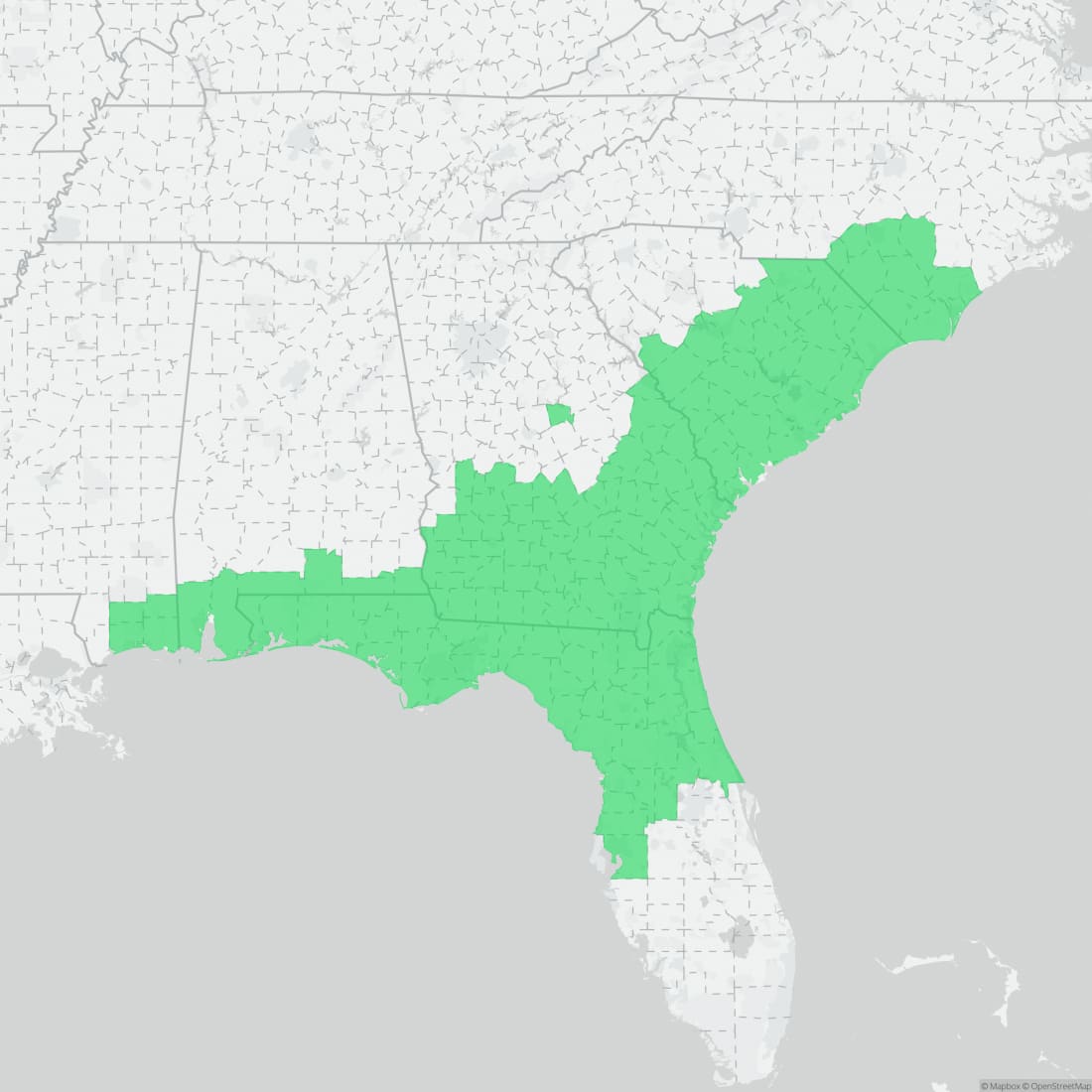
Approximate range. © Mapbox © OpenStreetMap