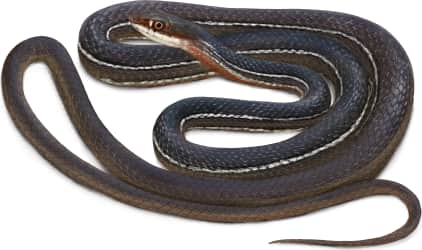
Schott's Whipsnake
Masticophis schotti
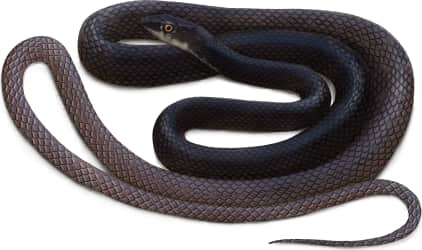
The Schott’s whipsnake has a dorsal coloration that ranges from blue-gray, olive to greenish-gray. The color of its belly is variable, the chin is generally white and the…
How to identify
The Schott’s whipsnake has a dorsal coloration that ranges from blue-gray, olive to greenish-gray. The color of its belly is variable, the chin is generally white and the ventral scales are bluish-gray striped. The dorsal scales are smooth appearing in 15 rows at mid-body. The underside of the belly is usually red or yellow.
Range
This species is found in Texas and through many northeastern states of Mexico.
Habitat
The Schott’s whipsnake is diurnal and inhabits brushy thornscrub, mesquite lowlands, Gulf coastal plain and river valleys. It feeds on small birds, lizards, frogs and mice. The females lay 3-12 eggs in May and June with young ones emerging in August.
Variations
The Masticophis schotti ruthveni or Ruthven’s whipsnake has a dorsal coloration of olive green. The underside of the tail is orange in color. Another distinguishing feature of this subspecies is that the underside of its head and snout are orange in color.
Similar species
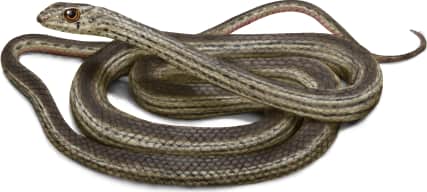
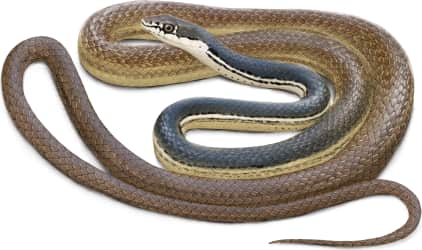
The Eastern coachwhip or Masticophis flagellum is the longest native snakes and has its head and neck black in color that fades to tan posteriorly. This species has smooth scales which gives it the appearance of a braided whip. The striped whipsnake or Masticophis taeniatus is dark brown, black, or gray at its back. This varying coloration comes often with an olive or bluish. This species is known to have a dark longitudinal stripe along the center of each of the first four rows of dorsal scales. Its dorsal scales are smooth and not keeled and the scales at the head are large distinguishing it from others. Sonoran whipsnake or Masticophis bilineatus has two-three light-colored stripes on each side of its body that extend from the neck to about the mid-body before melting into the color of the background. The belly of this species is cream that fades to pale yellow towards its tail.
Name and etymology
Genus
Masticophis
Greek for whip (mastix) snake (ophis).
Origin
Sources
- Baird and Girard, 1853. Cat. N. Amer. Rept., Pt. 1, p. 98 ↗
Masticophis. Baird and Girard, 1853 - Cat. N. Amer. Rept., Pt. 1, p. 98
Species epithet
schotti
Honoring Arthur C.V. Schott.
Origin
Honors
Sources
- Baird and Girard, 1853. Cat. N. Amer. Rept., Pt. 1, p. 160 ↗
Masticophis schotti. Baird and Girard, 1853 - Cat. N. Amer. Rept., Pt. 1, p. 160
Explore more names in the etymology index.
At a glance
Range
This species is found in Texas and through many northeastern states of Mexico.
Habitat
The Schott’s whipsnake is diurnal and inhabits brushy thornscrub, mesquite lowlands, Gulf coastal plain and river valleys. It…
Guide
Reptiles and Amphibians of North America
Range map
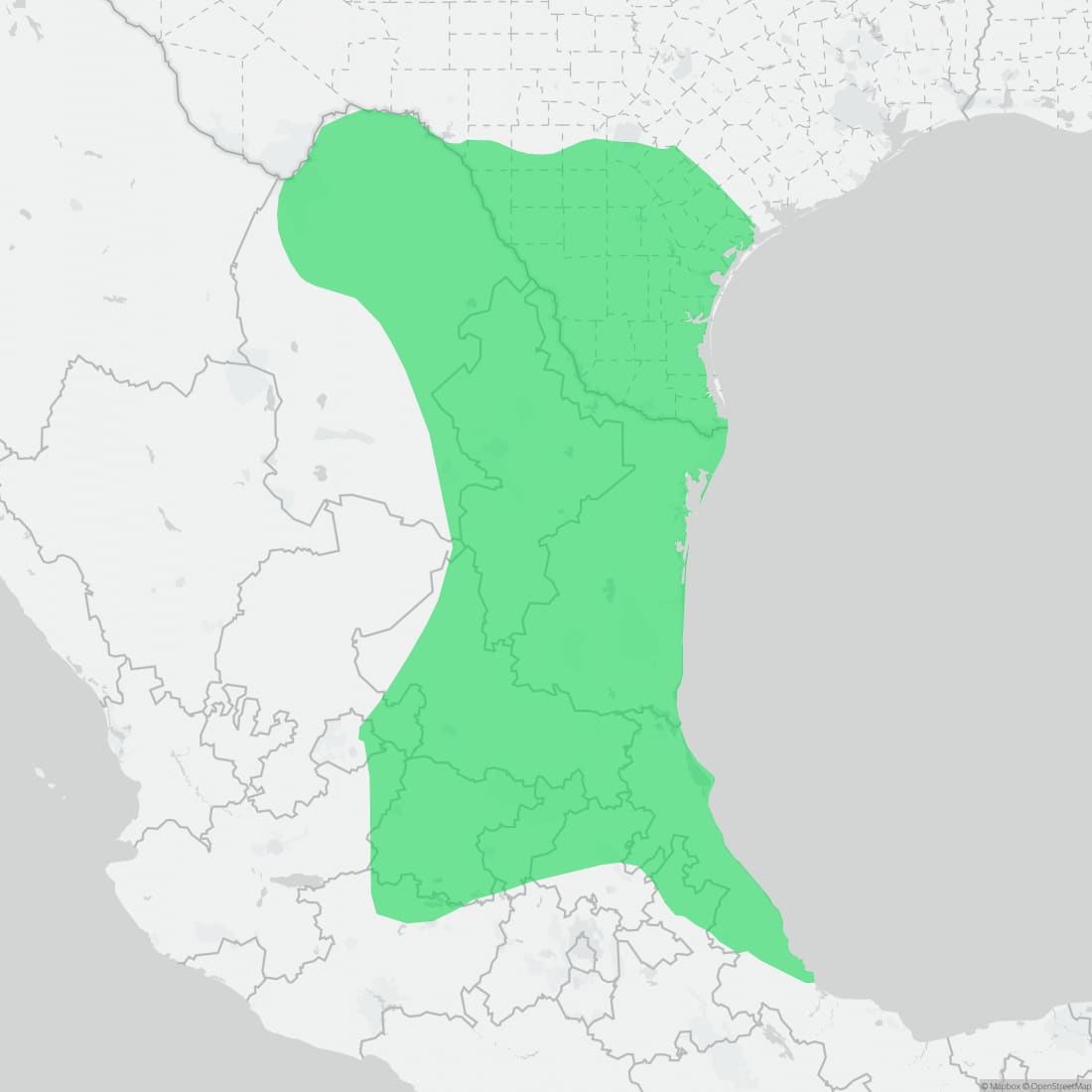
Approximate range. © Mapbox © OpenStreetMap