Crested Anole
Anolis cristatellus
The Crested Anole is a relatively small and full-bodied lizard. Although the females are significantly smaller than the male species, they are able to develop and measure…
How to identify
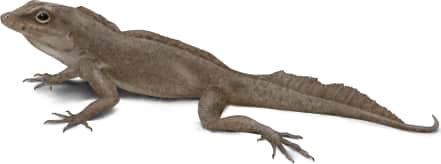
The Crested Anole is a relatively small and full-bodied lizard. Although the females are significantly smaller than the male species, they are able to develop and measure up to 77mm from snout to vent asides a tail as long as 1.7 times the snout to vent length. Naturally, the body coloration varies from bronze to greenish grey with light colored irregular markings. The entire underside, including the dewlap(throat-sac) is greenish yellow except its whitish throat. Notably, this specie is often mistaken as chameleons particularly because of its ability to display and appear in various dark-shaded colors. Asides the large throat-sac (especially in the male) posing as a distinguishing feature, the crest on the tail makes it more distinct at the same time, explaining its common name. The crests are fin-like and wavy running through from the back to the tail but appearing shorter on the back compared to the tail.
Range
Crested Anoles are traditionally native to Puerto Rico, they are also found in Miami and Florida, USA.
Habitat
Crested Anoles are tree-dwelling creatures and perching species. They are commonly referred to as trunk-ground species because of their strong preference to remain on or close to the ground. They are diurnal and so spend quality time spying and perching on walls and fences. They are mostly found in urban and suburban regions. The lizard feeds on insects, small fruits, frogs, flowers and even young lizards as a carnivore. The female species lay one or two eggs at a time in underground holes, logs or rock pikes after regular mating sessions. However, egg production is less active during cold or dry seasons. Incubation period lasts for approximately 50days. Luckily, the body temperature varies with the environment so, they are able to adapt quickly. This specie is extremely territorial so they are rough and may have to fight to survive. These animals communicate with push-ups, dewlaps extensions, head bobbing, bites, tail lashing, etc.
Similar species
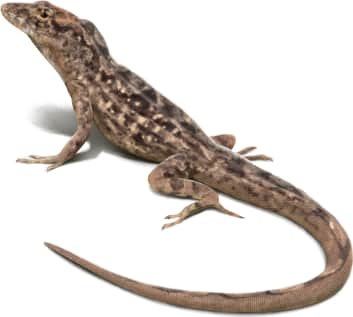
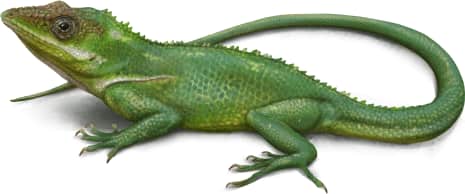
The Brown Anole (Anolis sagrei) is a moderately-sized species with a smaller head compared to similar species. The body is convex-shaped from head to tail although the snout appears to be very short. They uniquely have two dark bars above their eyes alongside the body markings on the back and sides. The base coloration is light brown and like similar species, it can change color but in this case, from dark brown to black; they never appear green. They measure up to 8 inches in total length. Knight Anole (Anolis equestris) is the largest of all the Anole species with a snout to vent size of 17cm. They have large and bony heads. They have unusually long tails that can grow longer than the entirety of the body. Often times, they appear brightly green with yellow stripes on the head and shoulder linking up with the pinkish white dewlap. They also display their ability to change color to deep brown. Green Anole (Anolis carolinensis) is a slim and moderate-sized lizard. Unlike the Crested Anole, it has a crest on its long and pointed snout. The toes are sticky and able to hold back when climbing. The specie is green in body color with light green stripes on the sides and top surface. Its color can change as in other species and as it develops.
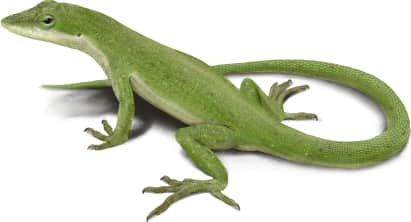
Name and etymology
Genus
Anolis
Antillean name for lizard.
Origin
Sources
- Daudin, 1803. Hist. Nat. Rept., Vol. 4, p. 50 ↗
Anolis. Daudin, 1803 - Hist. Nat. Rept., Vol. 4, p. 50
Species epithet
cristatellus
Latin for little (-ellus) crest (cristate)
Origin
Sources
- Wikipedia: Anolis cristatellus ↗
“Anolis cristatellus.” Wikipedia. https://en.wikipedia.org/wiki/Anolis_cristatellus
Explore more names in the etymology index.
More illustrations
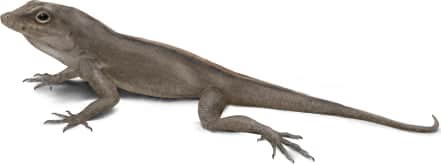
Female Crested Anole
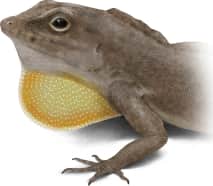
Dewlap
At a glance
Size
10 to 20.5 cm
Range
Crested Anoles are traditionally native to Puerto Rico, they are also found in Miami and Florida, USA.
Habitat
Crested Anoles are tree-dwelling creatures and perching species. They are commonly referred to as trunk-ground species becaus…
Range map
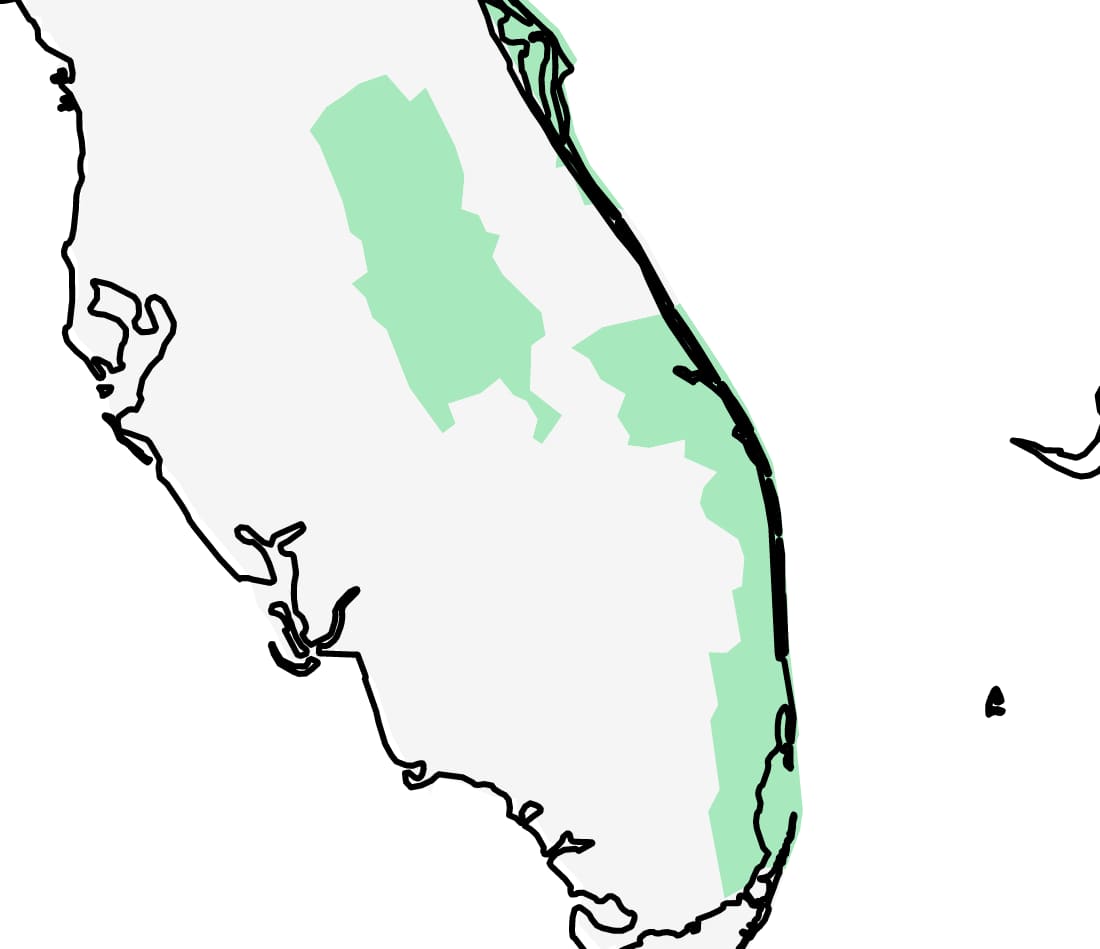
Approximate range. © Mapbox © OpenStreetMap