
Coast Mountain Kingsnake
Lampropeltis multifasciata
Adult coast mountain kingsnakes usually fall in the range of 22-30 inches in length. It is a medium-sized, slender snake with a moderate-sized head and smooth glossy scal…
How to identify
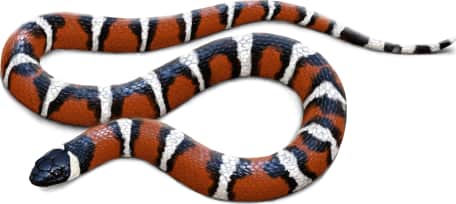
Adult coast mountain kingsnakes usually fall in the range of 22-30 inches in length. It is a medium-sized, slender snake with a moderate-sized head and smooth glossy scales. It has a conspicuous color pattern of black, red, and white or greyish-white bands that cover the body. The red bands are larger than the white and the white bands are slightly wider than the black. In some specimens, the black band may widen and cross over the red bands on the back. The bands continue around the belly, however, the coloring is paler and the bands assume a more irregular shape. It has a black nose splotched with red.
Range
This snake is endemic to the US and Baja California. In California, they may be found from the Ventura County, south into Monterey, and the mountains west and south of the San Francisco Bay.
Habitat
These snakes have a very diverse selection of habitats that include redwood and coniferous forests, oak-pine or riparian woodlands, and coastal sage scrubs. They can be found in wooded areas with streams and surfaces exposed to sunlight. They spend most of their time underground, and under terrain objects, or sheltering inside rock crevices. Breeding season is in spring and the eggs are laid in June-July then hatch about two months later. The kingsnake feeds on lizards, small mammals, birds, eggs, amphibians and other snakes even their species.
Similar species
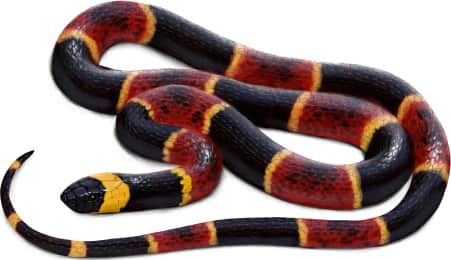
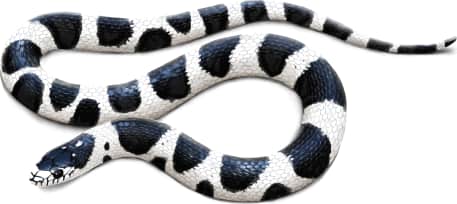
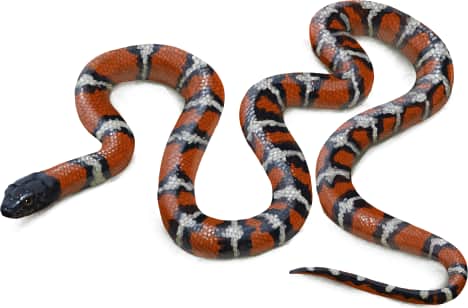
Many members of the Lampropeltis have been described as coral snake mimics because of their glossy scales and yellow-black-white-red crossbands. The Eastern Coral Snake (Micrurus fulvius) is similar in size and color. But the main difference lies in the fact that it is highly venomous. The physical difference lies in the pattern of colors; the coral snake has yellow crossbands that touch the red. California Mountain Kingsnake (Lampropeltis zonata) has a pattern color of red, black, and white bands. The bands always occur in the order of each red band being surrounded by two black bands just like L. multifasciata. In some specimens, the black band may overshadow the red especially around the tail which lends the snake an almost black and white appearance in that area. California King Snake (Lampropeltis californiae) is ringed with crossbands as well, but the color on this snake is ideally black and white or greyish-white or yellow.
Name and etymology
Genus
Lampropeltis
Greek for shiny (lampros) shield (pelta), referencing the shiny scales of the genus.
Origin
Sources
- Fitzinger, 1843. Syst. Rept., p. 25 ↗
Lampropeltis. Fitzinger, 1843 - Syst. Rept., p. 25
Species epithet
multifasciata
Latin for many (multi) bands (fasciata).
Origin
Sources
- (Bocourt, 1886).
Lampropeltis zonata multifasciata. (Bocourt, 1886) -
Explore more names in the etymology index.
At a glance
Range
This snake is endemic to the US and Baja California. In California, they may be found from the Ventura County, south into Mon…
Habitat
These snakes have a very diverse selection of habitats that include redwood and coniferous forests, oak-pine or riparian wood…
Guide
Reptiles and Amphibians of North America
Range map
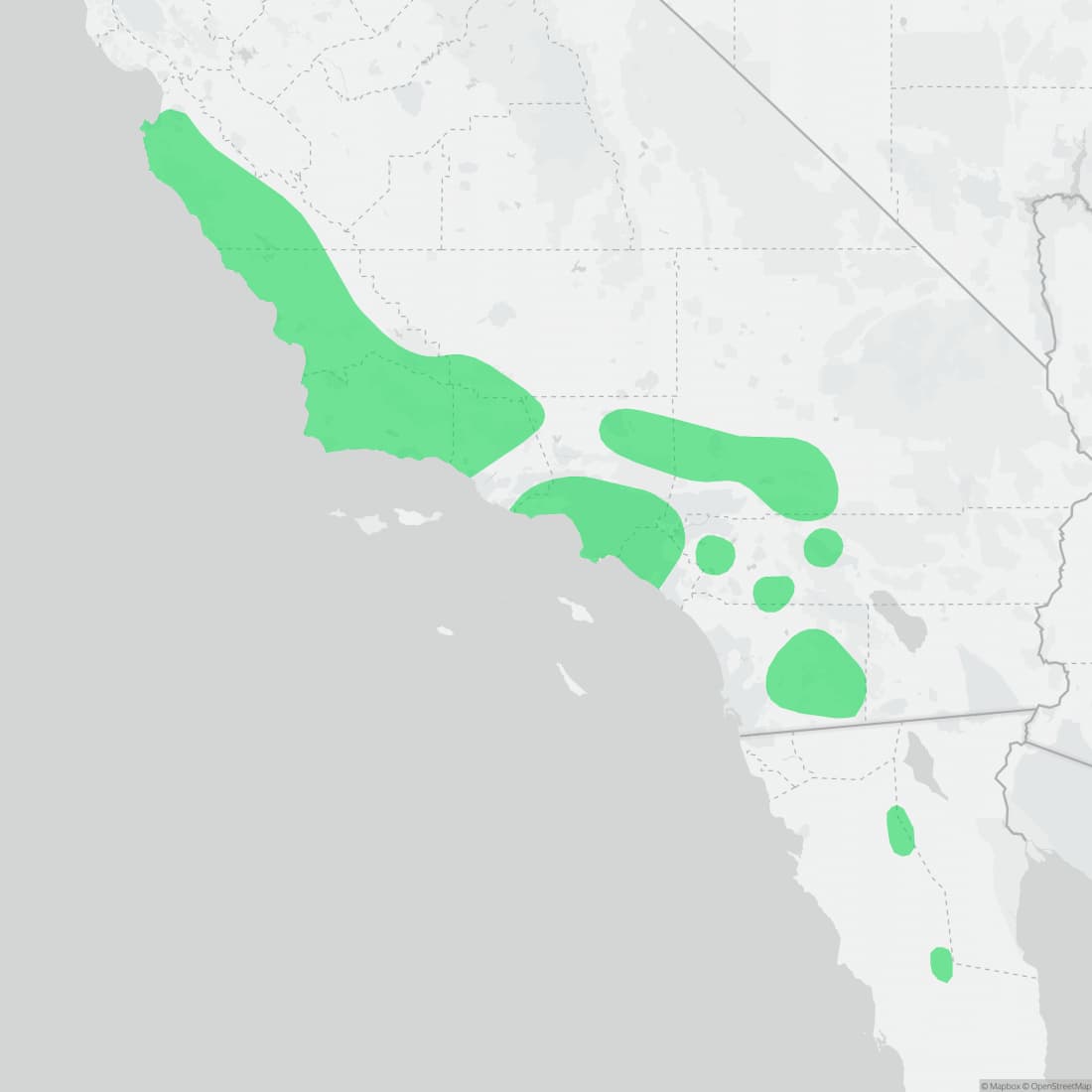
Approximate range. © Mapbox © OpenStreetMap