Brush Rabbit
Sylvilagus bachmani
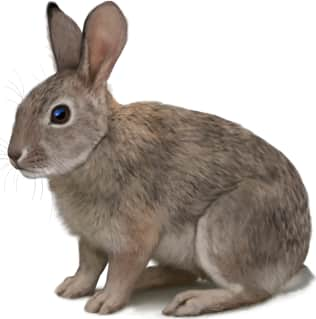
S. bachmani is one of the smallest cottontails. They have grayish-brown fur with a dark wash on the back and a grayish underside. The ears are relatively short and rounde…
How to identify
S. bachmani is one of the smallest cottontails. They have grayish-brown fur with a dark wash on the back and a grayish underside. The ears are relatively short and rounded, and the tail is small and grayish. They are adapted to dense brush and chaparral habitats.
Range
S. bachmani is found along the Pacific coast of North America, from southwestern British Columbia south through Washington, Oregon, and California, into Baja California, Mexico.
Habitat
S. bachmani inhabits dense brush, chaparral, and coastal scrub habitats. They require dense cover for protection from predators and construct shallow nests in dense vegetation or under logs.
Similar species
S. audubonii (Desert Cottontail) can overlap in range in some parts of California, but S. bachmani is smaller, has shorter ears, and prefers denser, brushier habitats.
Name and etymology
Genus
Sylvilagus
Latin for forest (silva) and Greek for hare (lagos_
Origin
Sources
- Palmer, Index Generum Mammalium (1904) ↗
Palmer, T. S. 1904. Index Generum Mammalium: a list of the genera and families of mammals. North American Fauna 23. Government Printing Office, Washington. https://doi.org/10.5962/bhl.title.39809
Species epithet
bachmani
Etymology incomplete
The meaning of this name has not been recorded yet.
Explore more names in the etymology index.
At a glance
Range
S. bachmani is found along the Pacific coast of North America, from southwestern British Columbia south through Washington, O…
Habitat
S. bachmani inhabits dense brush, chaparral, and coastal scrub habitats. They require dense cover for protection from predato…
Guide
Mammals of North America
Range map
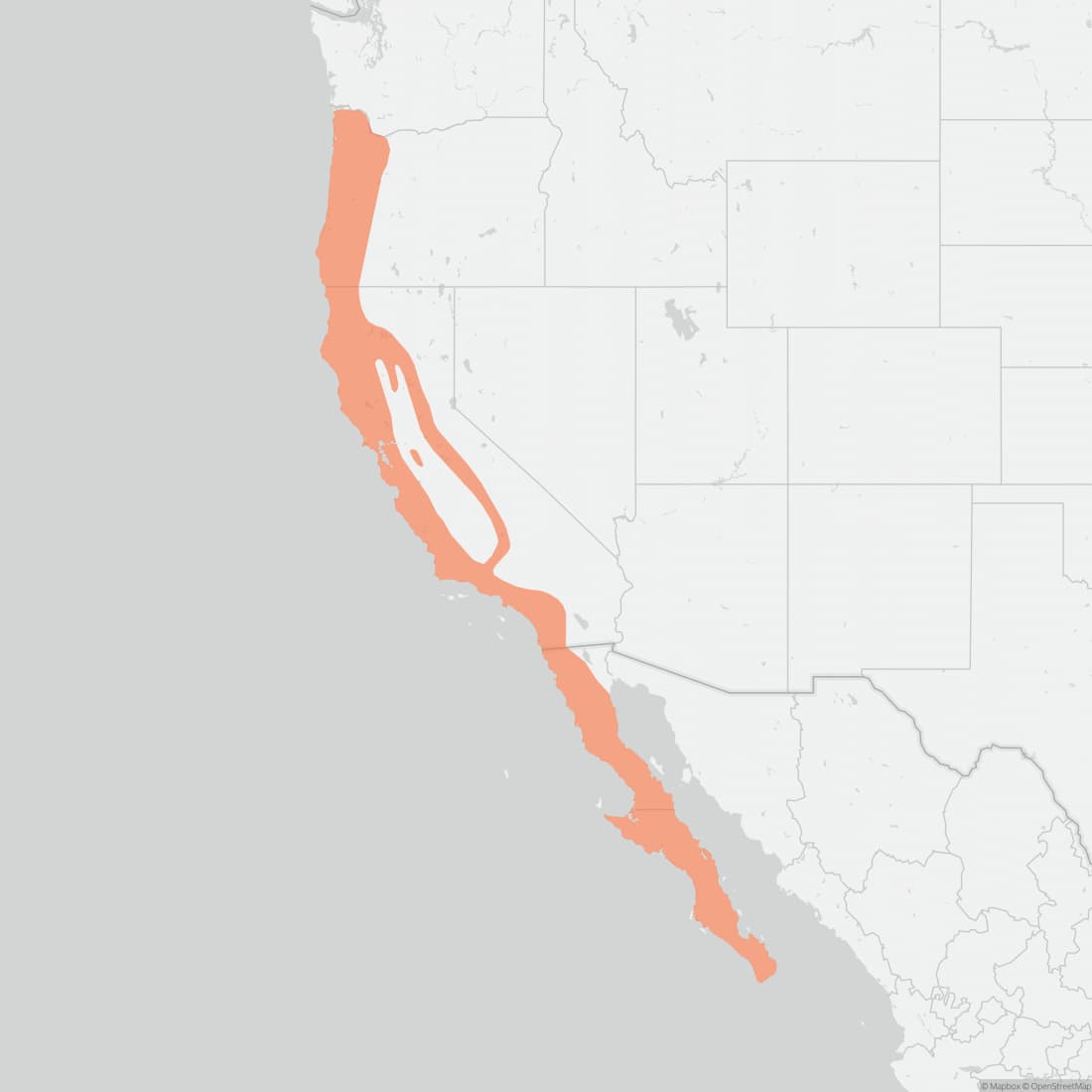
Approximate range. © Mapbox © OpenStreetMap