Louisiana Pinesnake
Pituophis ruthveni
A mid-sized snake averaging 3-4 feet long, but it can grow over 5 feet. It has a small, tapered head and an undefined neck. Its scales are keeled and glossy. Its backgrou…
How to identify
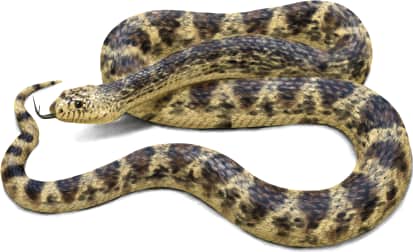
A mid-sized snake averaging 3-4 feet long, but it can grow over 5 feet. It has a small, tapered head and an undefined neck. Its scales are keeled and glossy. Its background color is tan to yellowish light brown, and it has dark brown patterning. At the front of the snake, the pattern is mainly speckled, but it gradually changes to distinct irregular blotches towards the tail end. The blotches become bands on the tail. The ventrum has a messy checkered pattern, with lighter coloration.
Range
The range of this endangered snake has been reduced to a few small patches in western Louisiana and extreme eastern Texas.
Habitat
Spends about 60% of its time underground in pocket gopher burrows. Pocket gophers are its primary food source, so it's often found within the vicinity of this prey species. It frequents open longleaf pine forests with well-developed grassy understory in loose, sandy soil.
Variations
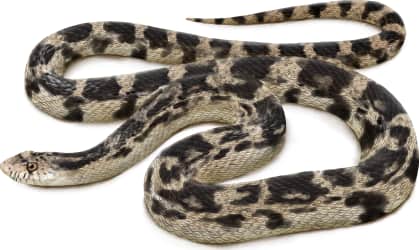
Markings can be dark brown to black.
Similar species
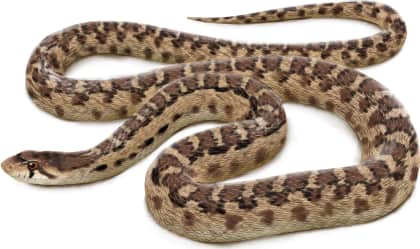
It is quite similar to the related pine snake (*Pituophis melanoleucus*), and could also be mistaken for the gopher snake (*Pituophis catenifer*).
Name and etymology
Genus
Pituophis
Greek for pine (pitys) snake (ophis).
Origin
Sources
- Holbrook, 1842. N. Amer. Herp., Ed. 2, Vol. 4, p. 7 ↗
Pituophis. Holbrook, 1842 - N. Amer. Herp., Ed. 2, Vol. 4, p. 7
Species epithet
ruthveni
Honoring Alexander G. Ruthven.
Origin
Honors
Sources
- Stull, 1929. Occ. Papers Mus. Zool. Univ. Michigan, No. 205, p. 1 ↗
Pituophis ruthveni. Stull, 1929 - Occ. Papers Mus. Zool. Univ. Michigan, No. 205, p. 1
Explore more names in the etymology index.
At a glance
Range
The range of this endangered snake has been reduced to a few small patches in western Louisiana and extreme eastern Texas.
Habitat
Spends about 60% of its time underground in pocket gopher burrows. Pocket gophers are its primary food source, so it's often…
Guide
Reptiles and Amphibians of North America
Range map
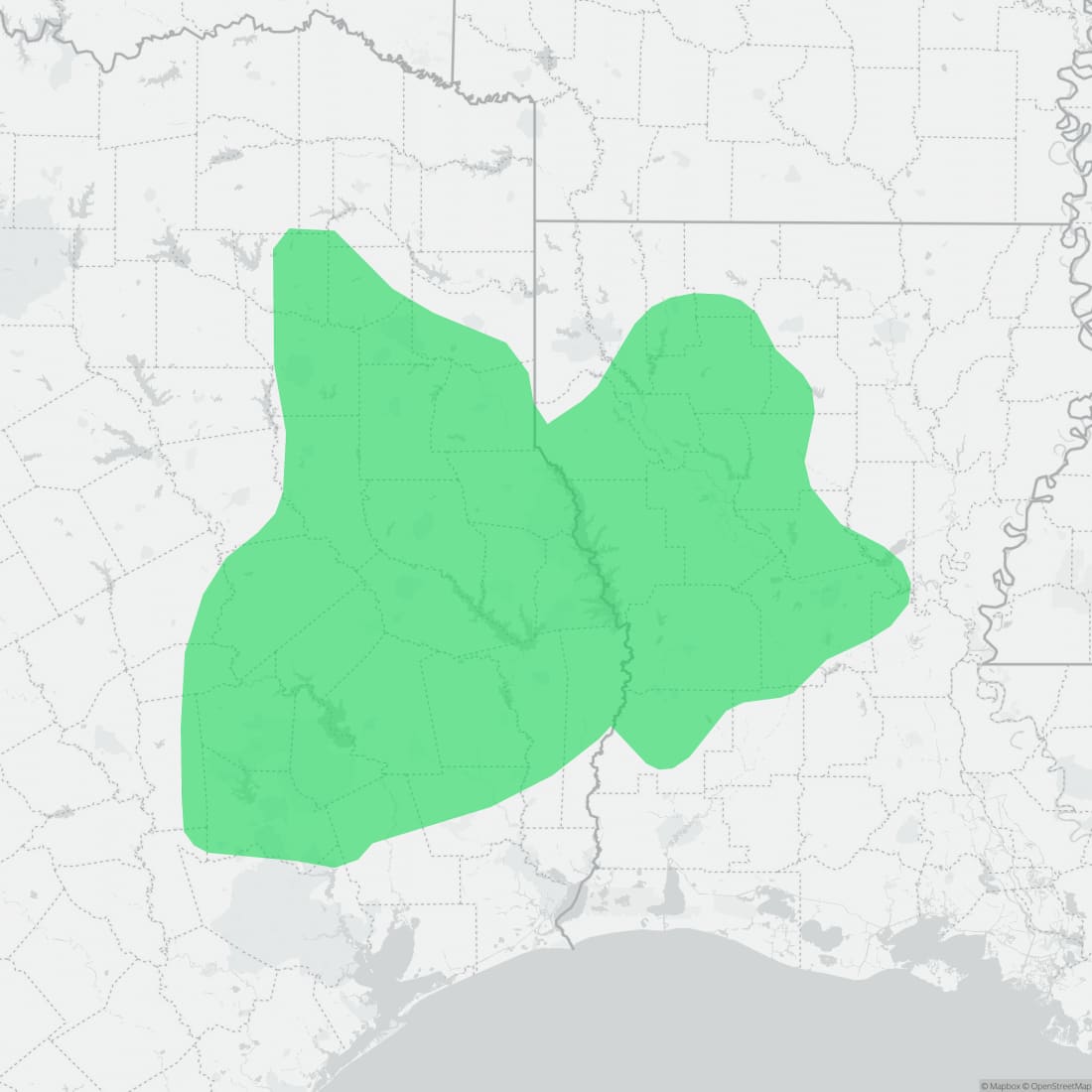
Approximate range. © Mapbox © OpenStreetMap