Austin Blind Salamander
Eurycea waterlooensis
The Eurycea waterlooensis is a perennibranchiate form which sustains permanent larval morphology. They grow to a total length of 60 – 70 mm. This species lacks external e…
How to identify
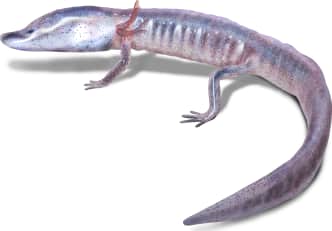
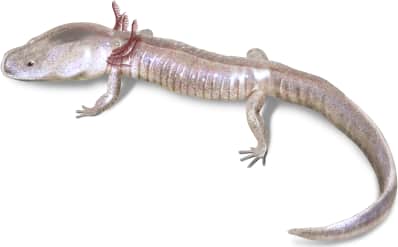
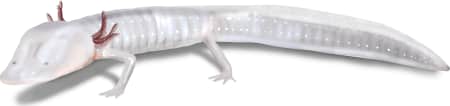
The Eurycea waterlooensis is a perennibranchiate form which sustains permanent larval morphology. They grow to a total length of 60 – 70 mm. This species lacks external eyes but rather has little subdermal eyespots. It also has 12 coastal grooves. Additionally, it has smaller limbs, in comparison to its closest relations. This salamander has weakly developed tail fins. The ventral section of the tail fin is there just on the posterior half. But the dorsal section is almost gone on the anterior half. This salamander also has a flattened and elongated snout. It also has a glistening and shiny white look due to the reflective connective tissue that lies underneath its transparent skin. Shades of lavender are sometimes exhibited. Lastly, a row of iridophores can occasionally be discovered along the sides of the body and tail.
Range
The range of the Austin Blind Salamander is exceedingly restricted. It has only been found in the 3 out of 4 outlets of Barton Springs in Austin, Texas. These 3 outlets are Parthenia, Eliza and sunken Garden Springs.
Habitat
They are strictly aquatic. This species of salamander enjoys spending most of its time underground in the subterranean cavities in the Edwards Aquifer. Their diet includes ostrapods, copepods, amphipods and aquatic plants. They can also be seen coming out of water for a few minutes if humidity is close to 100%. There is little information known about their reproduction. Lastly, their status is endangered.
Similar species
Eurycea rathbuni: Also known as Texas Blind Salamander grows up to 130 mm. They have larger limbs than the Eurycea waterlooensis. Eurycea robusta: Also known as Blanco Blind Salamander is an aquatic, lungless salamander. Also, with larger limbs than the E. waterlooensis grown up to 101 mm.
Name and etymology
Genus
Eurycea
Probably honoring Eurydice the wife of Orpheus in Greek mythology. Although Rafinesque, who named the genus, only wrote "mythological"
Origin
Honors
Sources
- Rafinesque, 1822. Kentucky Gazette, Lexington, N. S., Vol. 1, No. 9, Feb. 28, p. 3, column 6
Eurycea. Rafinesque, 1822 - Kentucky Gazette, Lexington, N. S., Vol. 1, No. 9, Feb. 28, p. 3, column 6
Species epithet
waterlooensis
Belonging to Waterloo
Origin
Sources
- Hillis, Chamberlain, Wilcox and Chippindale, 2001. 2001 Herpetologica Vol. 57, Number 3, pages 266-280.
Eurycea waterlooensis. Hillis, Chamberlain, Wilcox and Chippindale, 2001 - 2001 Herpetologica Vol. 57, Number 3, pages 266-280.
Explore more names in the etymology index.
At a glance
Range
The range of the Austin Blind Salamander is exceedingly restricted. It has only been found in the 3 out of 4 outlets of Barto…
Habitat
They are strictly aquatic. This species of salamander enjoys spending most of its time underground in the subterranean caviti…
Guide
Reptiles and Amphibians of North America
Range map
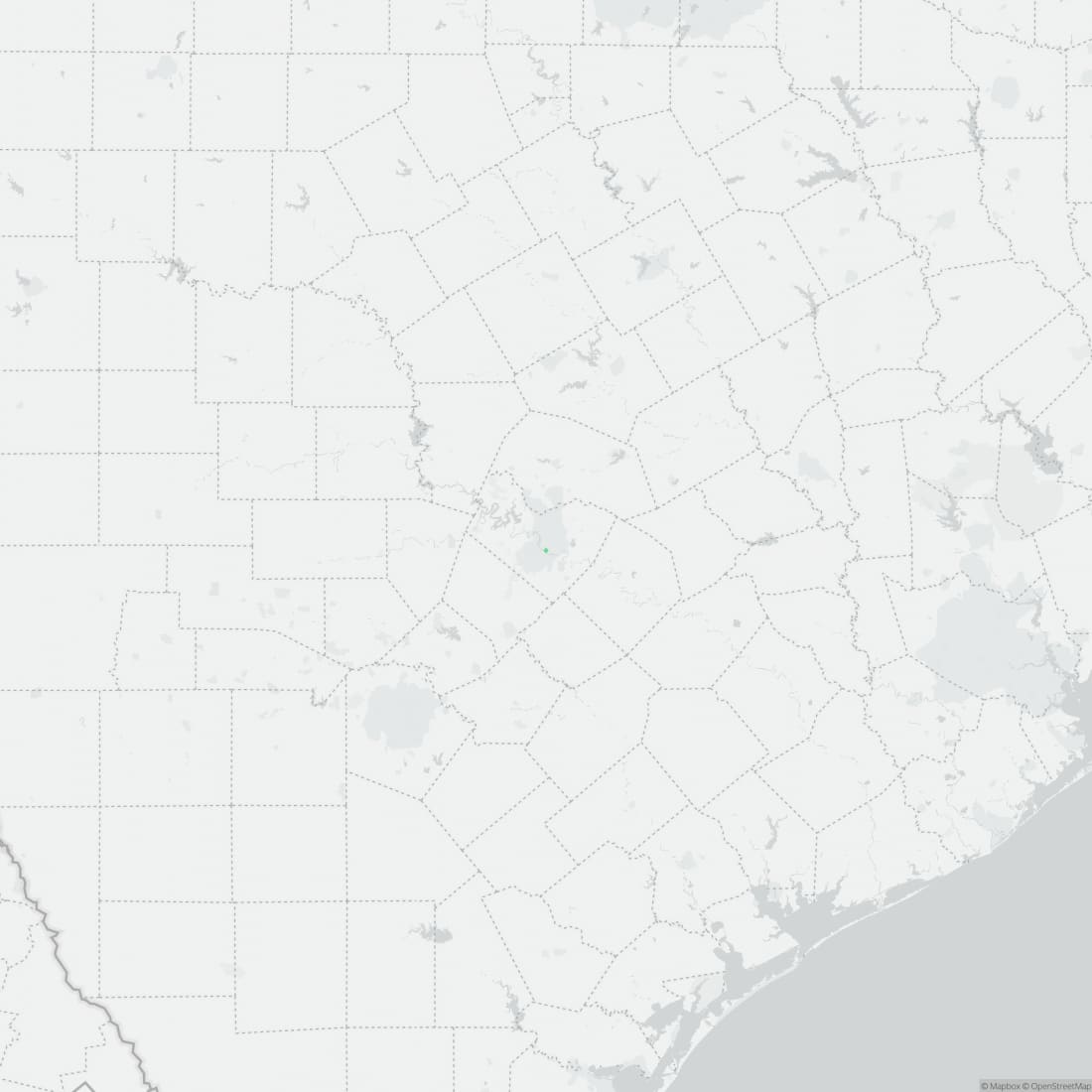
Approximate range. © Mapbox © OpenStreetMap