Yellow-blotched Map Turtle
Graptemys flavimaculata
This is a small to medium-sized map turtle. The carapace is brown to olive and slightly high domed and keeled. On the first couple of vertebral is spike-like projections…
How to identify
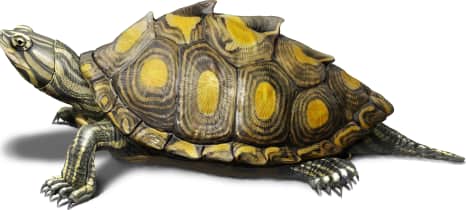
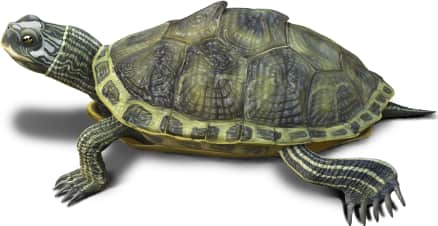
This is a small to medium-sized map turtle. The carapace is brown to olive and slightly high domed and keeled. On the first couple of vertebral is spike-like projections which become less visible with age. On each pleural scute is a bright yellow or yellow to orange blotch, a key feature of the yellow-blotched map turtle. However, these blotches do not appear in a specific pattern for all graptemys flavimaculata. The base of the plastron is yellow to cream with dark patterning in varying degrees which fades with age. Its skin is dark olive to black with yellow stripes. The head is marked with bold stripes. The females are generally larger than the males which have a narrow head, longer and wider tails and a more elongated foreclaw.
Range
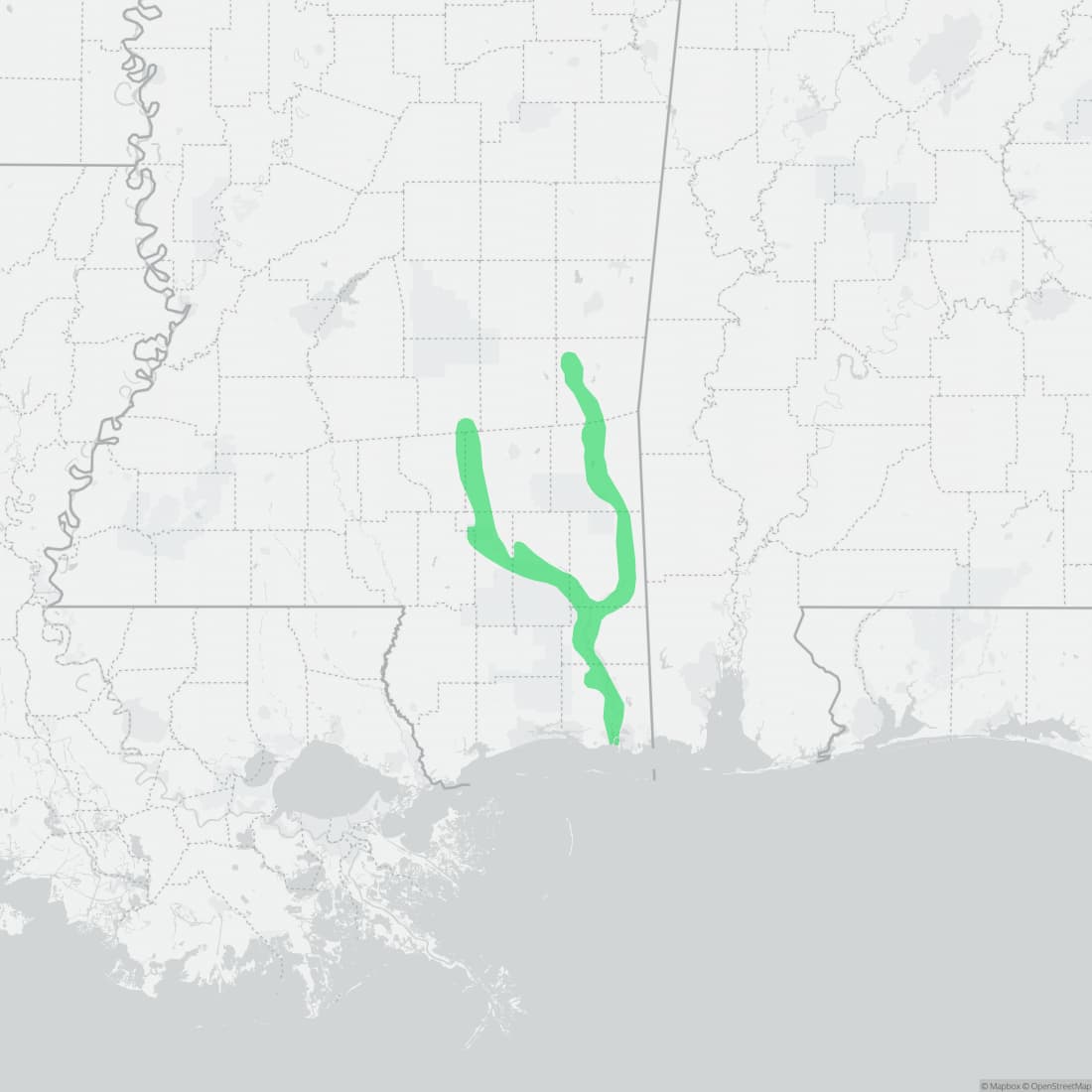
Its range is limited to the Pascagoula River in Mississippi and its tributaries.
Habitat
They occur in large rivers with clay or sandy bottoms, an open canopy and basking sites. They are diurnal and spend the greater part of their day time basking. These excellent climbers are also opportunistic feeders. Their diet includes but not limited to mollusks, sponges, insects and insect larvae. They reach reproductive maturity around 6 to 9 years and lay 3 or 4 clutches of eggs in the sand and gravel banks of their riverine habitat. Each clutch contains 5 to 7 eggs.
Similar species
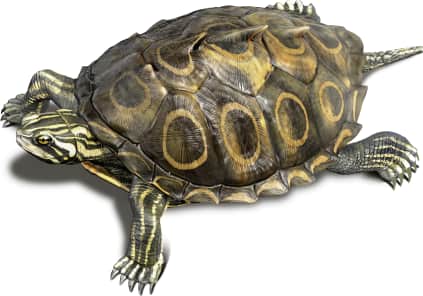
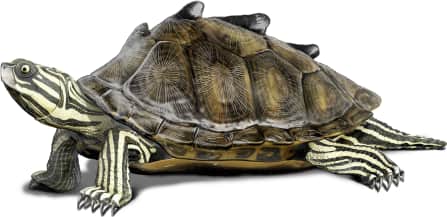
The ringed map turtle or Graptemys oculifera is a small turtle with an olive-brown carapace. Each scute has a yellow ring in it. It has spike-like projections on the down center of its carapace. The black-knobbed map turtle or Graptemys nigrinoda has a slightly domed carapace with backwards-facing knob-like projections. The carapace is olive green with yellow-green rings in each scute outlined in black. Pascagoula map turtle or Graptemys gibbonsi is a large turtle that shares its range with the yellow blotched map turtle. They have a slightly high domed carapace that is olive, green or brown with spines on the second and third vertebral.
Name and etymology
Genus
Graptemys
Greek for written (graptos) turtle (emys).
Origin
Sources
- Agassiz, 1857. Contr. Nat. Hist. U. S., Vol. 1, p. 436 ↗
Graptemys. Agassiz, 1857 - Contr. Nat. Hist. U. S., Vol. 1, p. 436
Species epithet
flavimaculata
Latin for spotted (maculata) yellow (flavus).
Origin
Sources
- Cagle, 1954. Tulane Stud. Zool., Vol. 1, No. 11, p. 167, fig. 2
Graptemys flavimaculata. Cagle, 1954 - Tulane Stud. Zool., Vol. 1, No. 11, p. 167, fig. 2
Explore more names in the etymology index.
At a glance
Range
Its range is limited to the Pascagoula River in Mississippi and its tributaries.
Habitat
They occur in large rivers with clay or sandy bottoms, an open canopy and basking sites. They are diurnal and spend the great…
Guide
Reptiles and Amphibians of North America
Range map
Approximate range. © Mapbox © OpenStreetMap