Eastern Musk Turtle
Sternotherus odoratus
Carapace is either brown or black; usually displays black markings occurring in random patterns. Patterns most visible on small turtles. Plastron typically displays yello…
How to identify
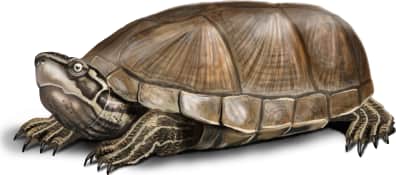
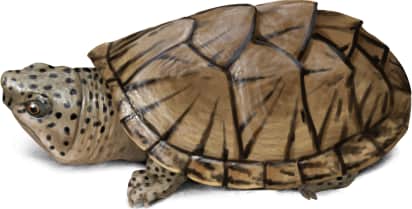
Carapace is either brown or black; usually displays black markings occurring in random patterns. Patterns most visible on small turtles. Plastron typically displays yellow or brown scutes and white or yellow skin. Rest of skin usually gray or black; may display yellowish markings. Maximum carapace length is 137 mm (5.5 inches).
Range
Eastern United States, Eastern Canada and Chihuahua, Mexico; as far west as central Texas, Wisconsin, and southern Ontario.
Habitat
Can be found in bodies of water that are permanent year round and have soft river beds and slow currents. Also have been spotted on vegetation hanging over water. Hides under rocks, logs, and in rodent holes. Diet usually consists of aquatic invertebrates but can also include fish, plants, and amphibian larvae.
Variations
Males exhibit greater amount of skin between plastral scutes than females. They also differ from females in having 2 small areas with raised scales behind knees and a thick tail which ends with an anal opening extending further than carapace.
Similar species
Name and etymology
Genus
Sternotherus
Greek for hinged (thairos) chest (sterno).
Origin
Sources
- Gray, 1825. Ann. Philos., N.S., Vol. 10, Sept. p. 211
Sternotherus. Gray, 1825 - Ann. Philos., N.S., Vol. 10, Sept. p. 211
Species epithet
odoratus
Latin for strong odor, referencing the odor of its musk gland.
Origin
Sources
- (Latreille, 1801). Hist. Nat. Rept., Vol. 1, p. 122 ↗
Sternotherus odoratus. (Latreille, 1801) - Hist. Nat. Rept., Vol. 1, p. 122
Explore more names in the etymology index.
At a glance
Range
Eastern United States, Eastern Canada and Chihuahua, Mexico; as far west as central Texas, Wisconsin, and southern Ontario.
Habitat
Can be found in bodies of water that are permanent year round and have soft river beds and slow currents. Also have been spot…
Guide
Reptiles and Amphibians of North America
Range map
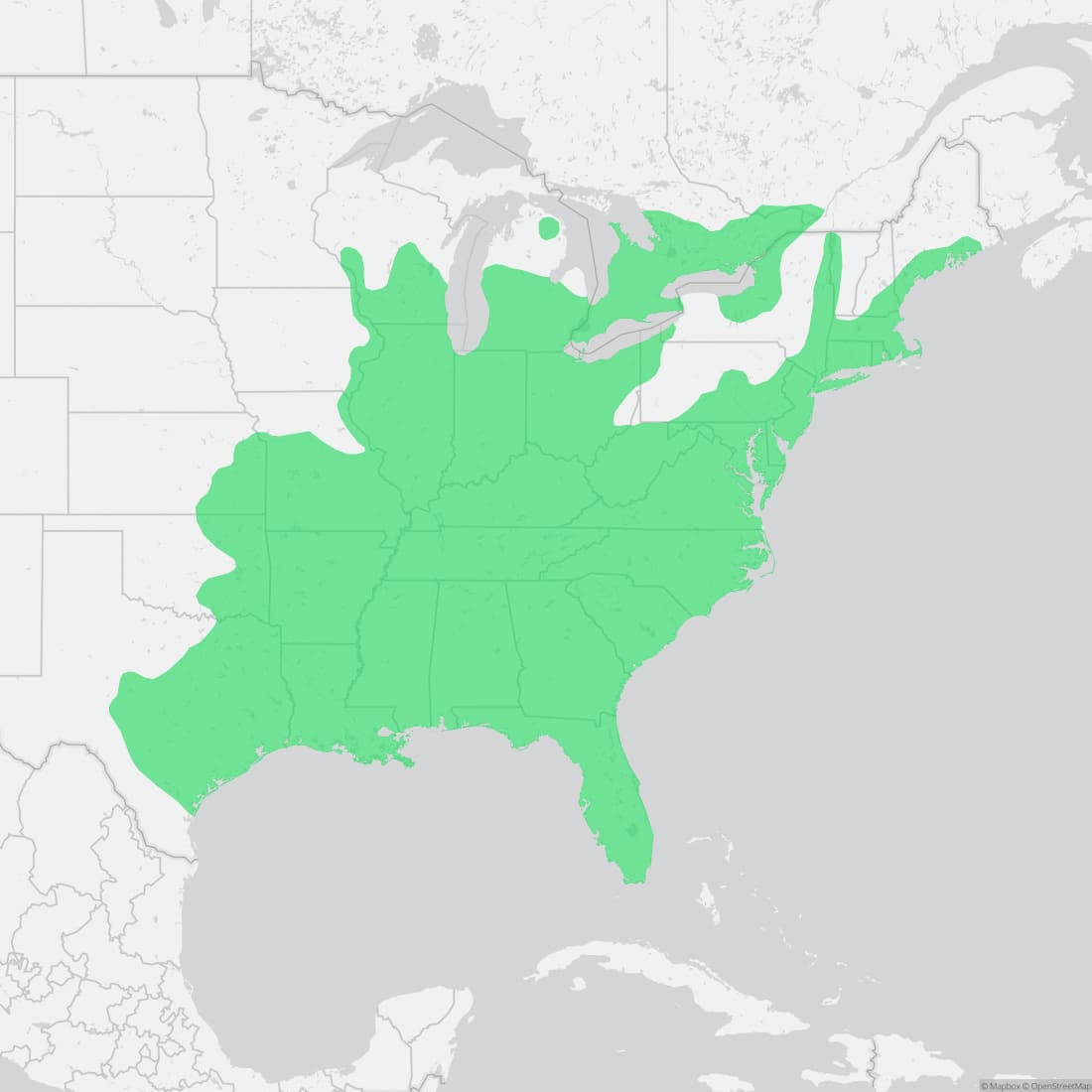
Approximate range. © Mapbox © OpenStreetMap