Striped Mud Turtle
Kinosternon baurii
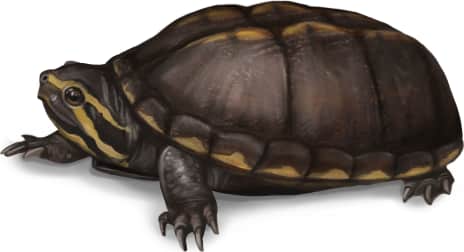
The striped mud turtle is quite small in size, with an oblong shaped shell, up to 10 to 12 centimeters. They typically have big heads and have three yellow strips on the…
How to identify
The striped mud turtle is quite small in size, with an oblong shaped shell, up to 10 to 12 centimeters. They typically have big heads and have three yellow strips on the length of the carapace (shell top). There is distinctive feature between the males and females. The males have thicker and longer tails than the females. It has a double hinged plastron, not unlike the eastern box turtle.
Range
It can be found in Virginia, Florida, Georgia, North and South Carolina.
Habitat
This organism wanders on land more than other mud turtles. It’s diet consist of aquatic animals, plants and insects such as algae, snails, worms, dried up kill and fish. It also looks for food in cow dung. It is commonly found in ditches and ponds. It prefers to dwell in fresh and brackish waters. The striped mud turtles are primarily not found in moving water. By way of estimate, females lay about 4 eggs early in the summer.
Similar species
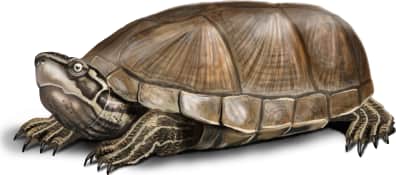
Eastern mud turtle or Kinosternon sulbrubrum can be found in Texas, North and South Carolina, Missouri, Virginia and some other parts of the United States. They span from 7 to about 10 cm. They are also small in size with a clear and flawless carapace. Its color ranges from dark brown to olive. Common musk turtle or sternotherus odoratus is commonly seen in fresh waters. It is quite small sized with about 5 – 12cm. It can be found all through the eastern US. They have a very small (plastron) bottom shell. This turtle is dark brown or black in color. Like the striped mud turtle, the mails have a thicker and longer tail than the females. Furthermore, the tails of the males typically ends in a spine beyond the edge of the carapace. Eastern box turtle or Terrapene Carolina can be found in the United States. The males typically have reddish eyes while the females’ eyes are brownish in color. The carapace is usually brownish orange or yellow. The bottom of their shell is hinged in nature
Name and etymology
Genus
Kinosternon
Greek for moving (kineo) breast (sternon), referencing ability to move lower shell.
Origin
Sources
- Spix, 1824. Testud. Brasil, p. 17
Kinosternon. Spix, 1824 - Testud. Brasil, p. 17
Species epithet
baurii
Honoring George H. Baur.
Origin
Honors
Sources
- Wikipedia: Kinosternon baurii ↗
“Kinosternon baurii.” Wikipedia. https://en.wikipedia.org/wiki/Striped_mud_turtle
Explore more names in the etymology index.
At a glance
Range
It can be found in Virginia, Florida, Georgia, North and South Carolina.
Habitat
This organism wanders on land more than other mud turtles. It’s diet consist of aquatic animals, plants and insects such as a…
Guide
Reptiles and Amphibians of North America
Range map
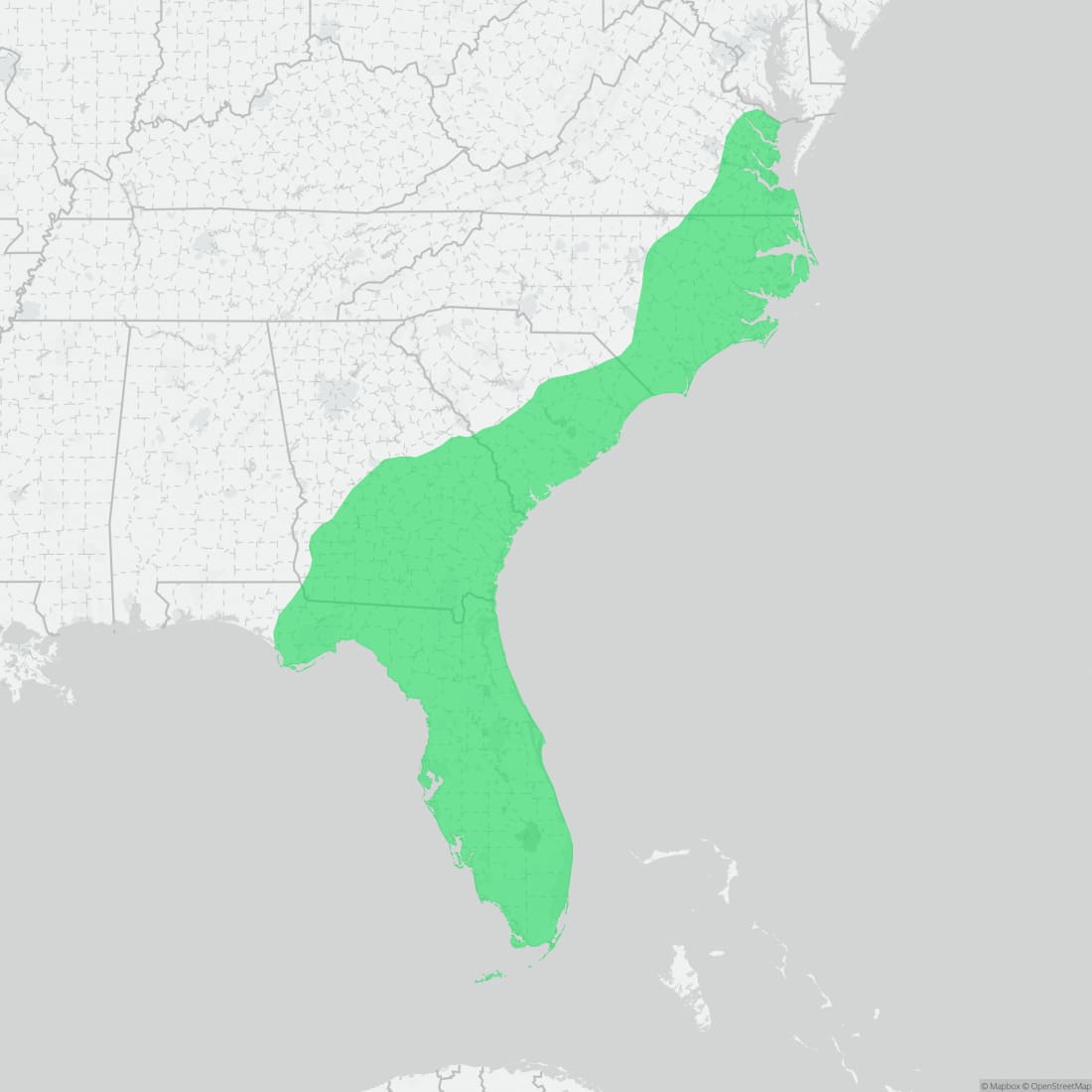
Approximate range. © Mapbox © OpenStreetMap