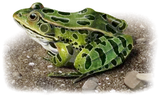
Pacific Chorus Frog
Pseudacris regilla
Pacific Chorus Frogs are typically between 1 and 2 inches long and come in various shades of green, brown, or gray. They can change their coloration over time to blend in…
How to identify
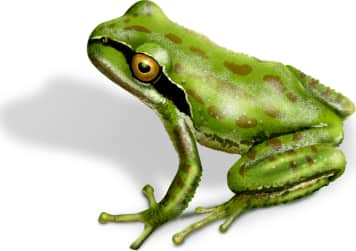
Pacific Chorus Frogs are typically between 1 and 2 inches long and come in various shades of green, brown, or gray. They can change their coloration over time to blend in with their surroundings. One key identifying feature is a dark stripe that runs from their nostril through their eye and down to their shoulder. Their toes have enlarged pads for climbing, and unlike many tree frogs, their feet have minimal webbing. During breeding season, males can be distinguished by their dark throat patch, which inflates when they call.
Range
The Pacific Chorus Frog range stretches from British Columbia down through Washington, Oregon, and California, reaching as far south as Baja California and east into Nevada. These adaptable creatures can thrive in a variety of habitats, from sea level meadows to mountain forests over 10,000 feet in elevation, as long as there is a nearby source of water.
Habitat
While adept climbers, Pacific Chorus Frogs spend much of their time on the ground in moist environments near water. They can be found in forests, grasslands, and even backyards with ponds or streams. During dry periods, they may take refuge in rock crevices, burrows, or under leaf litter.
Similar species
Several other small, brown tree frogs share the Pacific Chorus Frog's range. However, the combination of toe pads, a dark eye stripe, and a lack of webbing on the feet is a unique identifier for this species.
Name and etymology
Genus
Pseudacris
Greek for false(pseudes) locus(akris) referencing genus Acris.
Origin
Sources
- Fitzinger, 1843. Syst. Rept., p. 31 ↗
Pseudacris. Fitzinger, 1843 - Syst. Rept., p. 31
Species epithet
regilla
Latin for regal (regilla).
Origin
Sources
- Wikipedia: Pseudacris regilla ↗
“Pseudacris regilla.” Wikipedia. https://en.wikipedia.org/wiki/Pacific_tree_frog
Explore more names in the etymology index.
More illustrations
At a glance
Range
The Pacific Chorus Frog range stretches from British Columbia down through Washington, Oregon, and California, reaching as fa…
Habitat
While adept climbers, Pacific Chorus Frogs spend much of their time on the ground in moist environments near water. They can…
Guide
Reptiles and Amphibians of North America
Range map
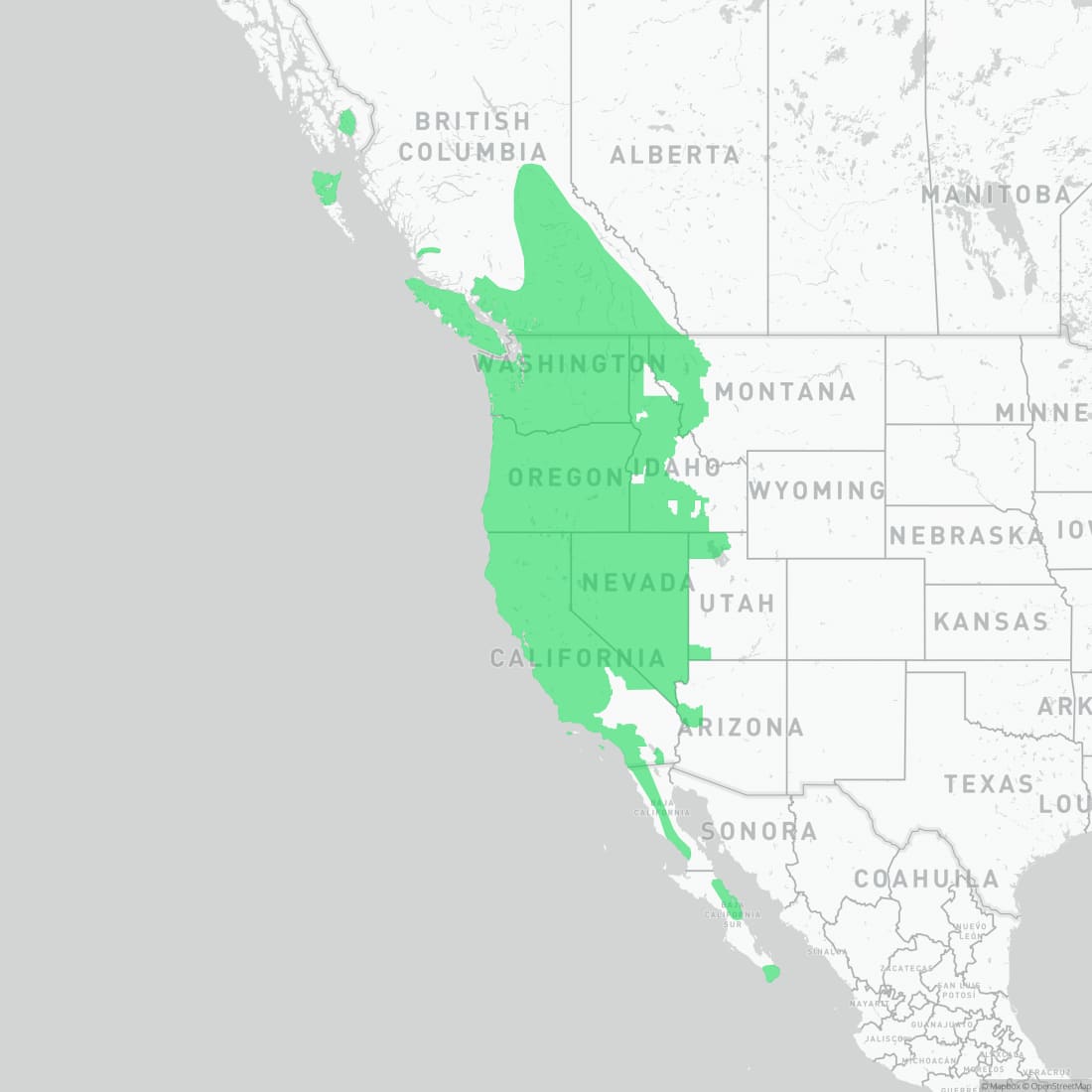
Approximate range. © Mapbox © OpenStreetMap