
Rock Rattlesnake
Crotalus lepidus
Smaller rattlesnake with a round, large head and rattle tail. When sheds skin, it produces a new segment to the rattle; rattle itself can break apart. Total length usuall…
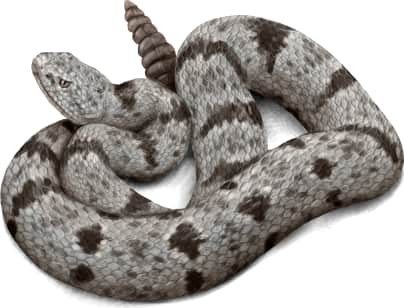
How to identify
Smaller rattlesnake with a round, large head and rattle tail. When sheds skin, it produces a new segment to the rattle; rattle itself can break apart. Total length usually under 32 in (81.3 cm). Color usually mirrors that of surrounding rocky habitat. Primary defensive strategy is camouflaging into surrounding with similarly colored dorsum. It is not aggressive unless physically provoked. Males and females breed in the spring and females give birth from July to August; clutches usually contain 1 to 8 young.
Range
Southern United States and most of northern central Mexico; starts in southeastern Arizona, southern New Mexico, and southwestern Texas and continues south to eastern Sinaloa, Durango, Zacatecas, and western San Luis Potosi.
Habitat
Primarily inhabits rocky areas in mountainous terrain. This includes rimrock, gorges, wooded areas, grassland, and deserts. In Mexico, can be found in mixed boreal-tropical forest and tropical deciduous forest. Although it is known to stay on the ground for the most part, some individuals will climb into low hanging vegetation. Primary diet is lizards but will also eat small mammals, frogs, and snakes.
Variations
Individuals in limestone habitats are usually light gray with dark gray rings on dorsum while individuals in higher altitude habitats are overall darker. Subspecies Banded Rock Rattlesnake, or *Crotalus lepidus klauberi*, has especially distinctive banding and less speckling on dorsum than other subspecies.
Similar species
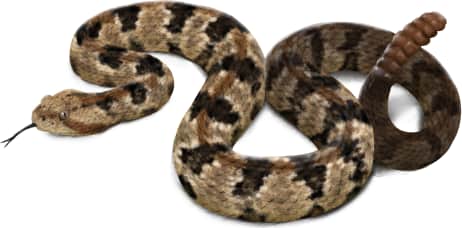
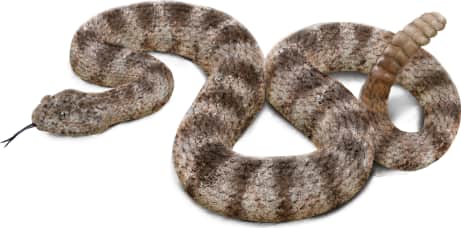
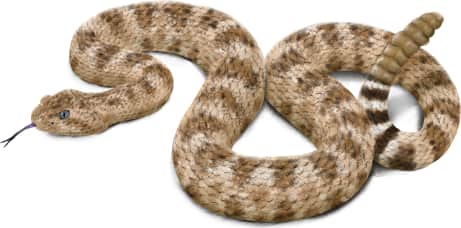
Name and etymology
Genus
Crotalus
Greek for rattle (krotalon).
Origin
Sources
- Linnaeus, 1758. Syst. Nat., 10th ed., Vol. 1, p. 214 ↗
Crotalus. Linnaeus, 1758 - Syst. Nat., 10th ed., Vol. 1, p. 214
Species epithet
lepidus
Latin for pleasant, neat, or graceful.
Origin
Sources
- (Kennicott, 1861). Proc. Acad. Nat. Sci. Philadelphia, Vol. 13, p. 206 ↗
Crotalus lepidus. (Kennicott, 1861) - Proc. Acad. Nat. Sci. Philadelphia, Vol. 13, p. 206
Explore more names in the etymology index.
At a glance
Range
Southern United States and most of northern central Mexico; starts in southeastern Arizona, southern New Mexico, and southwes…
Habitat
Primarily inhabits rocky areas in mountainous terrain. This includes rimrock, gorges, wooded areas, grassland, and deserts. I…
Guide
Reptiles and Amphibians of North America
Range map
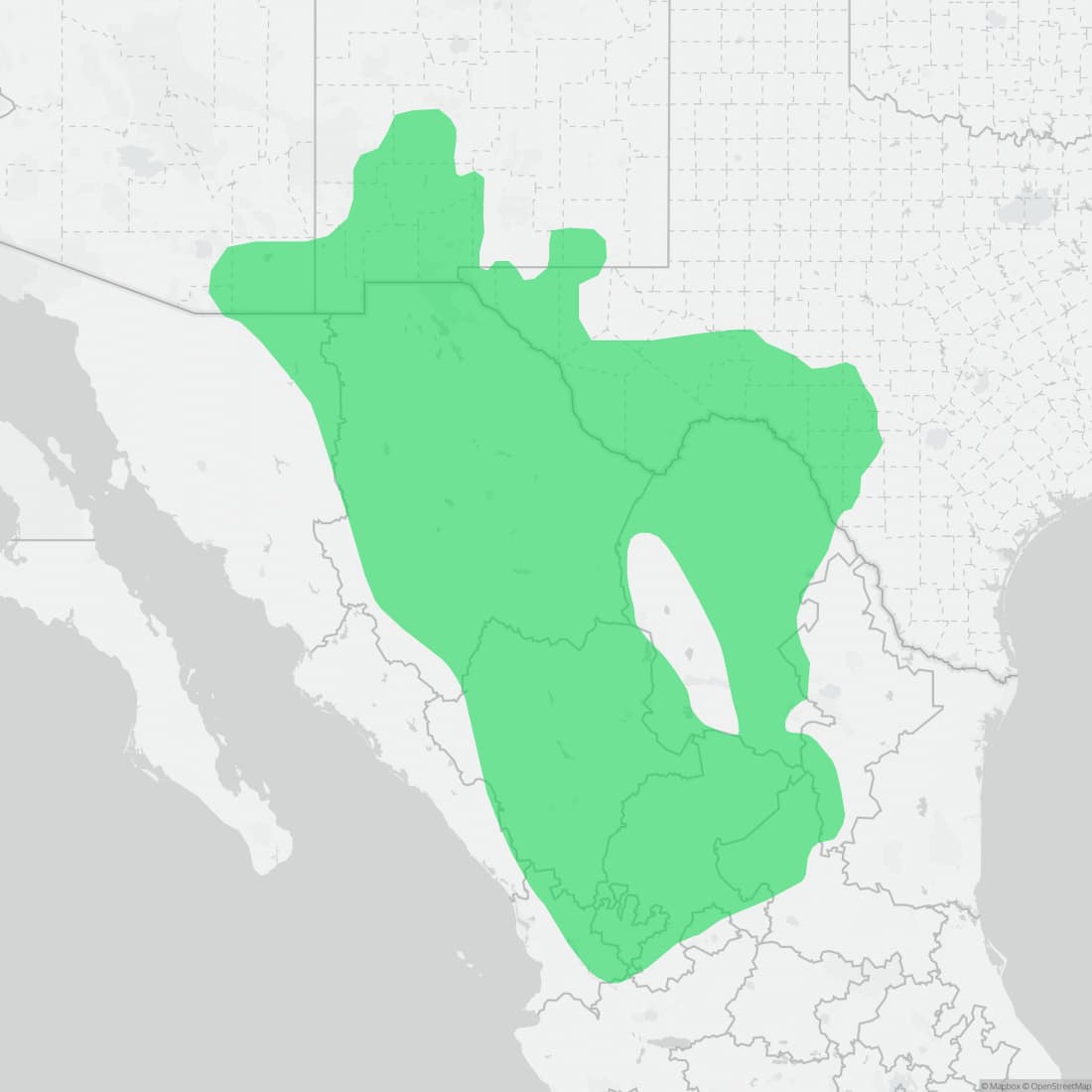
Approximate range. © Mapbox © OpenStreetMap