Long-tailed Brush Lizard
Urosaurus graciosus
This is a small lizard (averagely 2.6 inches snout-to-vent length) with a slender body and a very long slim tail. Its tail is up to twice its body length. The patterns an…
How to identify
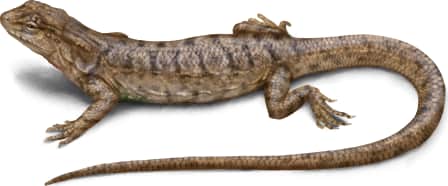
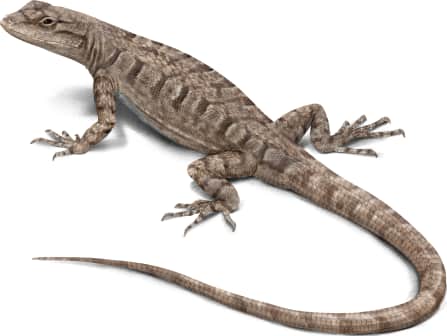
This is a small lizard (averagely 2.6 inches snout-to-vent length) with a slender body and a very long slim tail. Its tail is up to twice its body length. The patterns and markings on the body vary widely but the usual is a set of gray-brown blotches or crossbars. In some specimens, there are very faint or no markings at all. It usually has an orange or yellow throat. It has small dorsal scales with a granular texture but there is an enlarged strip of keeled scales that runs down the center of the back. Males have two blue patches with flecks of white on the belly.
Range
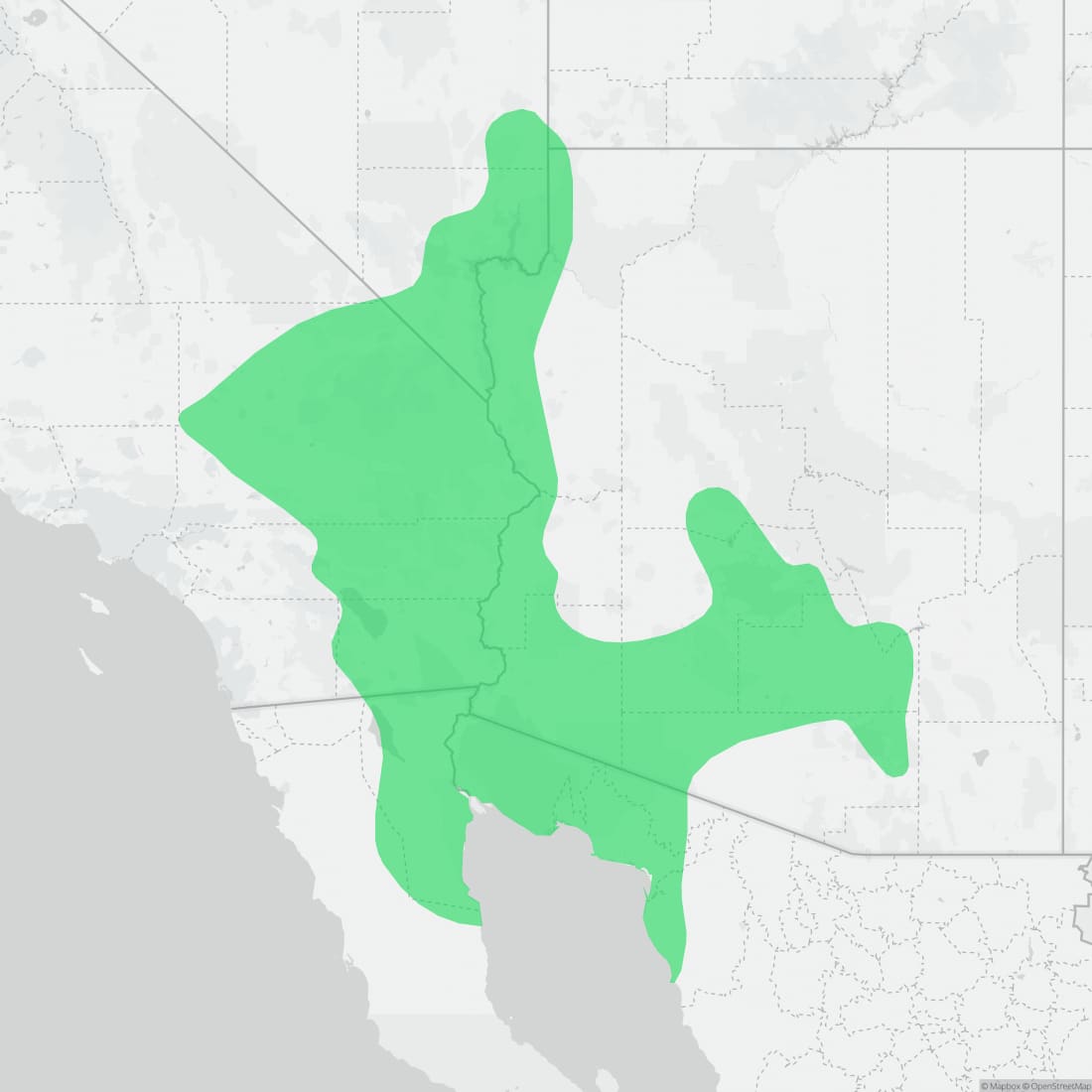
It is endemic to Mojave and the northwestern Sonoran Deserts, the long-tailed brush lizard occurs in the US states of California, Sonora, Arizona, and Nevada. It is also found in Baja California.
Habitat
Loose-sand deserts with scattered bushes and trees are ideal for this species. Especially found basking and foraging on the branches of creosote bushes and trees. They are usually seen on the branches of trees where they spend warm nights, unlike other phrynosomatid lizards who’d rather bury themselves in the sand. They hunt and eat a variety of insects and spiders but they may also be found eating plant material. Females lay eggs in spring and summer with an average clutch size of 19 eggs.
Variations
Urosaurus graciosus graciosus Urosaurus graciosus shannoni
Similar species
The Ornate Tree Lizard or Urosaurus ornatus is differentiated from U. graciosus by the large, wide strip of keeled scaled that runs down the back of the U. garciosus. Another distinguishing feature is that the ornate tree lizard has a much shorter tail. The Black-tailed Brush lizard or Urosaurus nigricauda and the Tropical Tree Lizard (Urosaurus bicarinatus) lack the characteristic long tail of U. graciosus and they lack the large dorsal scales that transition sharply into granular later scales. The black-tailed brush and the tropical tree lizard’s transitioning of scales is not as intense and it transitions gradually.
Name and etymology
Genus
Urosaurus
Greek for tail (oura) lizard (saurus).
Origin
Sources
- Hallowell, 1854. Proc. Acad. Nat. Sci. Philadelphia, Vol. 7, p. 92 ↗
Urosaurus. Hallowell, 1854 - Proc. Acad. Nat. Sci. Philadelphia, Vol. 7, p. 92
Species epithet
graciosus
Latin for full of (-osus) grace or slender (gracilis).
Origin
Sources
- Hallowell, 1854. Proc. Acad. Nat. Sci. Philadelphia, Vol. 7, p. 92 ↗
Urosaurus. Hallowell, 1854 - Proc. Acad. Nat. Sci. Philadelphia, Vol. 7, p. 92
Explore more names in the etymology index.
At a glance
Range
It is endemic to Mojave and the northwestern Sonoran Deserts, the long-tailed brush lizard occurs in the US states of Califor…
Habitat
Loose-sand deserts with scattered bushes and trees are ideal for this species. Especially found basking and foraging on the b…
Guide
Reptiles and Amphibians of North America
Range map
Approximate range. © Mapbox © OpenStreetMap