Plateau Striped Whiptail
Aspidoscelis velox
With an average snout-to-vent length of 3.3 inches, the Aspidoscelis velox is a small lizard. It is slim with a long slender tail and a pointed snout. It has a dark brown…
How to identify
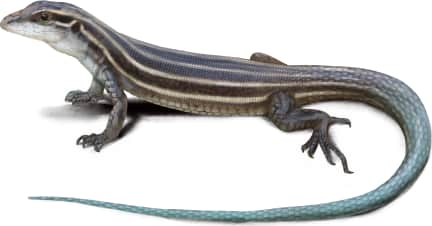
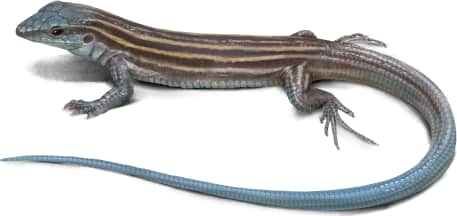
With an average snout-to-vent length of 3.3 inches, the Aspidoscelis velox is a small lizard. It is slim with a long slender tail and a pointed snout. It has a dark brown to black coloration and its body is striped with 6-7 yellow to cream lines. In some cases, where there is a seventh stripe (or mid-dorsal stripe, it appears as thin or disrupted. It possesses a light blue tail and the belly is a plain pale color. The juveniles possess a brighter blue tail. The scales on the body of the lizard are tiny and grainy. While the tail has large, ridged, and rectangular-looking scales. The scales on the belly are large, rectangular and smooth. And the scales on the head are plate-like.
Range
This species of lizard is endemic to the United States of America and has a range that includes southeastern Utah, most of Colorado, northern Arizona and the northern regions of New Mexico. They have also been introduced at the Cove Palisades Park in Oregon.
Habitat
They can be found in juniper and oak woodlands, mountain shrubland, Great Basin Desertscrub, Great Basin Conifer Woodland. They can be found in various terrains like riparian corridors, bajadas, flatlands, foothills, and canyons. Females lay eggs in June or July and the hatchlings emerge in August. They feed by foraging in organic matter under bushes and digging soil around the bases of logs and rocks. They are insectivorous and feed on many types of insects and spiders.
Similar species
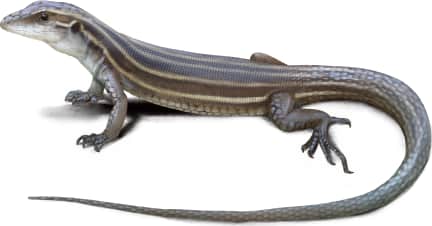
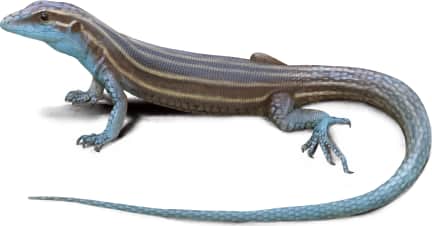
The Desert Grassland Whiptail (Aspidoscelis uniparens) is similar in size (3.3 inches snout-to-vent length). It also has six yellow to cream stripes with select specimens possessing a partial seventh stripe on the neck. The major difference lies in its blue-gray or olive-colored tail. The Pai Striped Whiptail (Aspidoscelis pai) is slender and similar in stature and length (3.4 inches snout-to-vent length). However, this lizard is brown to dark-reddish brown. It has light yellow stripes and some specimens have a seventh incomplete mid-dorsal stripe. The major difference lies in the face, feet, and underside which are all tinted a pale blue. The Little Striped Whiptail (Aspidoscelis inornatus) while slightly smaller (at 2.8 inches snout to vent). This lizard has a brown to reddish-brown coloration. They generally have seven yellow stripes although some specimens can have the seventh mid-dorsal one indistinct. The major difference lies in the face, feet, and underside which are all tinted a pale blue.
Name and etymology
Genus
Aspidoscelis
Greek for shield (aspido) leg (skelos).
Origin
Sources
- Wagler, 1830. Nat. Syst. Amph., p. 154
Cnemidophorus. Wagler, 1830 - Nat. Syst. Amph., p. 154
Species epithet
velox
Latin for speed
Origin
Sources
- Springer, 1928. Copeia, p. 101 ↗
Cnemidophorus velox. Springer, 1928 - Copeia, p. 101
Explore more names in the etymology index.
At a glance
Range
This species of lizard is endemic to the United States of America and has a range that includes southeastern Utah, most of Co…
Habitat
They can be found in juniper and oak woodlands, mountain shrubland, Great Basin Desertscrub, Great Basin Conifer Woodland. Th…
Guide
Reptiles and Amphibians of North America
Range map
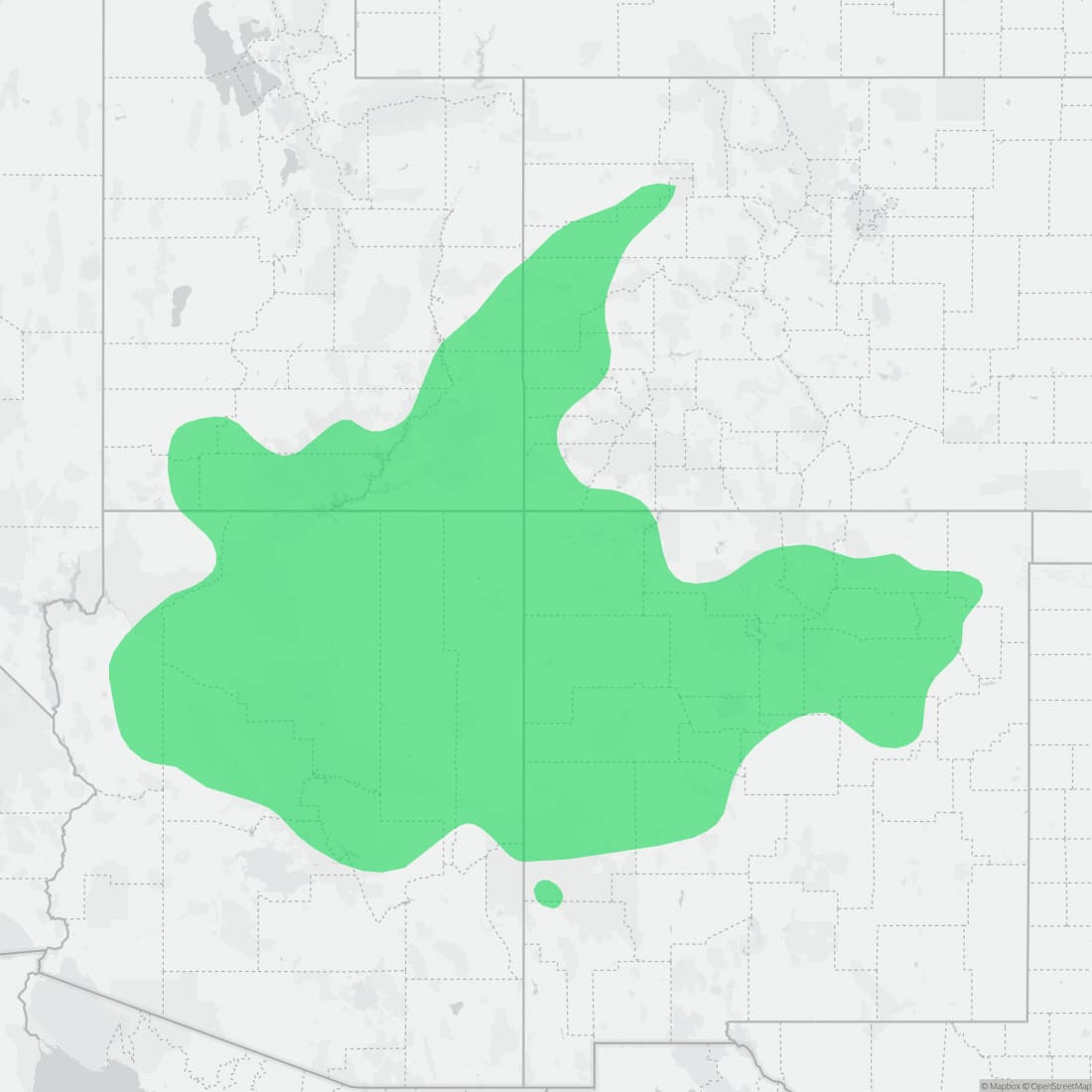
Approximate range. © Mapbox © OpenStreetMap